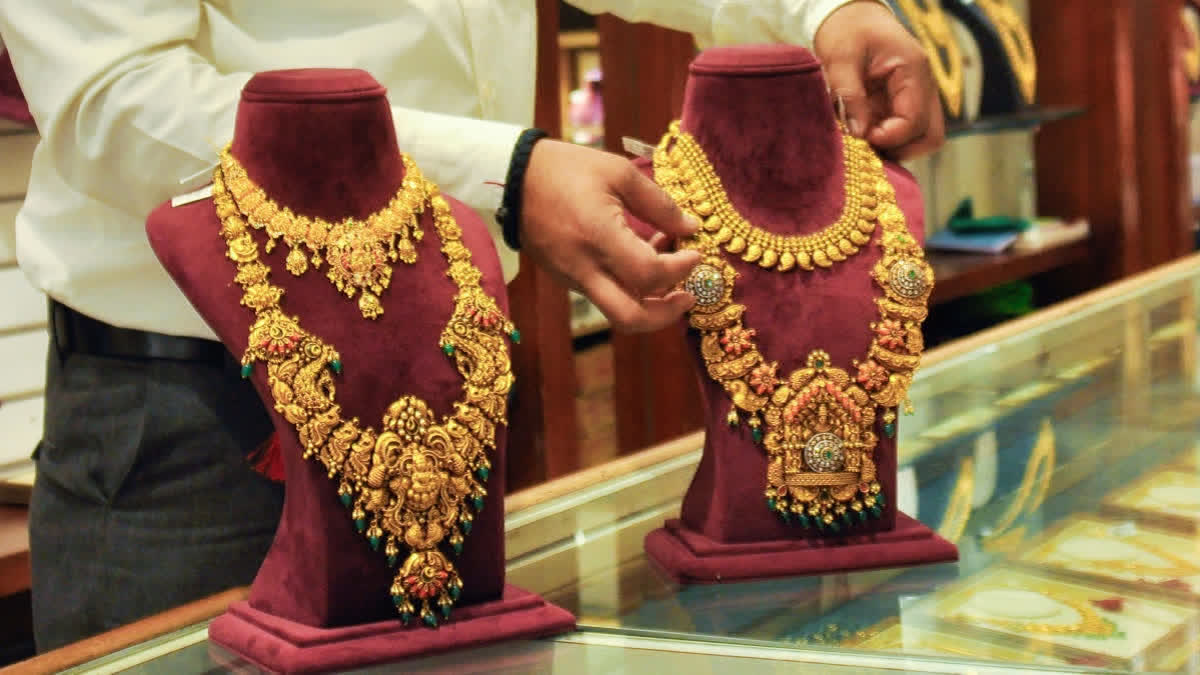
Gold Prices Fall: In the cultural fabric of India, gold is rarely treated as just a luxury ornament; it is universally viewed as the ultimate financial safety net. However, mid-2026 has brought a fascinating paradigm shift to the domestic bullion market. As gold prices slide from their historic all-time highs, Indian households are breaking tradition—choosing to sell their old jewelry for cash rather than exchanging it for new designs.
Market analysts note that a distinct anxiety has gripped retail consumers: the fear of a deeper market correction. If prices plummet further, the resale value of their family wealth will shrink. To outsmart the market, consumers are actively choosing to lock in their profits while the rates remain historically attractive.
The MCX Correction and Retail Panic
After hitting stratospheric records earlier this year, gold prices on the Multi Commodity Exchange (MCX) are currently undergoing a severe reality check. Friday morning trading saw gold hovering around the ₹1,44,000 per 10 grams mark—a noticeable retreat from its peak.
What Is Driving the Panic? According to the India Bullion and Jewellers Association (IBJA), when gold flirted with the ₹1.8 lakh per 10 grams territory earlier in the year, consumers held on. Now, with the slide toward ₹1.4 lakh, fear is growing that the metal might test support levels as low as ₹1.2 lakh. Rather than risking further erosion of value, families are initiating immediate profit booking.
April–June Quarter Witnesses a 43% Surge in Sales
The ground reality is heavily backed by hard data. IBJA’s latest quarterly reports indicate that Indian households liquidated nearly 50 tonnes of old gold during the April–June quarter alone. This marks a staggering 43% year-on-year volume surge compared to the same period last year. Gold is no longer being viewed as an idle heirloom to be locked away indefinitely, but as an active financial asset to be traded strategically.
A Massive Boost to Organized Gold Recycling
Perhaps the most structural and positive fallout of this selling spree is the rapid formalization of India’s gold recycling ecosystem. Historically, consumers turned to local, unorganized neighborhood goldsmiths where valuation methods were opaque. Today, the trend has decisively shifted toward transparent, organized corporate players like Muthoot Exim and Augmont.
- Explosive Volume Growth: Muthoot Exim reported a massive 40% jump in old gold intake across its 100+ ‘Gold Point’ centers nationwide.
- The Refining Loop: Organized aggregators melt the old consumer jewelry, refine it to 24-karat purity bars, and feed it straight back into the manufacturing supply chain.
- Projected Trends: While India recycled roughly 125–150 tonnes of gold in 2025, current momentum places 2026 projections between a historic 200–250 tonnes.
Why This Trend is a Massive Win for the Indian Economy
India is one of the world’s largest consumers of gold, but because domestic mining is virtually nonexistent, we rely almost entirely on foreign imports. In the preceding fiscal year (FY26), India’s gold import bill hit a staggering $72.4 billion, adding immense stress to the country’s Current Account Deficit (CAD) and piling pressure on the Indian Rupee.
Indian households collectively sit on an estimated 30,000 tonnes of idle gold. When a fraction of this massive domestic vault enters the recycling loop, it immediately dampens the need for fresh imports. By relying on recycled gold, the nation saves billions in foreign exchange, improves domestic cash liquidity, and naturally strengthens the rupee against the US dollar.
Strategic Checklist: Should You Sell Your Old Gold Right Now?
Financial planners advise that liquidating gold shouldn’t be an emotional reaction to short-term price drops. Consider these two strategic lenses:
- Liquidate the “Dead Weight”: If you own jewelry that is broken, outdated in design, or has sat in a bank locker for a decade without being worn, cashing it out right now is highly practical. The proceeds can be deployed into higher-yielding, wealth-generating assets like equity mutual funds.
- Preserve the Strategic Core: If your gold acts as your portfolio’s core hedge against inflation and global geopolitical risks, do not liquidate it out of panic. Markets move in cycles; while short-term corrections happen, gold’s long-term intrinsic value remains rock solid.
Conclusion: Balancing Sentiment with Financial Literacy
The sudden rush to sell old gold proves that the modern Indian consumer is becoming incredibly financially savvy. The sentimental attachment to gold is slowly being balanced by smart tactical asset management. While macro factors like the US Federal Reserve’s monetary policies and global tensions will continue to dictate international rates, Indian families have proven they know exactly how to monetize a market dip to their absolute advantage.
Frequently Asked Questions (FAQs)
Q1. What is causing the sudden drop in global and domestic gold prices?
The primary driver is the hawkish stance of the US Federal Reserve, alongside expectations of sustained higher interest rates. When interest rates remain elevated globally, institutional investors shift capital into high-yield fixed-income assets, taking the momentum away from non-yielding assets like gold.
Q2. Why should consumers prefer organized centers over local jewelers to sell gold?
Organized centers utilize advanced, automated XRF melting and testing machines that determine the exact karat purity transparently. This eliminates arbitrary deductions under the guise of “melting losses” or “handling charges” that commonly occur in the unorganized market, ensuring the customer receives 100% of the true market value via secure bank transfers.
Q3. Will domestic gold prices actually drop to ₹1.2 lakh per 10 grams?
While a market bottom is impossible to predict precisely, institutional bullion analysts suggest that if global equity markets remain exceptionally strong and inflation cools, gold could experience an extended correction toward the ₹1.25 lakh–₹1.20 lakh range. However, upcoming domestic festive and wedding seasonal demands generally act as a natural floor to prevent unchecked freefalls.
Q4. How does gold recycling protect the Indian rupee?
When jewelers source gold locally through recycling, India’s demand for imported bullion drops significantly. Fewer gold imports mean fewer US dollars leave the country, which directly reduces the trade deficit and keeps the exchange value of the Indian Rupee stable.
For more information, follow Shabdsanchi‘s social media pages today and stay updated.
- Facebook: shabdsanchi
- Instagram: shabdsanchiofficial
- YouTube: @shabd_sanchi
- Twitter: shabdsanchi