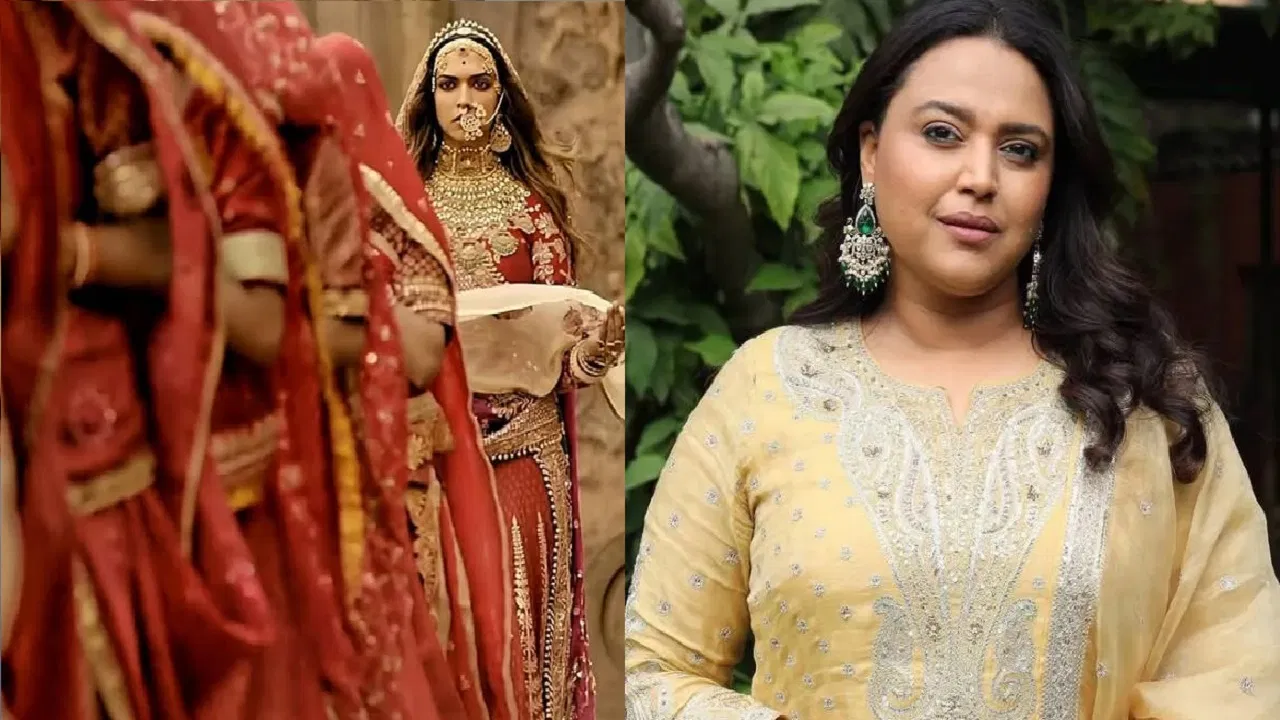
Bollywood actress Swara Bhasker has issued a clear clarification regarding a viral video clip circulating across social media platforms. The controversial clip, taken from an event on August 31, showed Swara discussing the open letter she wrote to filmmaker Sanjay Leela Bhansali following the release of his period drama Padmaavat.
Addressing the mounting backlash and media coverage, Swara shared a detailed video on her social media handles to explain the full context of her remarks, asserting that her words were completely mistranslated and falsely presented.
The Origin of the Controversial Viral Video
During the August 31 event, Swara Bhasker reflected on her initial reaction to the climax of Padmaavat. Soon after the event, a short video segment began circulating online, prompting claims that the actress had labeled Rani Padmavati and other women who committed Jauhar as “cowards.”
Swara pushed back against these claims in her latest statement:
“Main clearly kehna chahti hoon, maine aisa bilkul nahi kaha ki Rani Padmavati kayar thi yaa Mahal ki baaki aurtien kayar thi. Jo log mujhe gaaliyan dena chahte hain, dijiye par sahi cheez pe dijiye.”
She emphasized that her critique was directed at the film’s artistic framing rather than historical figures, explaining her thought process while watching the scene:
“Maine kaha tha jab main climax dekh rahi thi, mujhe laga, bhagwan naa kare agar main rape peedita hoti toh main kayar mehsoos karti ki maine aapni jaan kyun nahi li, Ki main balatkar ke baad Zinda Bach gayi toh main kayar hoon.”
Read Also : Kerala Lottery Sthree Sakthi SS-535 Result Today (September 1, 2026): First Prize ₹1 Crore Draw Live Updates
Cinema, Rape Culture, and Society’s Message to Survivors
Swara explained that her observations were grounded in the alarming prevalence of sexual violence in society—an issue she described as a widespread epidemic. She questioned whether mainstream cinema should glorify the notion that a woman’s “purity” holds greater value than her physical life.
“Yeh asliyat hai humare desh mein. Kya hume aisi filmein banani chahiye jahan yeh sandesh jaa raha hai ki aurat ki pavitrata uski zindagi se jyada mulyawaan tha? Kya hume rape peedita ko yeh btaana chahiye ki tumhari jaan hi chali jaati, toh sahi rehta, tum bach gayi toh yeh buri baat hai?”
To emphasize her point on human resilience, she cited the 2012 Nirbhaya case. She noted that Nirbhaya fought valiantly against her attackers until her final breath, demonstrating an unyielding will to live that society and cinema should honor rather than diminish.
Key Objections to the ‘Padmaavat’ Climax Sequence
Swara reiterated the specific artistic choices in Sanjay Leela Bhansali’s portrayal that prompted her original open letter:
- Message to Rape Survivors: She questioned whether celebrating historical self-immolation in modern cinema inadvertently signals to survivors that surviving sexual assault renders them dishonorable.
- Depiction of Pregnant Women: She expressed deep distress over a specific cinematic frame showing a close-up of a pregnant woman’s belly during the Jauhar sequence, questioning the psychological implications of showing an unborn life being sacrificed to protect honor from invaders.
- Valuing Life Over Purity: Her primary argument remains that a woman’s right to live should never be subordinated to societal concepts of honor and purity.
Swara Bhasker’s clarification underscores her stance on cinematic portrayal and societal values. While critics continue to debate her perspective on historical narratives, Swara maintains that her critique was aimed purely at challenging cinematic tropes surrounding female trauma, survivor guilt, and the societal equating of a woman’s worth to her purity.
Frequently Asked Questions (FAQs)
What did Swara Bhasker say about Rani Padmavati?
Swara clarified that she never called Rani Padmavati or the women who committed Jauhar cowards. She explained that her remarks were about how the cinematic depiction of the scene made her reflect on society’s message to rape survivors regarding honor, dignity, and their fundamental right to life.
Why did Swara Bhasker write an open letter to Sanjay Leela Bhansali?
Swara wrote the open letter after watching Padmaavat to critique the film’s climax. She argued that glorifying Jauhar sends a problematic message in modern society, suggesting a woman’s life is secondary to her “purity,” particularly in a country fighting against a severe epidemic of sexual violence.
What was Swara Bhasker’s main issue with the Jauhar scene?
Swara objected to cinematic choices, such as showing a pregnant woman performing Jauhar. She argued that such visuals project a message that an unborn child or a survivor does not deserve to live if honor is compromised, thereby reducing a woman’s value solely to societal concepts of purity.
How did Swara Bhasker respond to the recent online backlash?
Swara released a video statement on social media addressing the viral clip. She stated that her comments were falsely translated and taken out of context by media outlets and trolls, urging critics to understand her full context regarding survivor guilt before forming conclusions or spreading outrage.