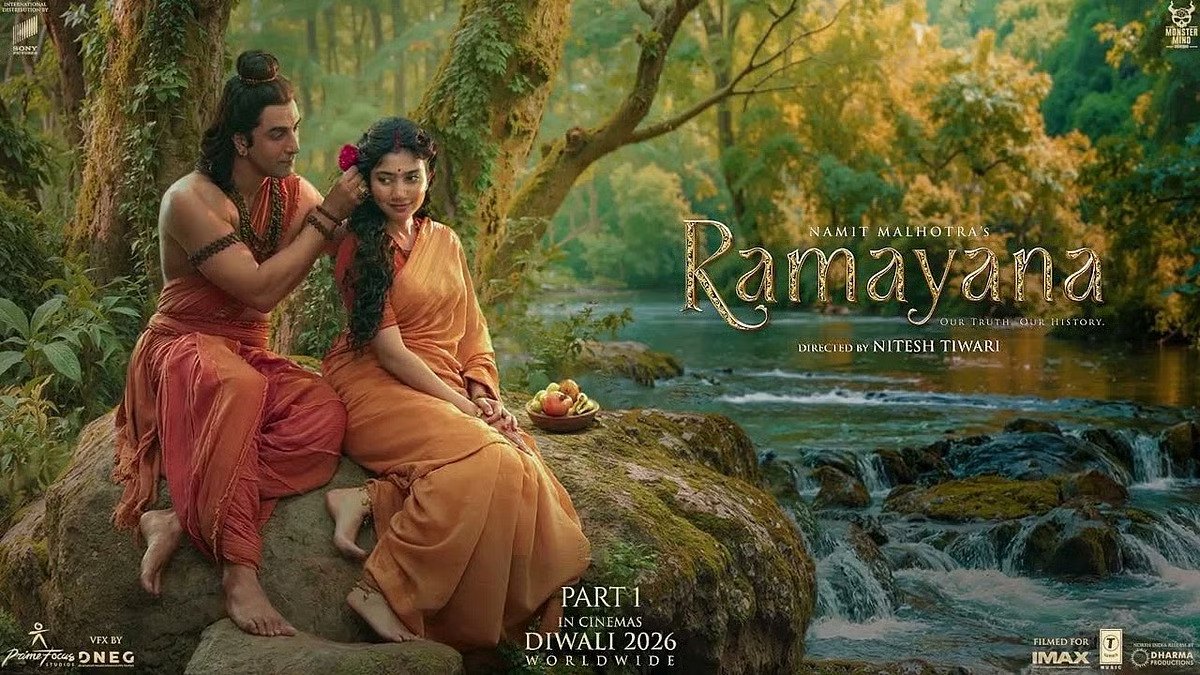
The intersection of ancient Indian mythology and 21st-century cinema has once again sparked intense cultural debate with the release of Ramayana: Part 1, directed by Nitesh Tiwari and produced by Namit Malhotra. Blending high-stakes CGI with modern psychological depth, the film reimagines foundational figures like Ram, Ravana, and Sita, forcing modern audiences to re-examine centuries-old narratives through a contemporary lens.
The Evolution of Epics: From Relics to Living Texts
Ancient epics are not dusty museum relics; they are vital, provocative, and deeply human texts that challenge how we think today. This perspective, championed by classicist Mary Beard regarding modern adaptations of The Odyssey, holds equally true for contemporary retellings of the Ramayana.
Rather than presenting a rigid, unyielding narrative, modern storytellers are increasingly leveraging cinema to mirror contemporary societal complexities. Ramayana: Part 1 steps directly into this arena by acknowledging Ravana’s immense capacity for leadership and community welfare among the Asuras, while simultaneously mapping Ram’s unwavering adherence to duty as Maryada Purshottaman.
“Multiplicity has been a key value in Indian culture down the ages.” — Chitra Banerjee Divakaruni
Deconstructing Ravana: The Schizophrenic Modern Mind
In an era where archetypal heroes feel scarce and societal conflicts run deep, the film opens with an analytical look at the motivations driving Ravana to seize control of all three realms. Early scenes establish a stark psychological conflict: Kaikasi, Ravana’s mother, mocks his youthful inclination toward playing the veena while his community fights for survival.
This framing presents Ravana as a deeply conflicted figure, torn between historical grievances faced by his people and personal artistic inclinations. One of the film’s most innovative sequences features his 10 heads engaging in internal debate—one advocating peace, another pushing for war, and a third leaning toward asceticism.
- Internal Duality: The multi-headed dialogue mirrors the fragmented, high-stress realities of modern human life.
- Filial Duty: Ravana’s choices for war are ultimately driven by absolute loyalty to his mother and sister.
- The Catalyst: His abduction of Sita—following her recitation from the Rig Veda—stems from political and familial vengeance rather than raw, unmitigated lust.
In sharp contrast, Ram maintains a unilinear, resolute arc. Serving as the ideal son, brother, and husband, he embodies the divine avatar destined to restore cosmic balance, willingly embracing exile to honor his father’s word.
The Debate on Character Agency and Cultural Responsibility
While the film attempts progressive strides—such as granting Sita sword-fighting agency and public speaking moments before leaving Ayodhya—critics note inconsistencies. Authors like Chitra Banerjee Divakaruni (The Forest of Enchantments) and Amish Tripathi have long championed powerful, independent portrayals of Sita, making sudden regressions in narrative agency feel jarring to literary fans.
Furthermore, academic voices have raised crucial questions regarding artistic license versus cultural custodianship. Prof. Vamsee Juluri of the University of San Francisco emphasizes that while creators enjoy the freedom to interpret texts like Valmiki’s or Vyasa’s, audiences possess the constitutional right to critically evaluate those choices.
“The core question is therefore, is it still the ‘Ramayana’ or even ‘Ram’ we are watching depicted if the ‘interpretation’ goes into a complete reversal of even core principles and sensibilities around the characters?” asks Prof. Vamsee Juluri.
Juluri warns that whitewashing defining traits—such as malicious cruelty or profound transgressions—threatens to cross the line from creative innovation into a form of epistemic distortion. Historically, versions like the 1958 film Bhoo Kailas successfully highlighted Ravana’s immense strengths while honoring queen Mandodari’s moral superiority, proving that nuance does not require core character subversion.
Frequently Asked Questions
What is the primary focus of Ramayana: Part 1?
The film offers a 21st-century cinematic interpretation that balances Ram’s traditional dharma with a psychological deep-dive into Ravana’s motivations and community struggles.
Who are the key creative forces behind this adaptation?
The project is spearheaded by director Nitesh Tiwari and producer Namit Malhotra.
How does the film portray Ravana differently from traditional narratives?
It explores Ravana’s internal conflicts through an innovative sequence involving his 10 heads, framing his actions through familial duty and geopolitical vengeance rather than simple villainy.
What are scholars saying about modern myth adaptations?
Scholars like Prof. Vamsee Juluri emphasize that artistic reinterpretation must balance creative innovation with cultural responsibility and respect for traditional frameworks.
How do literary figures view the multiplicity of the Ramayana?
Authors like Chitra Banerjee Divakaruni note that Indian culture has a rich, historical tradition of diverse retellings across regions and languages, including regional texts like the Kambaramayanam and Ramcharitmanas.
Conclusion: The Long-Term Implications for Mythological Cinema
Regardless of technical imperfections, stage-like dialogue, or stylistic choices, the true triumph of Ramayana: Part 1 lies in its ability to reignite public discourse around timeless moral frameworks. As filmmakers continue to experiment with ancient texts in the streaming and CGI era, the challenge ahead remains clear: balancing radical innovation with deep cultural competence. The future of epic cinema in India will depend entirely on whether storytellers can honor the sacred weight of tradition while engaging the complex, critical minds of modern audiences.

Manish Kumar began his professional journey in digital marketing and performance marketing, and currently works as a Digital Marketing Excutive and SEO expert. With over 3 years of professional experience, he handles both strategy and execution. Currently, he manages digital marketing and performance marketing at ‘Shabd Sanchi’ (shabdsanchi.com).