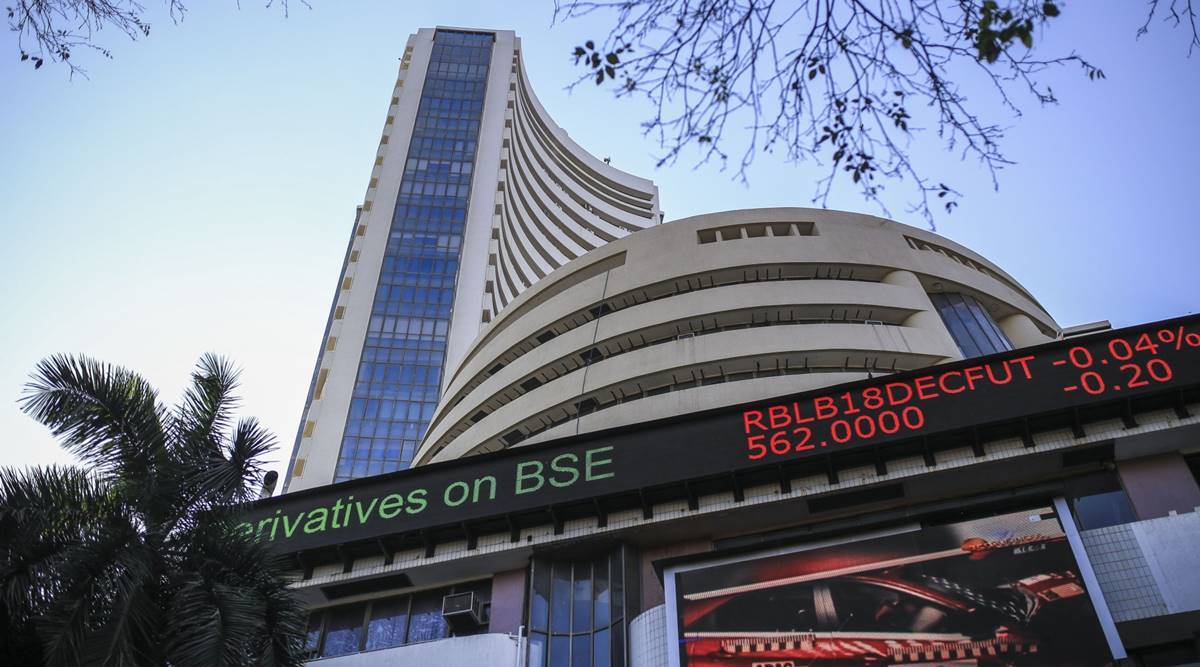
A massive wave of global risk-off sentiment swept through the Indian equity markets on Wednesday, leading to the sharpest single-day market correction in over two months. The benchmark 30-share BSE Sensex plummeted 1,677.12 points, or 2.15%, to settle at 76,503.60. The index hit an intraday low of 76,259.03, shedding nearly 1,922 points at its worst brief moment before mild late-day buying cut losses slightly.
Simultaneously, the broader NSE Nifty 50 surrendered the key psychological support level of 24,000, tumbling 517 points, or 2.12%, to close at 23,882.05. This intense bloodbath wiped out more than ₹5.8 lakh crore of investor wealth in a single trading session, leaving retail and institutional investors scrambling to evaluate the structural damage.
1. The Trigger: US-Iran Tensions Rise and End the Ceasefire Era
The sudden escalation in the Middle East acted as the primary catalyst for today’s market unwinding. Panic spread rapidly across global trading desks after US President Donald Trump stated that the interim agreement with Iran was officially “over.”
This geopolitical statement followed reported skirmishes and fresh attacks on commercial cargo vessels passing through the hyper-critical Strait of Hormuz.
Because the Strait of Hormuz acts as the world’s most vital choke point for oil transit, global energy traders immediately priced in a severe supply disruption risk premium. This structural shift caused market volatility to spike rapidly, causing the India VIX index to surge over 14.7.
Read Also: Cricketer Abhishek Sharma Moves Delhi High Court For Protection Of Personality Rights
2. The Crude Oil Price Spike: India’s Achilles’ Heel
As US-Iran tensions rose, Brent crude oil prices experienced a sharp 7% spike, jumping quickly to $79.1 per barrel. For an import-dependent economy like India, which imports over 85% of its crude oil requirements, rising energy costs create an immediate macroeconomic challenge.
A persistent increase in oil prices creates secondary negative effects for the Indian economy:
- Fiscal Deficit Pressures: Higher import bills weaken the Indian Rupee, which recently slid against the US Dollar.
- Corporate Margin Compression: Sectors relying heavily on crude derivatives see their raw material costs skyrocket almost immediately.
- Inflation Risks: Elevated fuel costs lead to higher logistics expenses, which complicates the RBI’s long-term monetary policy trajectory.
3. Sectoral Heatmap: All 30 Sensex Pack Firms End in Red
The selling pressure was absolute and broad-based. On the BSE, 3,211 stocks declined compared to just 1,070 advances. In a rare display of uniform market panic, every single constituent of the 30-share Sensex pack closed the day in negative territory.
| Major Laggard | Industry Impact | Primary Driver Behind Drop |
| InterGlobe Aviation (IndiGo) | Aviation / Transport | Soaring aviation turbine fuel (ATF) prices driven by crude surge. |
| Maruti Suzuki | Automotive Manufacturing | Rising input logistics costs and fears of a slowdown in discretionary consumer spending. |
| Hindustan Unilever (HUL) | Fast-Moving Consumer Goods (FMCG) | Increasing crude-linked packaging costs combined with macro inflation worries. |
| Bajaj Finance | Non-Banking Financial (NBFC) | Broad liquidity outflow and systemic risk-off selling by institutional players. |
| Kotak Mahindra Bank | Banking & Financial Services | General banking index drag as PSU and private banks faced heavy foreign fund outflows. |
Sectoral indices mirrored the headline crash, led downward by the BSE Services index (down 3.2%), followed closely by PSU Banks (down 2.8%) and FMCG (down 2.5%).
4. Global Market Echoes
Indian bourses were not alone in this correction. The geopolitical shockwaves triggered global equity corrections across time zones:
- South Korea’s Kospi bore the brunt of Asian market panic, diving a massive 5.4%.
- Japan’s Nikkei 225 dropped 2.1%, matching the structural declines seen on Dalal Street.
- US Markets: The Dow Jones Industrial Average opened down over 1%, sliding past the 52,385 mark as institutional money shifted rapidly into safe-haven assets like gold and US Treasuries.
5. Technical Outlook: Key Levels to Watch for Sensex and Nifty
From a purely technical perspective, the market has formed a large bearish candle on the daily charts, effectively erasing multiple weeks of hard-earned consolidation gains.
Technical Assessment: The Nifty 50 broke past its short-term support wall of 24,250 during early afternoon trade, which accelerated algorithmic stop-loss selling. Market analysts note that if the Nifty fails to defend the 23,800 mark in subsequent sessions, it opens up a further structural downside window toward the 23,500–23,600 zone.
For the BSE Sensex, preserving the 76,000 psychological floor remains absolutely critical to keeping the long-term structural bull market intact.
Conclusion: How Should Retail Investors Respond?
While a 1,677-point crash appears alarming on a daily chart, market veterans view geopolitical corrections as sharp but typically short-lived phenomena. The underlying domestic structural indicators for the Indian corporate sector remain healthy.
Investors should avoid making panic-driven emotional exits at the absolute bottom of a correction. Instead, focus on accumulating high-quality large-cap companies—especially those with minimal exposure to global supply chains or direct crude oil inputs—as prices stabilize around key technical support floors.
Read Also: NEET UG Paper Leak Case: Court Extends Judicial Custody of Key Accused; CBI Unravels the Leak Chain
Frequently Asked Questions (FAQs)
Q1: Why did the Sensex crash by 1,677 points today?
The primary driver was the abrupt escalation in US-Iran tensions after the US administration announced that the interim agreement with Iran was over. This triggered a rapid 7% spike in international crude oil prices, forcing global investors to move capital out of emerging equity markets like India and into safer assets.
Q2: How do rising oil prices directly damage the Indian stock market?
India imports the vast majority of its crude oil. When international oil prices rise, it expands India’s trade deficit, puts downward pressure on the Indian rupee, and increases raw material expenses across key corporate sectors like aviation, paints, automobiles, and chemicals, directly cutting into corporate profitability.
Q3: Which individual stocks lost the most money in today’s session?
The entire Sensex 30 pack closed in the red. The most prominent large-cap laggards included InterGlobe Aviation (IndiGo), Maruti Suzuki, Hindustan Unilever (HUL), Bajaj Finance, and Kotak Mahindra Bank.
Q4: What are the next major support levels for the Sensex and Nifty 50?
For the Nifty 50, the immediate, must-hold technical support level is 23,800, followed by a deeper structural support zone at 23,500. For the BSE Sensex, market experts are closely watching the 76,000 level as the key floor to prevent further technical damage.
Q5: Is this market correction a buying opportunity for long-term investors?
Historically, market drops triggered entirely by geopolitical events present strong accumulation opportunities for long-term investors. Rather than deploying all cash at once, a staggered, systematic buying approach into high-quality, fundamentally strong companies as the market finds a clear floor is often considered the safest strategic path.
For more information, follow Shabdsanchi‘s social media pages today and stay updated.
- Facebook: shabdsanchi
- Instagram: shabdsanchiofficial
- YouTube: @shabd_sanchi
- Twitter: shabdsanchi