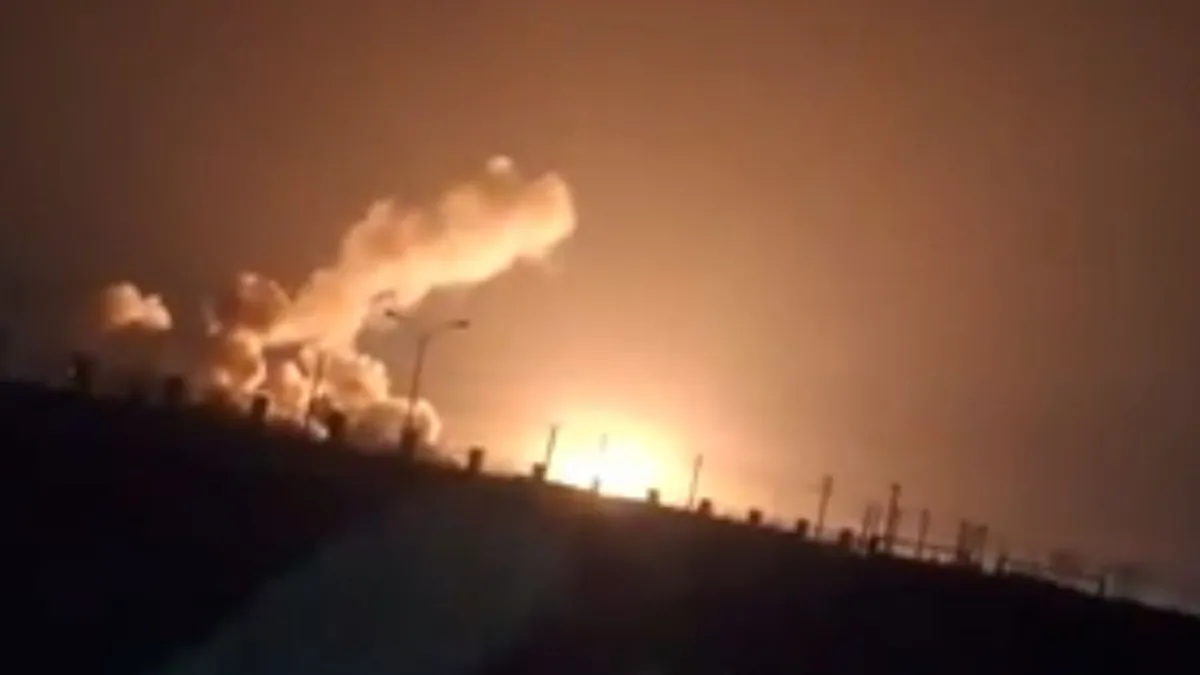
The temporary peace in West Asia has shattered completely. The fragile interim ceasefire agreement in the Persian Gulf has officially unraveled after a series of high-stakes military strikes turned the region into an active combat zone. According to updates tracking the Iran war live, United States military forces launched a massive, coordinated bombing campaign hitting approximately 90 distinct military targets inside Iran. Within hours, Iran’s Islamic Revolutionary Guard Corps (IRGC) executed swift retaliatory missile and drone strikes directly targeting America’s key regional allies, Bahrain and Kuwait.
As sirens wail across Gulf capitals and international oil markets react to the sudden disruption, this latest flashpoint marks the most dangerous military escalation in the region this year.
The Catalyst: Why the US Launched Fresh Raids
The sudden collapse of the truce began in the strategic waters of the Middle East. According to statements released by U.S. Central Command (CENTCOM), the latest U.S. intervention was a direct response to Iranian forces attacking three merchant vessels and commercial shipping containers off the coast of Oman in the Strait of Hormuz.
Declaring that the maritime attacks signaled an end to diplomatic patience, the U.S. military received orders to hit back with overwhelming force.
U.S. Central Command Statement: “U.S. forces completed an additional round of strikes against Iran to further degrade their ability to attack commercial shipping and innocent civilian mariners in the Strait of Hormuz.”
The U.S. air campaign systematically hammered 90 strategic assets inside Iranian territory, focusing heavily on:
- Air defense radar networks
- Underground drone launch pads and assembly facilities
- Missile storage warehouses and ballistic production facilities
- Port infrastructure used to disrupt global shipping channels
Tehran Hits Back: Missiles Target Bahrain and Kuwait
True to its defensive doctrine of asymmetric warfare, Tehran chose not to absorb the blow in silence. The IRGC instantly claimed responsibility for an expansive ballistic missile and suicide drone offensive directed at neighboring Gulf states that host vital American military assets.
Air Raid Sirens Sound in Manama, Bahrain
In Bahrain, home to the highly strategic headquarters of the United States Navy’s Fifth Fleet, emergency air raid sirens blared at least twice through the early morning hours. Residents reported hearing multiple distant explosions over the capital city of Manama. Military officials confirmed that air defense systems were engaged to neutralize incoming threats targeted directly at bases housing Western personnel.
Read Also: NEET UG Paper Leak Case: Court Extends Judicial Custody of Key Accused; CBI Unravels the Leak Chain
Kuwait Engages Active Air Defenses
Simultaneously, the skies over Kuwait flared to life. The Kuwaiti military confirmed that its automated air defense grids were fully deployed, actively detecting and intercepting multiple waves of incoming hostile drones and low-flying cruise missiles launched from across the Persian Gulf.
The Kuwaiti Foreign Ministry issued a scathing diplomatic rebuke, expressing its “strongest condemnation and denunciation of the repeated, illicit Iranian attacks,” adding that Tehran’s actions systematically undermine all ongoing international de-escalation programs.
                  ┌────────────────────────────────────────┐
                  │   STRAIT OF HORMUZ SECURITY OUTBREAK   │
                  └───────────────────┬────────────────────┘
                                      │
               ┌──────────────────────┴──────────────────────┐
               ▼                                             ▼
┌──────────────────────────────┐              ┌──────────────────────────────┐
│       U.S. AIR CAMPAIGN      │              │    TEHRAN COUNTER-STRIKES    │
├──────────────────────────────┤              ├──────────────────────────────┤
│ • 90 military targets hit    │              │ • Ballistic missiles fired   │
│ • Drone storages destroyed   │              │ • Drones target Kuwait grid  │
│ • Radar sites neutralized    │              │ • Sirens blare in Bahrain    │
└──────────────────────────────┘              └──────────────────────────────┘
“I May Be Gone”: Trump Details Assassination Plots at NATO Summit
As reports regarding the Iran war live conflict dominated international headlines, U.S. President Donald Trump addressed the escalating crisis during a major press conference following the conclusion of the NATO Summit in Ankara, Turkey.
When questioned by reporters on the tarmac of Air Force One regarding active threats against his life, Trump did not hold back. He openly declared that he remains the absolute priority on Tehran’s targeted hit list—a lingering grudge dating back to the 2020 targeted killing of Iranian General Qassem Soleimani.
Donald Trump: “They had leaders, they’re gone. Now they have another set of leaders. They may be gone. And you know what, I may be gone too, because I’m their number one target… I’m number one on the kill list for Iran. But I don’t really care because I’m doing my job.”
The Qatar Jet Controversy
Reporters also pressed Trump on why he chose to depart the NATO summit using an older model of Air Force One rather than a brand-new, modern presidential aircraft recently gifted to the United States by Qatar.
Trump brushed off speculation that security vulnerabilities or active Iranian intelligence tracking played a role in the decision. Instead, he clarified that the new Qatari-gifted aircraft had been routed ahead to various military bases across Europe so that active-duty American soldiers could inspect the plane firsthand.
Read Also: Maharashtra TET Paper Leak Bihar Connection: Assets Worth Crores Traced to Delhi & Patna
Despite the highly volatile atmosphere and fierce rhetoric, Trump claimed he does not believe a long, protracted ground war will break out. “I don’t think it’s going to start again. I think it’s going to go very quickly. When they hit, we hit 10 times harder,” Trump asserted, adding that any extended military operations would be swift, surgical, and designed primarily to ensure that global energy resources remain free to circulate.
Global Impact: Oil Markets and Shipping Channels on Edge
The immediate economic shockwaves of the collapsed ceasefire were felt across global financial desks. With Iran threatening that the Strait of Hormuz will only open under strict “Iranian naval arrangements,” the maritime transit corridor responsible for carrying nearly 20% of the world’s total petroleum liquids is under lockdown.
| Impact Vector | Current Situation | Long-Term Strategic Risk |
| Global Energy Prices | Brent crude futures spiked sharply instantly following the explosions in Bahrain. | Prolonged closure of Hormuz could push global oil prices past record structural highs. |
| Maritime Insurance | Risk premiums for commercial vessels traveling the Persian Gulf have quadrupled overnight. | Commercial cargo fleets may abandon the route entirely, forcing long detours around Africa. |
| Regional Geopolitics | Host nations like Kuwait and Bahrain are dragged directly into active crossfire zones. | Forced polarization of neutral Gulf Arab nations against Tehran, ending local diplomacy. |
Conclusion
The fragile peace process that diplomats fought to protect is effectively dead. With the U.S. showing zero tolerance for shipping disruptions, Donald Trump taking an unyielding stance from the NATO floor, and Tehran expanding its active target zone to include sovereign Gulf nations, the Middle East stands at a historic crossroads. The world watches the Iran war live tickers closely, as the next 48 hours will decide whether this conflict triggers a wider regional war or remains a contained, yet deadly, exchange of tactical fire.
Read Also: Sensex Crashes 1,677 Points as US-Iran Tensions Rise: Why Dalal Street Turned Red Today
Frequently Asked Questions (FAQs)
Why is Iran targeting Bahrain and Kuwait?
Iran is targeting Bahrain and Kuwait because both nations host significant U.S. military logistics networks. Bahrain houses the U.S. Navy’s Fifth Fleet headquarters, while Kuwait maintains critical U.S. military bases. Tehran views these locations as launchpads for Western operations.
Did the U.S. and Iran ceasefire completely fail?
Yes. Following Iranian attacks on merchant ships in the Strait of Hormuz and the subsequent U.S. counter-strikes hitting 90 targets inside Iran, leaders from both sides have indicated that the previous interim ceasefire agreement is officially over.
Why does Trump claim he is on an Iranian “kill list”?
Trump has been a primary target for Iranian state rhetoric since he authorized the drone strike that killed top Iranian military commander Qassem Soleimani in Baghdad back in January 2020. Tehran has repeatedly vowed to seek structural and personal retribution.
Is global oil shipping currently blocked?
The Strait of Hormuz is experiencing extreme transit delays and high-risk security alerts. Iran’s chief negotiators have claimed that the shipping lanes will only function normally under special “Iranian arrangements,” creating severe security concerns for global tankers.
For more information, follow Shabdsanchi‘s social media pages today and stay updated.
- Facebook: shabdsanchi
- Instagram: shabdsanchiofficial
- YouTube: @shabd_sanchi
- Twitter: shabdsanchi