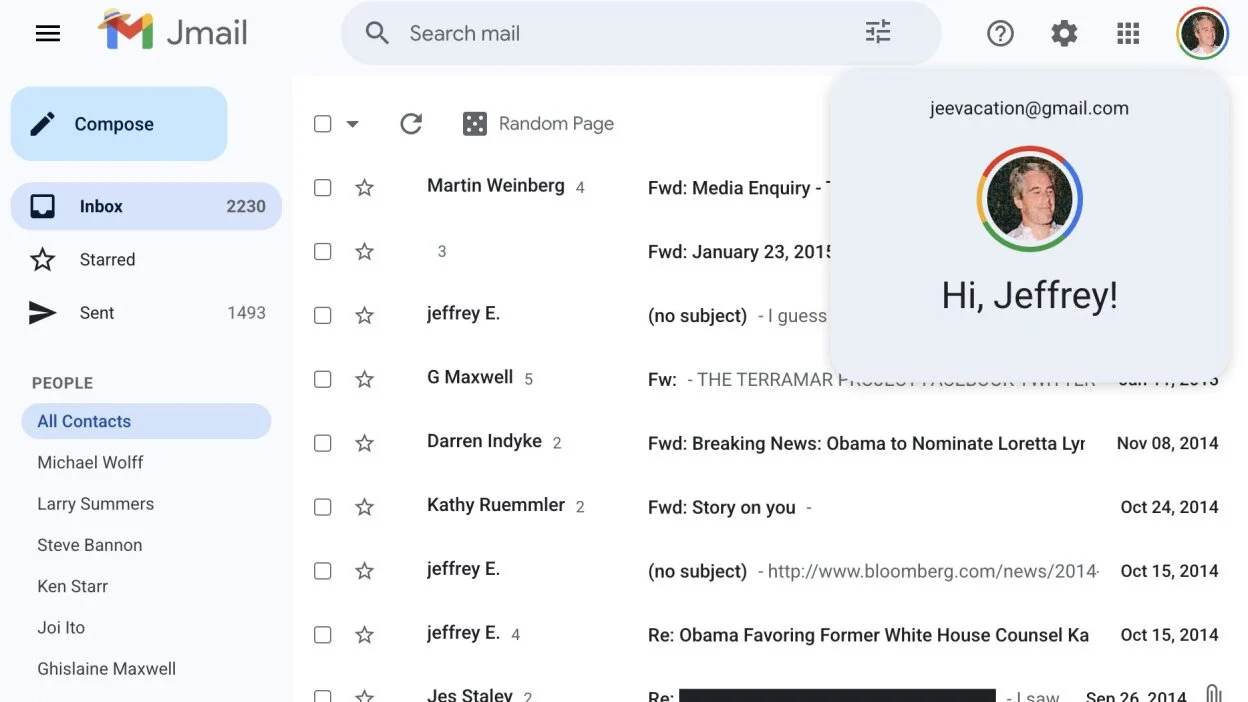
The Department of Justice recently released a massive trove of documents concerning disgraced financier Jeffrey Epstein, totaling over three million pages. To make this overwhelming data accessible, developers have created Jmail, a specialized web tool that mimics the Gmail interface, allowing the public to browse Epstein’s correspondence and flight logs with unprecedented ease.
Understanding the Jmail Interface
The digital landscape has been buzzing since the release of the “Epstein files,” but the sheer volume of material—including 180,000 images and 2,000 videos—posed a significant challenge for researchers and the public. Jmail addresses this by providing a user experience identical to Google’s email platform. The site features a recognizable layout, though with a distinct twist: a small hat perched on the ‘M’ of the logo and Epstein’s own profile picture in the corner.
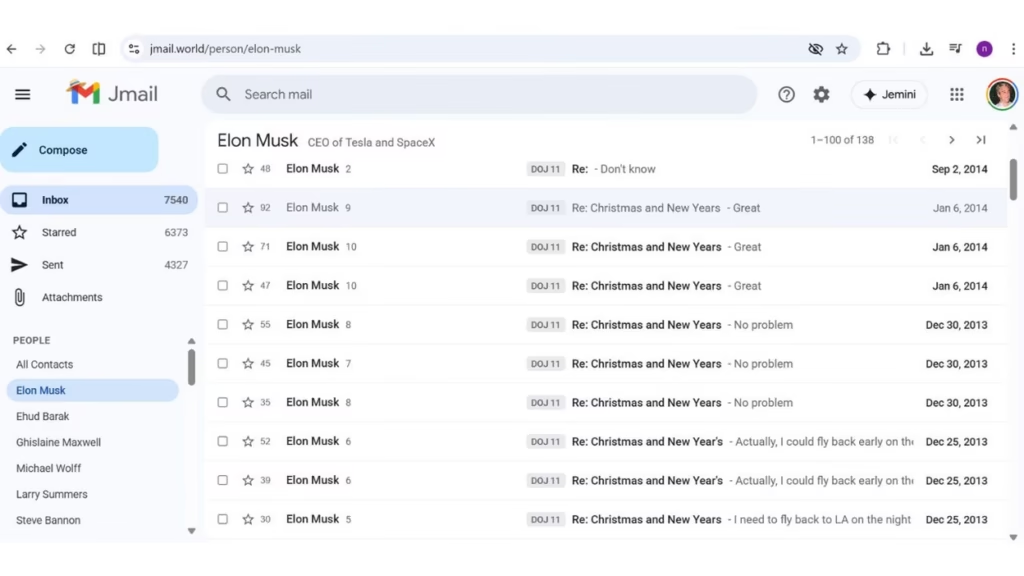
Created by internet artist Riley Walz and developer Luke Igel, the platform aims to humanize raw data. Instead of squinting at poorly scanned, low-quality PDFs, users can now view messages as they would appear in a modern inbox. The sidebar allows for sorting through “Sent” and “Starred” folders, while a dedicated section lists frequent correspondents, including high-profile global figures.
More Than Just Emails: JDrive and JPhotos
While the email simulation is the primary draw, the website extends into a full suite of data-tracking tools. These include:
- JDrive: A repository for millions of pages of legal documents and estate records.
- JPhotos: A gallery containing thousands of images released by the Justice Department.
- JFlights: A dedicated flight-tracking software specifically mapping the movements of Epstein’s private aircraft.
The developers used “Cursor,” an AI-powered code editor, to build the core of the site in a single night. Their goal was to remove the “imagination steps” required to process legal discovery files. By placing the data in a familiar context, the impact of the communication becomes much more immediate for the reader.
High-Profile Names in the Spotlight
The latest document release has reignited public interest due to the mention of several “household names.” Figures like Bill Gates, Elon Musk, and Bill Clinton appear within the logs, though it is important to note that a mention in the files does not necessarily imply legal wrongdoing. However, the ease provided by Jmail has allowed independent journalists and citizens to cross-reference these names against specific dates and flight paths.
Digital Transparency and Ethics
The creation of Jmail represents a new trend in “information activism.” By taking public records that are often buried in difficult-to-navigate government portals and making them “searchable,” the developers have democratized the investigation process. The platform also includes “Jotify,” an audio archive modeled after Spotify, and “Jamazon,” which tracks Epstein’s historical purchase orders.
As the US Justice Department continues to process the estate’s records, tools like these will likely play a crucial role in how the public consumes complex legal evidence. While the interface may seem satirical to some, its function is purely navigational, serving as a bridge between cold legal data and public understanding.
To learn more, follow Shabdsanchi’s social media pages today and stay updated.
- Facebook: shabdsanchi
- Instagram: shabdsanchiofficial
- YouTube: @shabd_sanchi
- Twitter: shabdsanchi