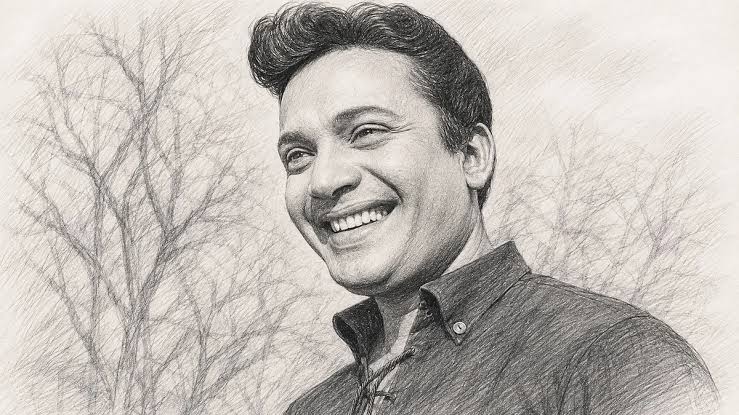
Few stars in world cinema hold a nation’s cultural imagination quite like Mahanayak Uttam Kumar. Decades after his passing, his charismatic screen presence, effortless style, and signature smile continue to captivate audiences across generations. Marking his 100th birth anniversary, Bengal and movie lovers worldwide celebrate a titan whose work transformed the artistic landscape of Bengali popular cinema.
Uttam Kumar was not merely a box-office phenomenon; he became a cultural institution. His ability to blend aspirational stardom with relatable middle-class vulnerability ensured that his appeal never diminished. Understanding Uttam Kumar’s legacy requires examining how an ordinary young clerk defied repeated failures to earn the permanent title of “Mahanayak” (The Great Hero).
The Early Struggle: From Port Clerk to ‘Flop Master General’
The Birth of Arun Kumar Chattopadhyay
Born as Arun Kumar Chattopadhyay on September 3, 1926, in Kolkata, the future superstar grew up in a traditional joint family in Ahiritola. His family maintained an amateur theatre group, Suhrid Samaj, which ignited his passion for performance early in life.
Financial necessity, however, forced him to take a steady day job. Before stepping into the limelight, he worked as a clerk at the Calcutta Port Commissioners‘ office and offered private music lessons to help support his household.
Overcoming Early Box-Office Failures
His journey to stardom was far from immediate. He made his silver screen debut in Nitin Bose’s Drishtidan (1948) under his birth name. This was followed by an unreleased film, Mayador. Trying to break through, he altered his screen name multiple times—appearing as Uttam Chatterjee in Kamona (1949) and Arup Kumar in Maryada (1950)—before adopting the name Uttam Kumar in Sahajatri (1951).
A string of early releases failed disastrously at the box office, leading industry insiders and critics to label him the “Flop Master General”. Film distributors actively avoided signing his projects. Yet, his determination remained unshaken as he systematically refined his voice modulation, posture, and acting technique.
The Rise of a Phenomenon: Basu Paribar and Sharey Chuattor
The turning point arrived in 1952 with Nirmal Dey’s family drama Basu Paribar. The film became a major commercial success, showing audiences a refreshing, naturalistic leading man who could anchor a story with warmth and dignity.
In 1953, Nirmal Dey cast him in the comedy Sharey Chuattor. The film brought Uttam Kumar together with a young actress named Suchitra Sen. Their dynamic on screen sparkled instantly. Audiences responded to their natural warmth and charm, paving the way for one of the most celebrated screen partnerships in film history.
      ┌─────────────────────────────────────────────────────────────┐
      │               THE TRANSFORMATION OF AN ICON                 │
      ├──────────────────────────────┬──────────────────────────────┤
      │ Birth Name                   │ Arun Kumar Chattopadhyay     │
      │ Date of Birth                │ September 3, 1926            │
      │ Initial Screen Identity      │ Flop Master General          │
      │ Breakthrough Film            │ Basu Paribar (1952)          │
      │ Breakthrough Romantic Pair   │ Sharey Chuattor (1953)       │
      │ Ultimate Title Earned        │ Mahanayak (The Great Hero)   │
      └──────────────────────────────┴──────────────────────────────┘
The Magic of Uttam-Suchitra: Cinema’s Most Iconic Romance
Defining Middle-Class Romance on Screen
The screen duo of Uttam Kumar and Suchitra Sen represented the romance and aspirations of post-independence Bengal. Together, they created a cinematic language that balanced traditional family values with modern romantic idealism.
Their partnership hit maximum stride with Agni Pariksha (1954), which ran for an unprecedented 15 consecutive weeks. Uttam Kumar was no longer just an actor; he became the definitive romantic ideal for generations of filmgoers.
Unforgettable Masterpieces
Together, Uttam and Suchitra starred in over 20 timeless classics, including:
- Harano Sur (1957): A romantic drama where Uttam Kumar portrayed an amnesiac businessman, winning widespread critical acclaim.
- Saptapadi (1961): Famous for the iconic motorcycle song “Ei Path Jodi Na Sheshey Hoey”, capturing youthful freedom and devotion.
- Pathy Holo Deri (1957) & Chaowa Pawa (1959): Box-office hits that cemented their status as screen legends.
Beyond Romance: Versatility, Ray Collaborations, and National Acclaim
The Satyajit Ray Connection
While his romantic roles won over the public, Uttam Kumar’s artistic ambition extended far beyond mainstream formula cinema. Master filmmaker Satyajit Ray recognized this depth and wrote the lead role of Nayak (1966) specifically for him. Playing Arindam Mukherjee, a troubled superstar confronting isolation and anxiety during a train journey, Uttam delivered a masterclass in psychological realism.
Ray collaborated with him again in Chiriyakhana (1967), where Uttam played Saradindu Bandyopadhyay’s famed detective, Byomkesh Bakshi, demonstrating his remarkable range as a character actor.
National Recognition: The Bharat Award Victory
At the 15th National Film Awards for work done in 1967, Uttam Kumar became the inaugural recipient of the Best Actor Award (then called the Bharat Award). He won this dual recognition for two contrasting performances:
- As Anthony Firingee in Anthony Firingee (1967), portraying a 19th-century Portuguese folk poet devoted to Bengali culture.
- As Byomkesh Bakshi in Satyajit Ray’s Chiriyakhana (1967).
He also achieved successful crossovers into Hindi cinema with acclaimed films like Amanush (1975) and Anand Ashram (1977).
The Untold Musical Talent: A Voice Beyond Acting
Acting was only one dimension of his musical talents. Gifted with a natural ear for melody, Uttam Kumar sang playback for several of his own films.
In the 1956 film Nabajanma, directed by Debaki Kumar Bose, Uttam Kumar recorded six classical compositions set to music by Nachiketa Ghosh. Tracks like “Kanu Kohe Rai, Kohite Dorai” highlighted his vocal discipline. He also composed music for films like Kaal Tumi Aleya, proving his multifaceted mastery over film craft.
Personal Life, Relationships, and Final Years
Behind the public stardom lay a private life filled with quiet dignity. Uttam Kumar married Gauri Devi, with whom he had a son, Gautam Chattopadhyay. In his later years, he shared his life with actress Supriya Devi, maintaining a partnership that lasted 17 years until his death.
On July 24, 1980, while shooting for Ogo Bodhu Sundari, Uttam Kumar suffered a massive heart attack and passed away at Bellevue Clinic in Kolkata at the age of 53. His sudden death brought the city of Kolkata to a standstill, drawing hundreds of thousands of weeping mourners onto the streets to bid farewell to their hero.
Why the ‘Mahanayak’ Remains Unmatched at 100
At his birth centenary, Uttam Kumar’s influence remains as vital as ever. Modern filmmakers continue to draw inspiration from his techniques, while visual technology and AI projects work to keep his presence alive for new generations.
Uttam Kumar was more than a film star; he captured the soul of Bengali culture. His style, natural charm, and deep artistic dedication set a benchmark for acting that remains unequaled. A century after his birth, the legend of the ‘Mahanayak’ endures—timeless, beloved, and unforgettable.
Frequently Asked Questions (FAQs)
1. Why is Uttam Kumar called “Mahanayak”?
Answer: Uttam Kumar was crowned “Mahanayak” (Great Hero) due to his unmatched popularity, versatile performances, and pioneering impact on Bengali cinema. Across a career spanning over 200 films, he redefined stardom and became a cultural icon whose influence endures long after his death.
2. What was Uttam Kumar’s real name?
Answer: Uttam Kumar’s birth name was Arun Kumar Chattopadhyay. Born in Kolkata on September 3, 1926, he experimented with early screen names like Uttam Chatterjee and Arup Kumar before permanently adopting the name Uttam Kumar for his cinematic career.
3. Which was the first film of Uttam Kumar and Suchitra Sen together?
Answer: The iconic screen pair of Uttam Kumar and Suchitra Sen first appeared together in the 1953 comedy hit Sharey Chuattor, directed by Nirmal Dey. Their chemistry resonated with audiences, starting a iconic cinematic partnership that spanned over two decades.
4. Did Uttam Kumar win a National Film Award?
Answer: Yes, Uttam Kumar won the inaugural National Film Award for Best Actor (then known as the Bharat Award) in 1967. He received the honor for his exceptional performances in two contrasting films: Anthony Firingee and Satyajit Ray’s detective classic Chiriyakhana.
5. Did Uttam Kumar act in Hindi movies?
Answer: Yes, Uttam Kumar starred in several notable Hindi films. His performance in Shakti Samanta’s Amanush (1975) earned him immense popular acclaim across India. He also appeared in Hindi classics like Anand Ashram (1977), Chhoti Si Mulaqat (1967), and Kitaab (1977).
Conclusion
One hundred years after his birth, Mahanayak Uttam Kumar remains the definitive gold standard of Bengali cinema. His journey from a struggling port clerk to an unmatched superstar reflects extraordinary grit, adaptability, and artistic dedication. Whether through his romantic classics with Suchitra Sen, his psychological depth under Satyajit Ray, or his evergreen charm, Uttam Kumar built an enduring legacy. As Kolkata and film lovers worldwide mark his centenary, the Mahanayak’s smile continues to illuminate screens and hearts, proving that true legends never fade.