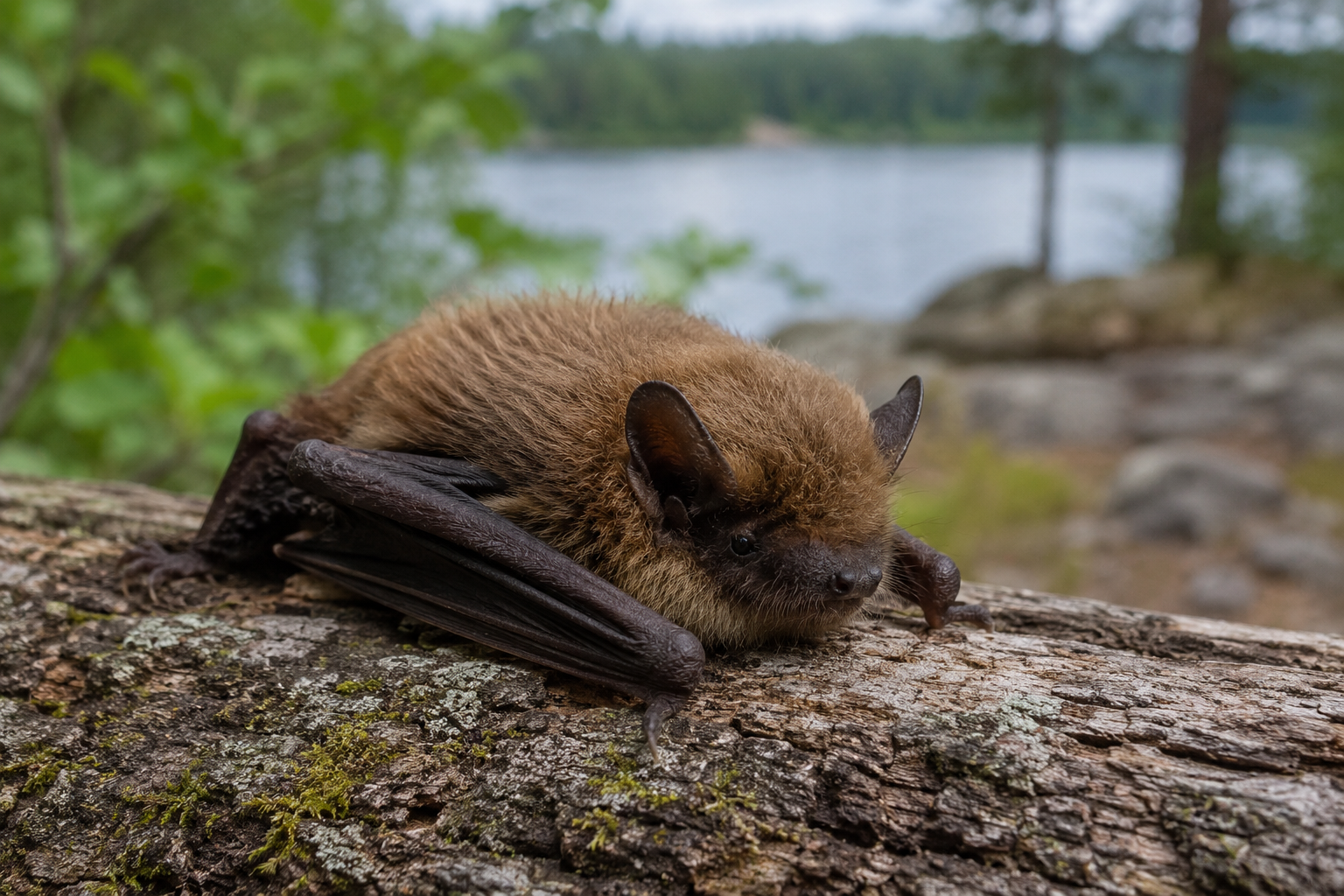
The Invisible Wound: A chilling and deeply heartbreaking medical case report published in the Canadian Medical Association Journal (CMAJ) has sent shockwaves through public health communities. An 11-year-old Canadian boy has died from rabies weeks after waking up to find a bat resting on his face.
The tragedy, which occurred during a family trip to a cottage in northern Ontario in the summer of 2024, highlights a critical, life-saving reality that every homeowner, camper, and vacationer must understand: Any direct physical contact with a bat constitutes a medical emergency, even if there are no visible signs of injury.
The Midnight Encounter: A Danger Unseen
While vacationing in a remote, wooded area of northern Ontario, the previously healthy 11-year-old boy abruptly woke up in the middle of the night. To his horror, a bat was clinging directly to his face, resting over his nose and mouth.
The child quickly swatted the animal away. Reacting swiftly, his father managed to trap the bat in a cooking pot and safely released it outdoors.
Because the parents meticulously checked the young boy’s face and found absolutely no scratches, puncture wounds, or visible blood, they assumed no harm had been done. The bat had not exhibited aggressively erratic flight patterns before its capture, leading the family to believe it was simply an accidental outdoor intruder. Reassured by the clean skin, they did not seek immediate medical consultation or rabies post-exposure treatment.
This decision, rooted in a completely logical but dangerously mistaken assumption, would prove catastrophic.
Medical Timeline: The Insidious Progression of Rabies
The human rabies virus variant acts with devastating stealth, slowly migrating through the peripheral nervous system toward the brain stem. In this specific case, the incubation period lasted nearly three weeks before the virus manifested outward signs.
Day 0: The Exposure
Summer 2024
The child wakes up with a bat resting on his nose and mouth. The bat is swatted away and released. No visible wounds are found.
Day 19: Initial Symptoms
19 Days Later
The boy develops localized tingling, sensory numbness, and mild swelling exclusively on the right side of his face, alongside a loss of appetite.
Day 22: First Medical Evaluations
3 Days Post-Symptom
An urgent care clinic notes facial weakness and initially diagnoses the child with Bell’s palsy (a common viral facial paralysis), prescribing oral antivirals.
Day 23: Clinical Escalation
4 Days Post-Symptom
Unable to swallow pills due to severe, painful throat spasms and vomiting, the boy is taken to a regional emergency department. Doctors observe oral ulcers.
Day 24: Rapid Neurological Decline
5 Days Post-Symptom
The boy is rushed back to the hospital with slurred speech, a spiking 39°C fever, intense confusion, and terrifying visual hallucinations. He is intubated.
Day 28: Definitive Diagnosis
9 Days Post-Symptom
Transferred to the pediatric intensive care unit, testing by the Canadian Food Inspection Agency confirms an active bat-variant rabies virus.
Day 41: Life Support Withdrawn
22 Days Post-Symptom
After losing all vital brainstem reflexes due to advanced viral encephalomyelitis, life-sustaining treatment is withdrawn. The child passes away peacefully beside his family.
The Diagnostics Challenge: Why Rabies Mimics Other Illnesses
The clinical team at McMaster Children’s Hospital and the University of Manitoba noted that diagnosing rabies in its early stages is notoriously difficult. Because the virus causes localized nerve irritation, the initial onset of facial numbness and asymmetry heavily mirrors Bell’s palsy or severe cases of herpes gingivostomatitis (a common mouth infection).
By the time the classic signs of rabies emerged—such as hydrophobia (fear of water caused by agonizing, uncontrollable throat spasms when trying to swallow), excessive salivation, and severe autonomic dysfunction—the central nervous system had already sustained irreversible damage.
Medical teams briefly evaluated experimental, highly invasive clinical protocols, including injecting targeted antibody infusions directly into the brain’s ventricles. However, due to the total absence of established clinical efficacy and the child’s incredibly rapid neurological decline, these procedures were bypassed in favor of compassionate palliative care.
Misconceptions vs. Realities of Bat Rabies
This case marks the first locally acquired human rabies infection within the province of Ontario since 1967. While exceptionally rare—with only 28 recorded human cases across Canada since 1924—it highlights a profound public knowledge deficit regarding how wildlife viruses spread.
| Common Misconception | Medical Reality |
| “If there is no bite mark or blood, I am safe.” | Bat teeth are microscopic and needle-thin. Bites can easily occur during sleep without breaking enough outer dermis to leave a visible scar or cause noticeable pain. |
| “Rabies is only transmitted through deep puncture bites.” | The virus is highly concentrated in animal saliva. If an animal’s wet nose or mouth touches open cuts, mucous membranes (eyes, nose, mouth), or cracked skin, transmission can occur. |
| “A rabid bat will always act crazy or foam at the mouth.” | While some infected bats lose the ability to fly or appear active during the daytime, many display completely passive or normal behavior right up until their death. |
Critical Warning from Dr. Brian Hummel:
“Any time a bat has directly touched human skin, that is an immediate, non-negotiable indication to contact public health authorities. Early recognition and timely administration of PEP remains our absolute only defense.”
Lifesaving Protocols: What to Do After Bat Exposure
Rabies holds a near-100% fatality rate once clinical neurological symptoms present themselves. Conversely, it has a virtually 100% success rate of prevention if treated immediately using Post-Exposure Prophylaxis (PEP).
If you find a bat inside your home, sleeping quarters, or tent, execute the following emergency workflow immediately:
1.Do Not Relase the Animal: Immediate Capture.
If safely possible, isolate the bat in the room or capture it using a thick container (like a pot or box) while wearing heavy, puncture-resistant gloves. Public health departments must test the specific animal to definitively rule out the virus.
2.Wash the Contact Area thoroughly: First Aid.
Immediately scrub any suspected skin or contact zones with copious amounts of soap and running water for at least 15 minutes. This mechanical washing drastically reduces viral load.
3.Contact Emergency Medical Services: Public Health Consultation.
Go directly to an emergency department or contact local public health units. Clearly state that direct physical contact or unsupervised room exposure occurred.
4.Receive the PEP Protocol: Immunization Series.
Undergo the Post-Exposure Prophylaxis routine. This consists of a prompt dose of Human Rabies Immune Globulin (HRIG) administered directly around the contact site to provide immediate antibodies, followed by a 4-dose series of the modern rabies vaccine over a 14-day window.
Modern rabies vaccinations are no longer delivered via painful abdominal injections; they are standard, highly refined intramuscular shots given comfortably in the deltoid arm muscle. Modern formulations show absolutely no causal link to severe neurological conditions like Guillain-Barré syndrome.
FAQ: Frequently Asked Questions
What should I do if I wake up and find a bat in my bedroom, but don’t think it touched me?
According to public health guidelines, if a bat is discovered in a room with a sleeping child, an intoxicated individual, or anyone unable to give a reliable account of physical contact, it must be treated as a potential exposure. Seek immediate medical advice.
Can you survive rabies once symptoms start?
Symptomatic rabies is universally fatal. Globally, there are fewer than 35 documented cases of human survival after symptom onset, and almost all survivors suffered profound, irreversible, long-term brain damage. Prevention via PEP is the only cure.
Do all bats carry rabies?
No. Statistically, less than 1% of bats in the wild carry the rabies virus. However, because bats are the primary reservoir for the virus in North America, any bat that allows close proximity to humans or enters homes is considered high-risk.
How long do you have to get the rabies shot after being bit?
While the vaccine should ideally be administered within 24 to 48 hours of exposure, PEP remains highly effective at any point during the incubation period before symptoms officially develop. Never delay treatment.
Conclusion: Turning Tragedy into Public Awareness
The tragic loss of this 11-year-old boy is a reminders of nature’s invisible dangers. By choosing to share their devastating loss through the Canadian Medical Association Journal, the boy’s family hopes to ensure that no other parent makes the same mistake.
If you are traveling to cottages, cabins, or heavily forested areas this season, ensure your living spaces are properly sealed, inspect window screens, and remember: where bats are concerned, what you cannot see can be fatal. When in doubt, always get the shot.
For more information, follow Shabdsanchi‘s social media pages today and stay updated.
- Facebook: shabdsanchi
- Instagram: shabdsanchiofficial
- YouTube: @shabd_sanchi
- Twitter: shabdsanchi