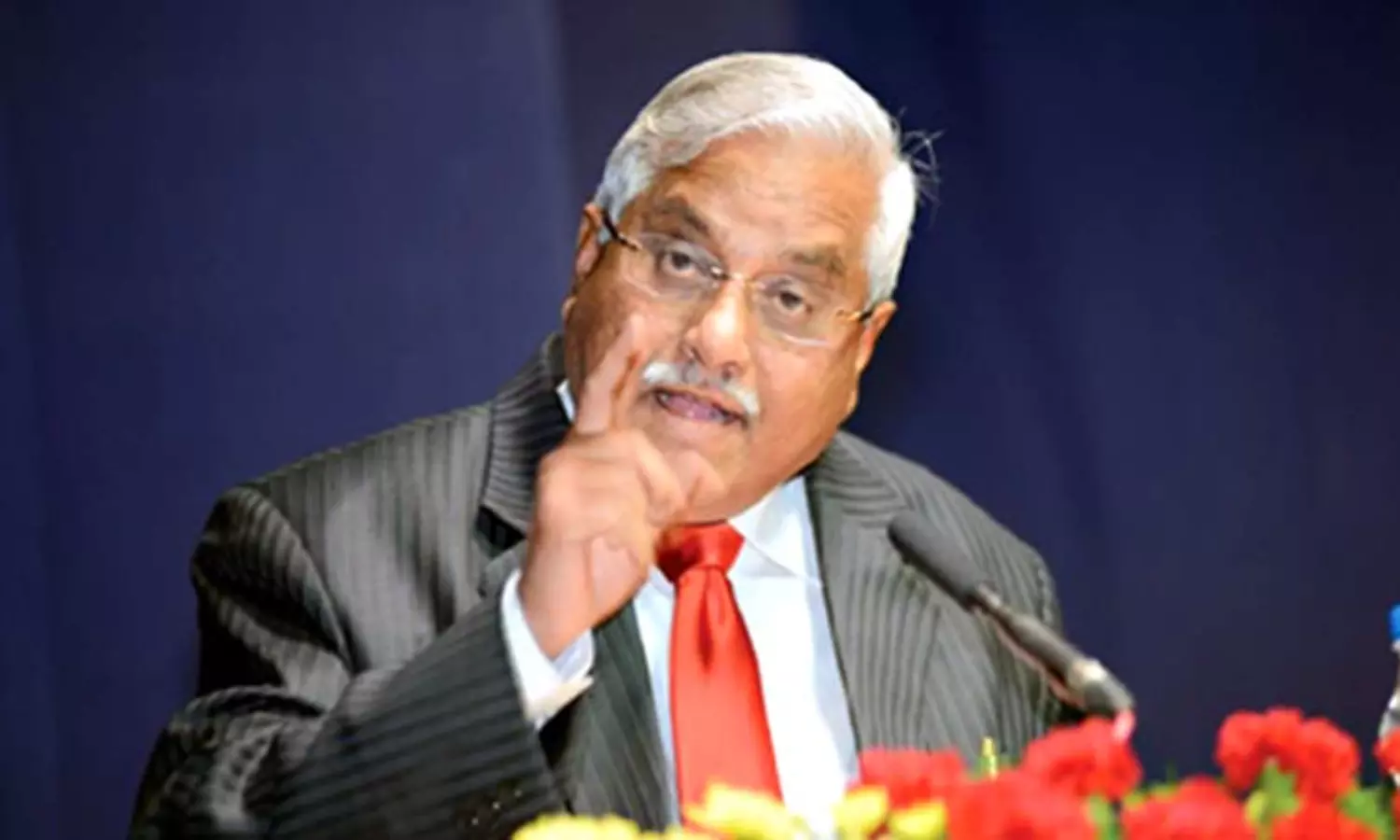
BENGALURU — Former Supreme Court judge Justice V. Gopala Gowda has demanded that the apex court suo motu recall its May 2026 judgment upholding the Election Commission of India’s (ECI) Special Intensive Revision (SIR) of electoral rolls. Speaking to LiveLaw and addressing a public gathering at Freedom Park, Justice Gowda asserted that the poll body committed a “fraud on the court” by suppressing critical internal dissent.
“Illegality and unconstitutionality are writ large on the SIR judgment. The deliberate suppression of facts amounts to playing fraud on the Court, and fraud vitiates the very basis of a judgment.” — Justice (Retd) V. Gopala Gowda
ECI Concealed Internal Dissent From Supreme Court, Says Former Judge
Justice Gowda’s standard-setting challenge focuses on the procedural integrity of the Election Commission of India under Article 324 of the Constitution. He cited recent investigative reporting by The Indian Express, which revealed that key directives regarding the Special Intensive Revision were unilaterally pushed through by the Chief Election Commissioner (CEC) despite explicit objections from two sitting Election Commissioners.
According to Justice Gowda, the ECI intentionally concealed these internal fractures from the Supreme Court during the original hearings. Had the court been aware that the decision lacked the concurrence of the Full Commission, the judicial outcome might have been fundamentally different.
▼
▼
▼
He argued that the ECI’s September 26 press release tacitly acknowledged the split within the commission while misleadingly projecting that modifications to Form 6 had received explicit judicial approval—a claim recently dispelled by the Chief Justice of India.
Defending Justice Ujjal Bhuyan Amid Judicial Friction
Addressing the heated constitutional debate surrounding sitting judges speaking on public matters, Justice Gowda mounted a robust defense of Justice Ujjal Bhuyan. Justice Bhuyan had drawn sharp criticism from former Chief Justice of India B.R. Gavai after making public observations regarding the risk of mass voter disenfranchisement under the SIR framework.
Justice Gowda rejected allegations of judicial impropriety against Justice Bhuyan, questioning the locus standi of critics:
- Constitutional Privilege: Judges possess the fundamental duty and right to address students and citizens on core constitutional guarantees.
- Precedent of Public Commentary: Justice Gowda pointed out that former CJI Gavai, while serving on the Bombay High Court, had publicly commented on the sensitive Judge Loya case while the matter was sub judice in the Supreme Court.
- Silence on Institutional Integrity: He questioned why critics remained silent on reports indicating that major decisions affecting millions of voters were executed without majority consensus inside the ECI.
Public Protest at Freedom Park Warns of Democratic Erosion
Participating in a demonstration organized by Citizens for Justice and Peace (CJP) at Bengaluru’s Freedom Park, Justice Gowda warned that the current execution of the SIR threatens the foundational structure of Indian democracy.
He urged the Supreme Court to immediately exercise its inherent powers under Article 137 to review and recall the May 2026 verdict, demand all internal decision-making files from the Election Commission, and verify whether procedural mandates were breached.
| Key Issue | Justice Gowda’s Legal Position | Implicated Authority |
|---|---|---|
| May 2026 SIR Ruling | Unconstitutional, illegal, and secured via fraud | Supreme Court Bench |
| ECI Internal Process | Directives executed without Full Commission consensus | Chief Election Commissioner |
| Modified Form 6 | ECI falsely claimed Supreme Court endorsement | Election Commission of India |
| Free Speech of Judges | Sitting judges can comment on constitutional rights | Supreme Court Judiciary |
Frequently Asked Questions (FAQs)
Why is Justice V. Gopala Gowda demanding a recall of the Supreme Court’s May 2026 SIR judgment?
Justice Gopala Gowda states the Election Commission misled the Supreme Court by suppressing the fact that key Special Intensive Revision (SIR) decisions were taken unilaterally without the approval of the Full Commission.
What is the Election Commission’s Special Intensive Revision (SIR)?
The Special Intensive Revision (SIR) is an intensive exercise undertaken by the Election Commission of India to verify and update electoral rolls, which critics allege has led to non-transparent voter deletions.
What did investigative reports reveal regarding internal ECI decisions?
Reports revealed that two Election Commissioners had formally objected to specific procedures in the SIR process, but these objections were bypassed by the Chief Election Commissioner.
How did Justice Gowda defend Justice Ujjal Bhuyan against former CJI B.R. Gavai’s criticism?
Justice Gowda affirmed that sitting judges have the constitutional right to discuss fundamental rights and voter disenfranchisement with law students, citing historical instances where other judges commented on ongoing matters.
What legal action is Justice Gowda urging the Supreme Court to take?
He is calling on the Supreme Court to suo motu recall its May 2026 judgment, summon all internal ECI files, and examine whether statutory majority concurrence was obtained.
Conclusion & Future Implications
The demand by a retired Supreme Court jurist to recall a major constitutional verdict highlights escalating institutional tensions between the judiciary and the Election Commission of India. If the Supreme Court chooses to act suo motu or entertain fresh petitions based on the non-disclosure of internal ECI dissent, it could establish a monumental precedent regarding the standard of candor administrative bodies owe to constitutional courts. In the long term, this controversy reinforces the urgent need for statutory transparency within multi-member constitutional bodies to ensure that internal dissent is neither suppressed in administrative execution nor hidden during judicial scrutiny.

Manish Kumar began his professional journey in digital marketing and performance marketing, and currently works as a Digital Marketing Excutive and SEO expert. With over 3 years of professional experience, he handles both strategy and execution. Currently, he manages digital marketing and performance marketing at ‘Shabd Sanchi’ (shabdsanchi.com).