Escalating geopolitical tensions in West Asia have triggered severe global energy disruptions. In response, the central government has rolled out significant measures to ensure fuel price relief in India. These strategic duty cuts aim to protect domestic consumers from sudden price spikes caused by the Strait of Hormuz blockade.
Massive Excise Duty Cuts on Petrol and Diesel
To mitigate the impact of the global energy shock, the government slashed excise duties on Friday. Petrol and diesel saw a drastic reduction of Rs 10 per litre. Consequently, the central duty on petrol has dropped to just Rs 3 per litre. Meanwhile, the excise duty on diesel has been completely eliminated, bringing it down to zero.
Export Restrictions and Windfall Taxes
Policymakers are strictly prioritizing domestic availability over international trade profits. A windfall tax of Rs 21.5 per litre has been imposed on the export of diesel. This aggressive fiscal move heavily discourages oil refiners from selling fuel abroad. It ensures that domestic supply remains robust, contributing directly to fuel price relief in India during this volatile period.
Read Also: Petrol and Diesel Prices Today: Rates Unchanged in Metros Amid Global Crisis
Commercial LPG Allocation Reform
Beyond liquid motor fuels, the government has rapidly restructured cooking gas distribution. The allocation for commercial LPG has been increased to 70 percent. This enhanced quota includes a 10 percent reform-based allocation. Officials state that this step will provide substantial relief to industrial and commercial operations. It helps domestic factories maintain production without facing crippling energy overheads.
Navigating the West Asia Energy Crisis
The root cause of the current market instability is the escalating US-Israel war on Iran. This severe conflict has led to a Tehran-imposed blockade on the critical Strait of Hormuz. Historically, a fifth of the world’s crude oil and gas supply passes through this narrow waterway. That translates to roughly 20 to 25 million barrels per day suddenly facing transit risks.
India’s Strategic Supply Chain Adjustments
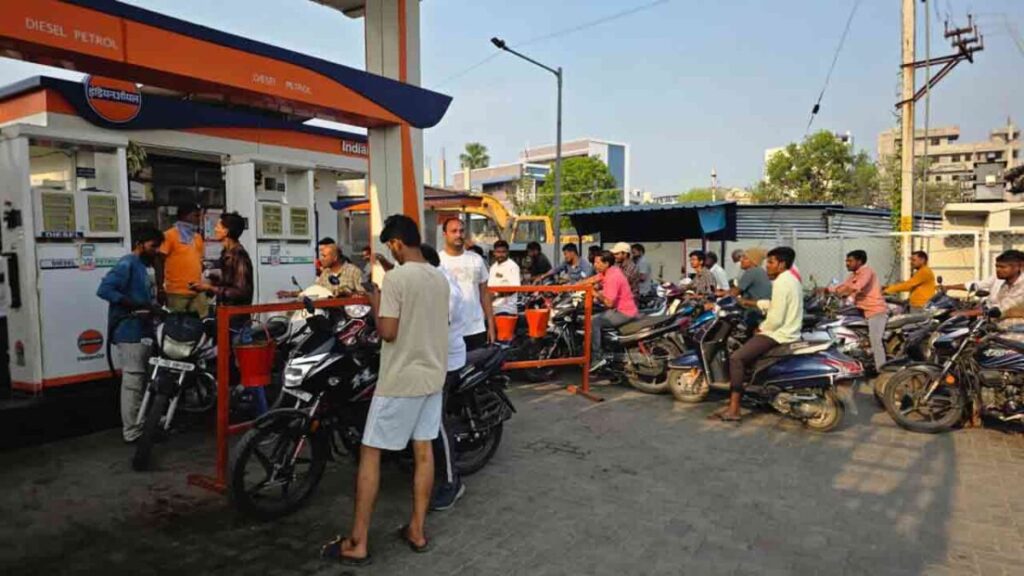
Before the current hostilities broke out, India sourced 12 to 15 percent of its oil directly through the Strait of Hormuz. The blockade naturally threatened to derail the nation’s energy security. However, proactive diplomatic and economic maneuvers have kept supply chains highly functional. The government quickly diversified its crude oil sources to bypass the blocked regional routes.
Read Also: Indian stock market today: Sensex crashes 1,000 points, Nifty falls below 23,000 amid US-Iran war
Government Assurance on Consumer Protection
Minister of State for Youth Affairs and Sports, Raksha Nikhil Khadse, emphasized the administration’s absolute commitment to ordinary citizens. Speaking at an ASSOCHAM event on ‘Women Leading India’s Growth Story’ in New Delhi, she highlighted the prompt economic interventions. “Whatever has been decided today, I think it is a good relief for all the consumers of the country,” Khadse noted on Friday.
Commitment to Uninterrupted Supply Lines
Khadse readily acknowledged that the gulf war has created a highly challenging global environment. However, she reassured the public that domestic supply lines for essential fuels remain entirely secure. Efforts are actively ongoing to maintain adequate stocks of diesel, petrol, and cooking gas across all states. The primary objective is to ensure that ordinary citizens do not bear the brunt of international military conflicts.
Managing Political and Economic Headwinds
While opposition parties have voiced sharp concerns regarding the potential economic fallout, government representatives maintain that the situation is firmly under control. Khadse dismissed some of the recent criticism as purely political rhetoric. She reiterated that compared to many other developing nations, India remains in a relatively stable and highly secure economic position.
Impact on Logistics and Freight Costs
The total elimination of excise duty on diesel is a monumental decision for the transport sector. Diesel remains the primary fuel for trucks, freight trains, and agricultural machinery across the subcontinent. By reducing the cost of this vital fuel, the government directly lowers the operational expenses for major logistics companies. This reduction in freight costs naturally prevents a cascading price rise in everyday essential commodities.
Read Also: Petrol Price Hike in India: Rates Jump Over ₹5, Cross ₹100 in Major Cities
Food Security Complements Energy Stability
Economic stability is not limited solely to the energy and logistics sectors. At the same ASSOCHAM event, officials extensively discussed the nation’s agricultural resilience. Sumitra Balmik, Member of the Standing Committee on Consumer Affairs, Food & Public Distribution, highlighted India’s robust food production capabilities. She confirmed that the country remains entirely self-sufficient in terms of strategic grain reserves.
To learn more, follow Shabdsanchi’s social media pages today and stay updated.
- Facebook: shabdsanchi
- Instagram: shabdsanchiofficial
- YouTube: @shabd_sanchi
- Twitter: shabdsanchi