Global markets are witnessing extreme volatility following a massive crude oil price surge. Escalating geopolitical tensions in the Middle East have pushed Brent crude up by over 25 percent. Consequently, the Indian stock market experienced a sharp decline today, with paint manufacturers and oil marketing companies taking the hardest hit.
The Geopolitical Trigger Behind the Spike
The global energy market is experiencing its most severe shock since mid-2022. Oil prices jumped significantly after major producers announced supply cuts. However, the primary catalyst for this unprecedented crude oil price surge is the rapidly deteriorating situation in West Asia.
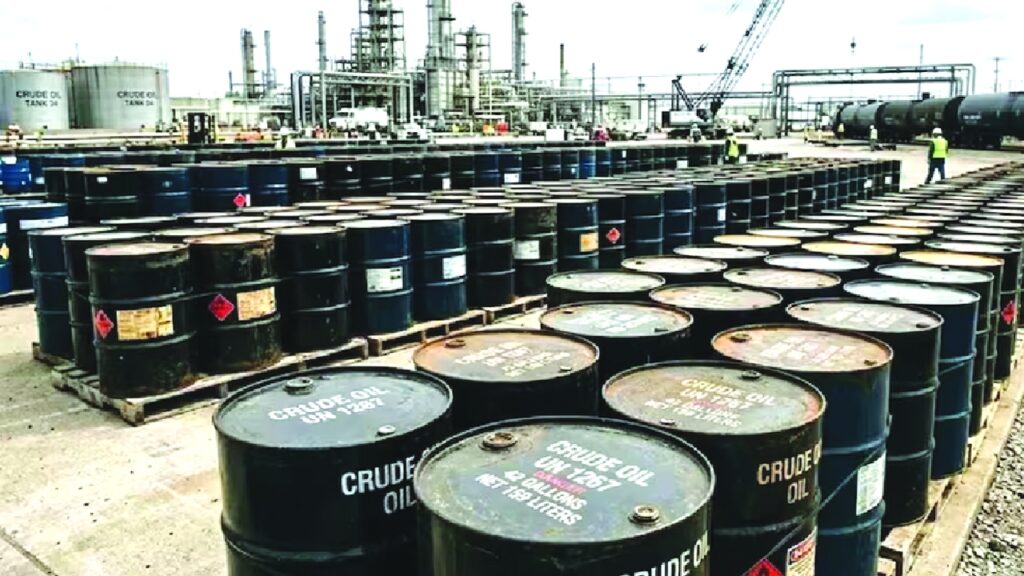
Recent military actions involving the US, Israel, and Iran have heightened market anxiety. Following strikes on Iran late last month, retaliatory attacks targeting military bases across several Gulf countries—including the UAE, Bahrain, Kuwait, Jordan, and Saudi Arabia—have raised severe concerns over shipping disruptions in crucial maritime choke points.
Brent and WTI Hit Multi-Year Highs
The conflict’s expansion has sent shockwaves through commodity exchanges. Brent futures skyrocketed by $24.96, or 27 percent, reaching $117.65 per barrel. Similarly, the US West Texas Intermediate (WTI) increased by $25.72, or 28.3 percent, to settle at $116.62. Both benchmarks are currently on track for their largest single-day gains in recent history.
Earlier in the trading session, WTI surged 31.4 percent to a high of $119.48 a barrel. Brent also mirrored this aggressive upward trajectory, rising as much as 29 percent to touch $119.50 a barrel. This massive single-day rally follows a previous week where Brent had already climbed 27 percent and WTI by 35.6 percent.
Sensex and Nifty Witness a Bloodbath
The ripple effects of the soaring energy costs immediately struck Dalal Street. The 30-share BSE Sensex crashed by a staggering 2,494.35 points, or 3.16 percent, to 76,424.55 during morning trade. While the index saw a mild recovery later in the day, the overall sentiment remains deeply bearish.

The broader 50-share NSE Nifty50 was not spared either. It tumbled 752.65 points, equating to a 3 percent drop, settling at 23,697.80. Foreign Institutional Investors (FIIs) aggressively pulled out funds, fearing that India’s macroeconomic stability could be severely compromised by the rising energy import bills.
OMC Stocks Tumble Under Margin Pressures
Oil Marketing Companies (OMCs) were among the worst performers on the bourses today. Shares of Hindustan Petroleum Corporation Ltd (HPCL) tanked by 8.67 percent. Bharat Petroleum Corporation Ltd (BPCL) dropped 8.43 percent, and Indian Oil Corporation (IOCL) declined by 7.29 percent on the BSE.
The massive sell-off in OMC stocks is driven by fundamental economic fears. These companies import crude oil at international rates to refine and sell domestically. When global crude prices spike suddenly, OMCs often struggle to pass the increased costs onto consumers immediately. This dynamic severely squeezes their marketing and refining margins, leading to lowered profitability outlooks.
Paint Sector Bleeds Due to Raw Material Costs
Alongside the energy sector, paint manufacturers faced heavy investor dumping. Asian Paints fell by 5.12 percent, Indigo Paints dropped 4.83 percent, Berger Paints lost 4.80 percent, and Kansai Nerolac Paints declined by 4.72 percent. On the NSE, Asian Paints shares registered a decline of over 5 percent.
The paint industry relies heavily on crude oil derivatives for its raw materials. Solvents, resins, and titanium dioxide—essential components for manufacturing paint—are directly linked to petroleum prices. Consequently, a sharp rise in crude oil instantly inflates their input costs, threatening to erode their gross profit margins in the upcoming quarters.
Indian Rupee Plummets to Record Low
The equity market crash was accompanied by a severe depreciation of the local currency. The Indian Rupee plummeted 46 paise to approach its all-time intraday low of 92.28 against the US dollar in early trade. This drop reflects the intense dollar demand from oil importers who now need more greenbacks to purchase the same amount of crude.
At the interbank foreign exchange, the local unit opened weak at 92.22 before slipping further. It had previously hit an all-time intra-day low of 92.35 earlier this month. The dollar index, which gauges the greenback’s strength against a basket of six major currencies, was trading 0.66 percent higher at 99.64, adding further pressure on emerging market currencies.
What Lies Ahead for the Indian Economy
Analysts are sounding the alarm over the sustained surge in energy prices. India imports over 80 percent of its crude oil requirements. Therefore, elevated oil prices directly translate to a wider current account deficit and higher imported inflation.
“The rupee will remain vulnerable to the rising oil prices, which have risen by more than 28 per cent since the last closure on Friday. Asian currencies were also lower on Monday,” stated Anil Kumar Bhansali, Head of Treasury and Executive Director at Finrex Treasury Advisors LLP. He further warned that the currency might touch the 93.00 mark if oil sustains above USD 100 in the coming trading sessions.
Higher fuel costs will eventually cascade into the transportation and logistics sectors. This will likely increase the prices of daily essentials and fast-moving consumer goods (FMCG). Consequently, near-term market sentiment remains deeply under pressure as investors brace for potential macroeconomic strain and a prolonged period of inflation.
To learn more, follow Shabdsanchi’s social media pages today and stay updated.
- Facebook: shabdsanchi
- Instagram: shabdsanchiofficial
- YouTube: @shabd_sanchi
- Twitter: shabdsanchi