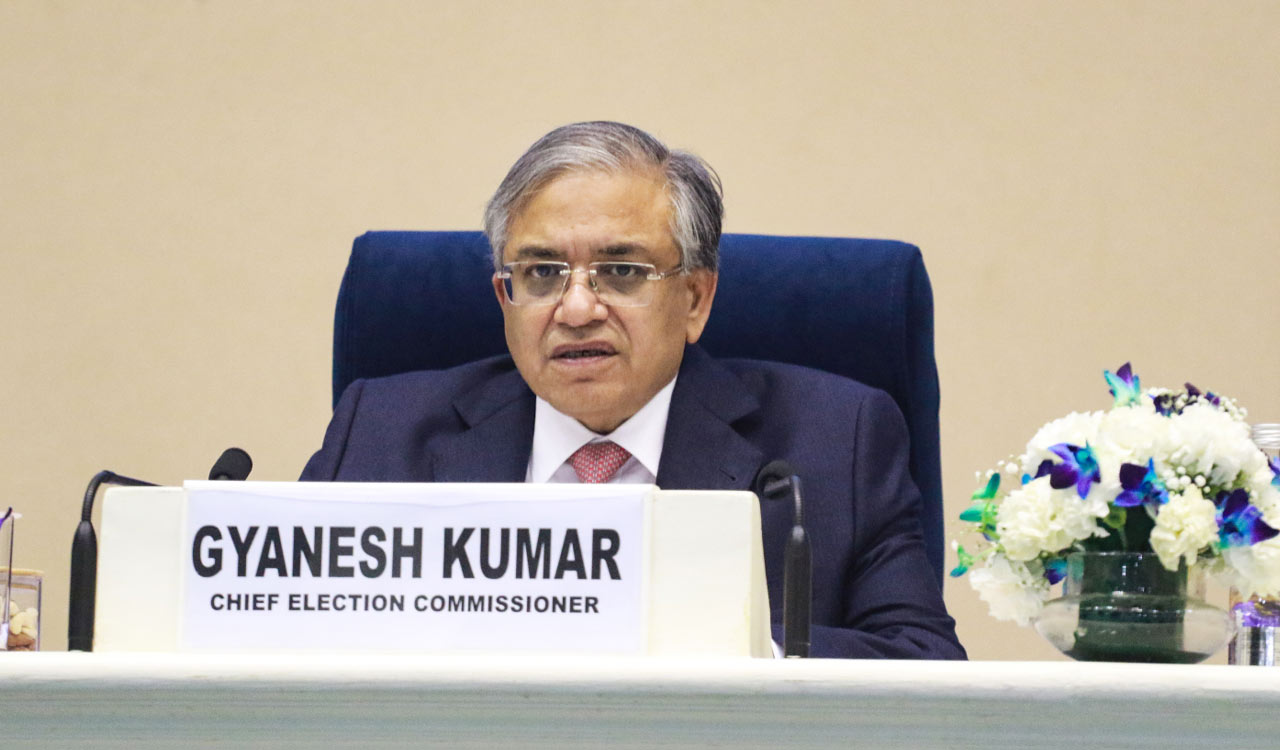
A Supreme Court advocate on Thursday, September 24, 2026, officially sought statutory consent from the Attorney General of India to initiate criminal contempt proceedings against Chief Election Commissioner (CEC) Gyanesh Kumar. The legal motion follows explosive media disclosures detailing an unprecedented operational breakdown within the Election Commission of India (ECI).
Advocate Brajesh Singh submitted the formal request after reporting revealed that fellow Election Commissioners Sukhbir Singh Sandhu and Vivek Joshi formally registered written dissent at least 14 times over the last 10 months against decisions executed by the CEC without panel concurrence.
“Bypassing fellow Commissioners to secretly issue public dictates under the banner of ‘full Commission’ constitutes willful defiance of the law declared by the Supreme Court under Article 141,” Advocate Brajesh Singh stated in his submission.
The controversy strikes at the foundational structure of India’s autonomous election management body, raising urgent constitutional questions regarding institutional governance, panel authority, and compliance with judicial mandates.
Allegations of Unilateral Governance and Structural Subversion
The core of the legal application centers on accusations that CEC Gyanesh Kumar systematically bypassed the constitutional requirement for multi-member consensus. The petition points to sweeping operational changes executed unilaterally under the pretense of full Commission authorization.
Among the contested measures flagged by Election Commissioners Sukhbir Singh Sandhu and Vivek Joshi are major changes to voter registration software, modifications to Form 6, and unauthorized adjustments during the Special Intensive Revision process.
“The Commissioners flagged numerous policy actions, including sweeping alterations to voter registration software, changes to Form 6, and the deletion/restoration of voter names under the Special Intensive Revision process as being ‘unauthorised, illegal’, and executed entirely without their knowledge or the approval of the full Commission,” the submission alleged.
These actions allegedly altered key operational workflows without formal approval, input, or prior knowledge from the remaining panel members.
The Legal Foundation: Supreme Court Precedents and Article 141
The petition contends that the unilateral actions taken by CEC Gyanesh Kumar directly breach established jurisprudence laid down by the Supreme Court of India. Under Article 141 of the Constitution, law declared by the apex court is binding on all authorities within the territory of India.
The submission explicitly cites landmark judgments, including T.N. Seshan versus Union of India and Anoop Baranwal versus Union of India, which established that the Election Commission of India must function strictly as a consensus-driven multi-member body.
In constitutional framework terms, the Chief Election Commissioner holds the position of primus inter pares—first among equals—rather than an absolute decision-maker with superior statutory powers over fellow Commissioners.
“Reducing a constitutionally-mandated multi-member independent panel into a one-man autocracy, the CEC has scandalised and lowered the authority of the institution, directly threatening the free and fair elections doctrine,” Mr. Singh argued.
Statutory Process: The Role of the Attorney General
Before a criminal contempt petition against a constitutional authority can be formally entertained by the Supreme Court of India, statutory requirements mandate explicit approval. Under Section 15 of the Contempt of Courts Act, 1971, prior written consent from the Attorney General of India is mandatory.
| Legal Requirement | Details & Context |
|---|---|
| Statutory Authority | Attorney General of India |
| Action Requested | Grant of consent to file Criminal Contempt Petition |
| Target Officer | Chief Election Commissioner (CEC) Gyanesh Kumar |
| Primary Grounds | Willful breach of Supreme Court mandates under Article 141 |
| Key Precedents Cited | T.N. Seshan v. Union of India; Anoop Baranwal v. Union of India |
The Attorney General must now evaluate whether the alleged procedural bypasses and ignored dissent notes constitute prima facie criminal contempt by scandalizing or lowering the authority of a constitutional institution.
Institutional Background: The 14 Dissent Notes
Reports regarding internal friction within the Election Commission of India indicate that objections were not isolated events, but a continuous pattern spanning 10 months.
The key areas of reported internal conflict within the ECI include:
- Voter Registration Software Updates: Core changes implemented in election administrative databases without full panel review.
- Form 6 Alterations: Unilateral modification of statutory forms used for the inclusion of names in electoral rolls.
- Electoral Roll Revisions: Unapproved additions, deletions, and restorations of voter entries under the Special Intensive Revision process.
- Public Communication Directives: Issuance of official dictates under the banner of the ‘full Commission’ despite active objections from sitting Commissioners.
The continuous issuance of written objections by Election Commissioners Sukhbir Singh Sandhu and Vivek Joshi underlines a prolonged operational rift at the highest levels of India’s electoral management body.
Conclusion: Long-Term Institutional Implications
The request for criminal contempt consent against CEC Gyanesh Kumar marks a significant moment for institutional governance within the Election Commission of India[cite: 2]. If the Attorney General grants statutory consent, the resulting Supreme Court proceedings could establish clear, strict boundaries regarding the exercise of executive power within multi-member constitutional bodies.
Beyond the immediate legal outcome, the EC dissent row highlights an urgent need for structural clarity regarding consensus execution, policy approvals, and internal administrative transparency. How the apex court and constitutional authorities navigate this crisis will permanently shape public trust in India’s election machinery and re-affirm the constitutional requirement that decisions must remain collective, transparent, and legally sound.
Frequently Asked Questions (FAQs)
What is the EC dissent row involving CEC Gyanesh Kumar?
The EC dissent row involves allegations that Chief Election Commissioner Gyanesh Kumar took major administrative and policy decisions unilaterally without obtaining the required consensus from Election Commissioners Sukhbir Singh Sandhu and Vivek Joshi, who formally filed written objections 14 times in 10 months.
Why is criminal contempt action being sought against CEC Gyanesh Kumar?
Criminal contempt action is being sought because Advocate Brajesh Singh alleges that CEC Gyanesh Kumar willfully violated Supreme Court rulings in T.N. Seshan and Anoop Baranwal cases, which mandate multi-member consensus under Article 141 of the Constitution.
What specific policy decisions were made without full ECI approval?
The contested actions include sweeping modifications to voter registration software, administrative changes to electoral Form 6, and the deletion or restoration of voter entries during the Special Intensive Revision process executed without full panel knowledge or authorization.
Why is the Attorney General’s consent required for contempt proceedings?
Prior written consent from the Attorney General of India is mandatory under Section 15 of the Contempt of Courts Act, 1971, before any private citizen or advocate can file a criminal contempt petition in the Supreme Court against a high constitutional authority.
What is the legal status of the Chief Election Commissioner relative to Election Commissioners?
Under constitutional jurisprudence established by the Supreme Court, the Chief Election Commissioner is primus inter pares (first among equals) and does not possess superior statutory authority over fellow Election Commissioners in policy decision-making.