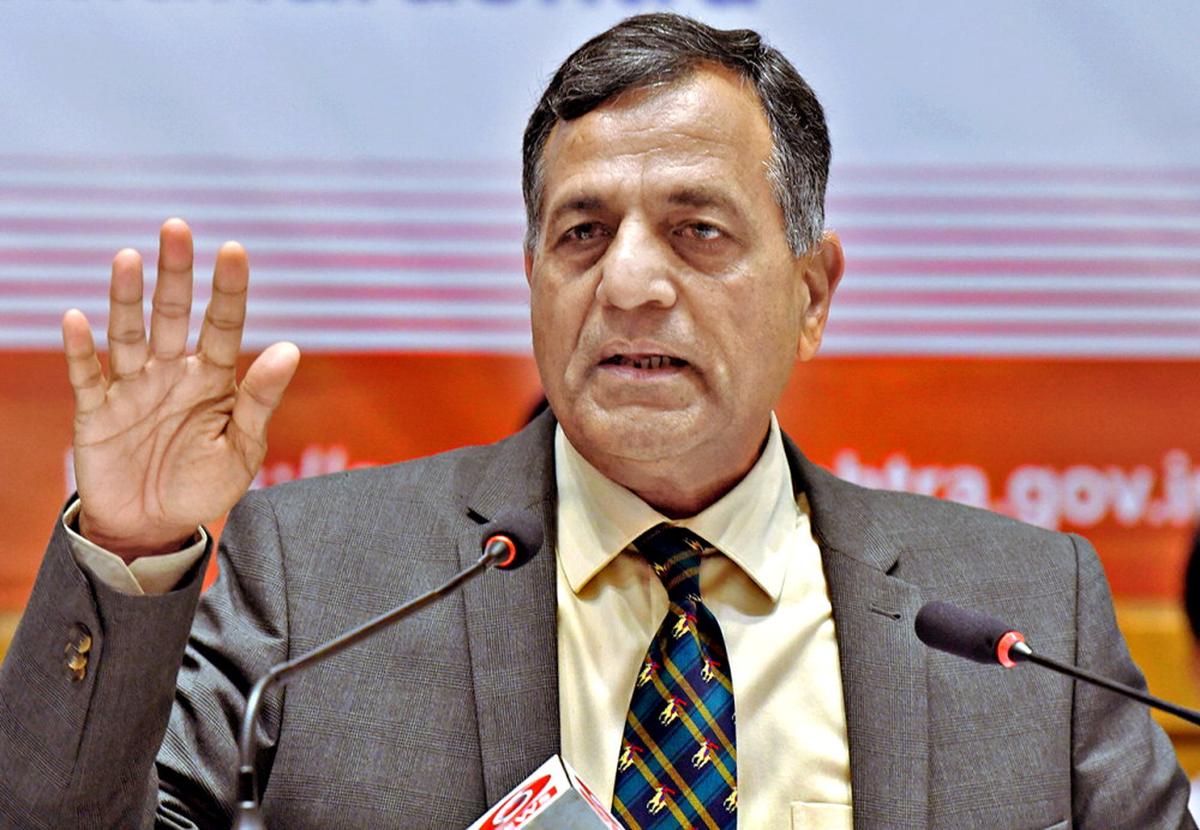
KOLKATA / NEW DELHI — Breaking his silence on the unfolding electoral tensions, former Election Commissioner Ashok Lavasa has warned that the Election Commission of India (ECI) is facing an unprecedented credibility crisis. Speaking virtually at a citizens’ convention in Kolkata, Lavasa invoked a sharp cricket analogy, cautioning that public faith evaporates the moment an electoral referee loses the appearance of absolute neutrality.
The remarks arrive at a volatile political juncture. Across major urban centers, opposition parties have intensified protests against the poll panel, demanding the resignation of Chief Election Commissioner (CEC) Gyanesh Kumar over alleged irregularities in the Special Intensive Revision (SIR) of electoral rolls.
The Core Controversy: Shifting Focus From Inclusion to Exclusion
For decades, India’s electoral machinery prided itself on universal adult suffrage, making sweeping grassroots efforts to ensure that even the last eligible citizen remained on voter lists. However, Lavasa pointed out that recent implementation trends under the SIR framework have inverted this democratic ethos.
“We were always told that voting is an important right… Now it’s reversed; all efforts are being made to see how people can be excluded,” noted critics of the exercise, echoing sentiments shared at civil society forums.
Lavasa emphasized that when mass administrative actions lead to the selective removal or flagging of millions of voter entries without convincing explanations, public anxiety spikes. The resulting friction has dragged the country’s apex poll body—historically enjoying immense institutional prestige—into the trenches of direct political confrontation.
The Cricket Analogy: Why Neutrality Matters
To articulate the gravity of institutional perception, Lavasa drew upon a universally understood sporting parallel:
“If people feel that the umpire is not neutral, they will even question the winning team’s victory.”
By framing the ECI as the ultimate democratic umpire, Lavasa underscored that winning an election legally is insufficient if the process lacks moral legitimacy. When structural transparency is replaced by opaque back-room mechanisms, both winners and losers suffer from a deficit of public trust.
Internal Dissent and the Silence of the Panel
A central pillar of Lavasa’s critique targeted the internal management of the commission itself. Recent media disclosures pointed to rare, documented disagreements among election commissioners concerning software integrity and procedural roll revisions.
- The Communication Gap: Lavasa criticized the ECI’s defensive PR strategy, noting that brief press statements issued by the panel have generated more suspicion than clarity.
- The Call for Accountability: “If illegalities have been committed, then somebody has to own the responsibility,” Lavasa asserted, stressing that institutional accountability cannot be deflected onto lower-level bureaucracy.
While the ECI has maintained that diverse deliberations and divergent opinions are a routine part of a robust multi-member body—and that all statutory orders comply fully with existing laws—critics argue that formal minutes and transparent dissent logs must be made public to restore faith.
Political Fallout: From Streets to Supreme Court
The ripples of the SIR controversy have rapidly transcended academic debates, translating into high-stakes street politics and judicial interventions:
- Nationwide Protests: Opposition figures and civil rights groups have taken to the streets in New Delhi, Kolkata, and other state capitals, leading to tense standoffs with law enforcement.
- Institutional Pushback: State assemblies, including Kerala, have debated formal resolutions demanding transparency measures and accountability from the CEC.
- Legal Scrutiny: Petitions challenging the constitutional validity of procedures and executive actions surrounding the SIR have reached the Supreme Court registry, keeping judicial oversight front and center.
Frequently Asked Questions (FAQs)
Q1: What did former Election Commissioner Ashok Lavasa say about the ECI?
A: Ashok Lavasa stated that the ECI is facing an unprecedented crisis of credibility and urged the poll body to take active steps to win back public trust.
Q2: What was Lavasa’s cricket analogy regarding elections?
A: He warned that if voters perceive the electoral “umpire” as biased or non-neutral, they will inevitably question the legitimacy of election outcomes.
Q3: What is the primary reason behind current protests against the ECI?
A: Protests have erupted nationwide over alleged irregularities, transparency issues, and mass voter deletions linked to the Special Intensive Revision (SIR) of electoral rolls.
Q4: Has the ECI responded to allegations of internal dissent?
A: Yes, the ECI maintained that differing opinions during internal deliberations are standard practice and that all statutory orders strictly follow legal frameworks.
Q5: What are opposition parties demanding from the Election Commission?
A: Several opposition factions and civil society groups have demanded structural accountability, roll rectifications, and the resignation of Chief Election Commissioner Gyanesh Kumar.
Analytical Conclusion & Outlook
As India navigates this critical juncture, Ashok Lavasa’s warnings serve as a sobering reminder that institutional strength relies less on legal technicalities and more on public perception. For the ECI, the path forward requires moving past defensive dismissals and embracing radical transparency—publishing meeting records, addressing software security concerns, and ensuring zero disenfranchisement. Unless systemic trust is actively rebuilt, the shadow cast over the “world’s largest democracy” risks undermining the foundational sanctity of future electoral mandates.

Manish Kumar began his professional journey in digital marketing and performance marketing, and currently works as a Digital Marketing Excutive and SEO expert. With over 3 years of professional experience, he handles both strategy and execution. Currently, he manages digital marketing and performance marketing at ‘Shabd Sanchi’ (shabdsanchi.com).