
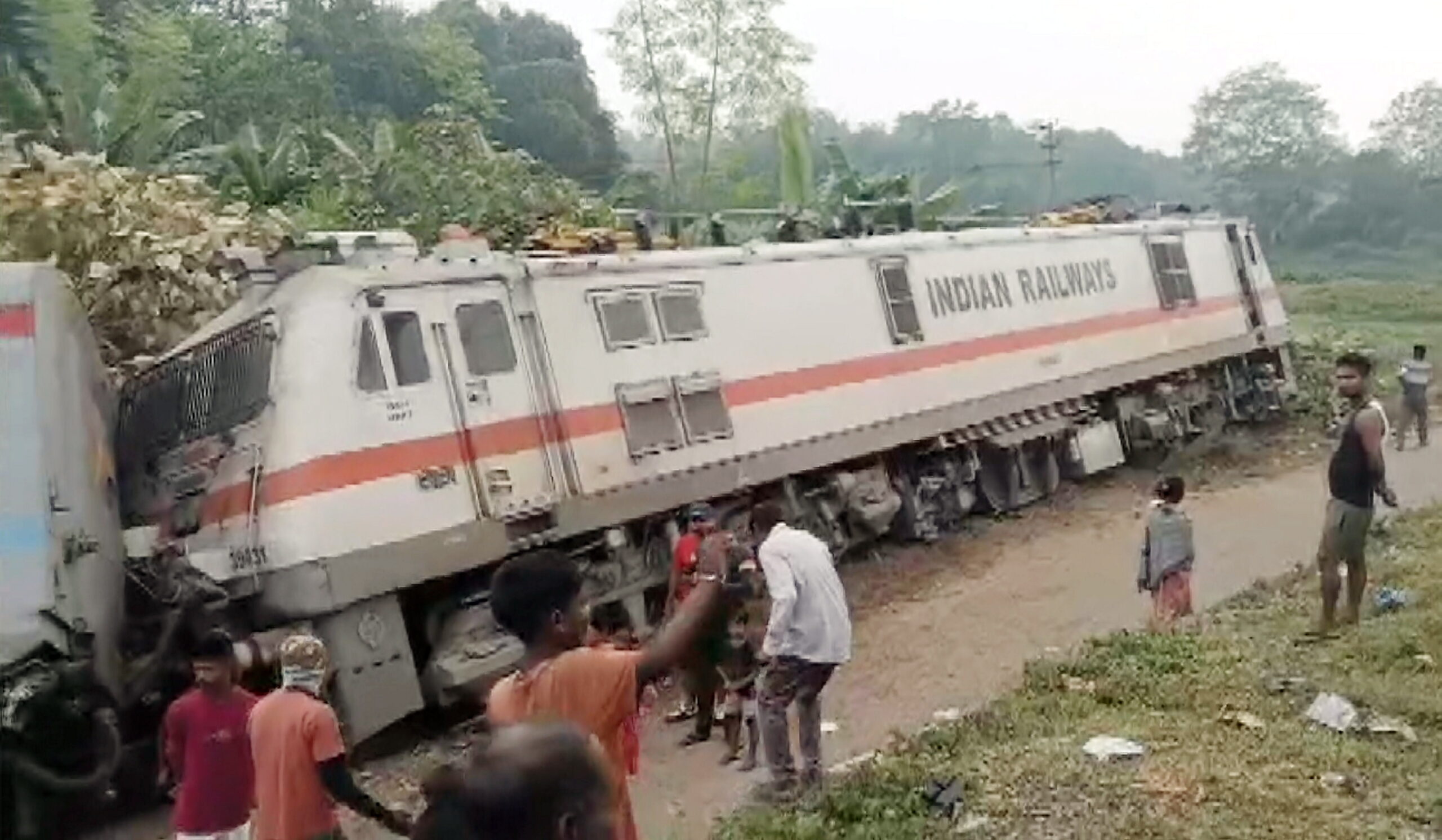
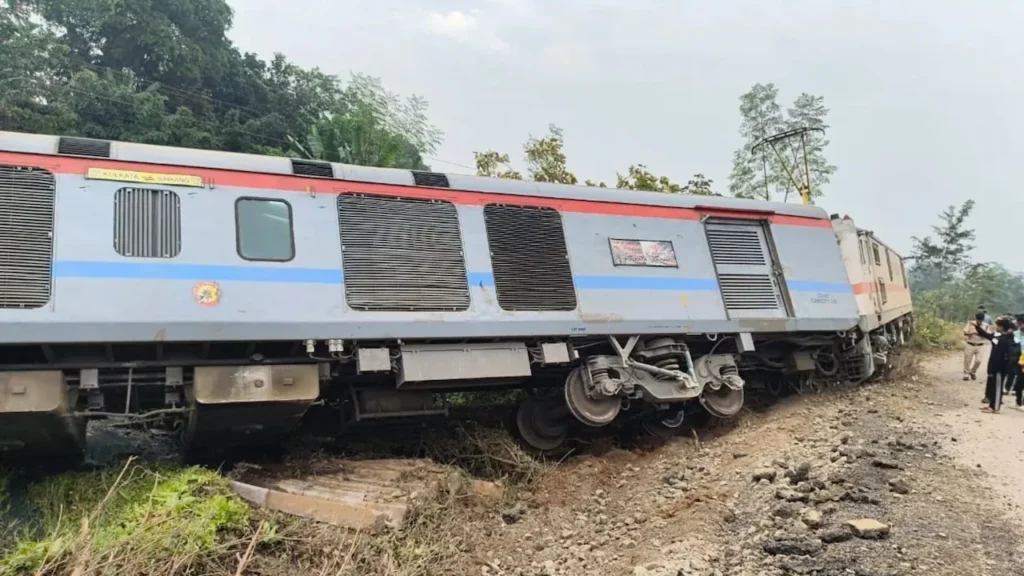
A major rail disruption unfolded in Assam early this morning as the Kolkata-Sairang Express (Train No. 13125) met with an accident near Digaru railway station, located close to Guwahati. The incident, which occurred at approximately 06:54 AM on November 11, 2026, involved the locomotive engine and five subsequent passenger coaches slipping off the tracks after failing to decelerate adequately during a scheduled crossing hold.
According to official bulletins released by the Northeast Frontier Railway (NFR), the train was being brought to a halt at Digaru station to allow another priority service to pass. However, preliminary evaluations indicate that the locomotive pilot failed to fully control the train’s speed during the deceleration phase, triggering the derailment. Several affected coaches collided slightly and scattered across the ballast, sparking immediate panic among passengers.
Despite the alarming visual impact of the mishap, authorities confirmed a major relief: no casualties, fatalities, or injuries were reported among passengers or onboard railway staff.
Immediate Response and Rescue Operations
Swift administrative mobilization followed the incident. Senior engineering, mechanical, and safety officials from the NFR zone rushed to the site alongside teams from the Railway Protection Force (RPF), local Assam district police, and civil administration units.
An emergency relief train carrying medical personnel, breakdown equipment, and senior supervisors was immediately dispatched from Guwahati. Stranded passengers at the site were methodically evacuated and transferred onto alternative arrangements to ensure their safe onward journey toward their destinations.
“The incident occurred at 06:54 AM when the train was being regulated at Digaru station. There are no casualties or injuries reported. Restoration and transshipment work is proceeding on a war footing under the direct supervision of senior railway engineers.” — Kopinjal Kishore Sharma, Chief Public Relations Officer (CPRO), NFR
Impact on Regional Rail Traffic & Diversions
The derailment has temporarily paralyzed traffic along this vital corridor of the Northeast Frontier Railway network. Because the derailed coaches and locomotive blocked the active alignment, downstream and upstream movements experienced severe bottlenecks.
- Train Delays: Multiple long-distance mail and express services originating from or heading toward upper Assam and neighboring states have been regulated at intermediate stations.
- Route Diversions: To prevent complete gridlock, operational controllers have initiated smart route diversions for select express trains via alternate tracks where available.
- Restoration Timeline: Heavy track-recovery cranes and hydraulic rerouting machinery have been deployed to clear the debris, repair damaged sleeper blocks, and restore overhead electrical traction lines.
Technical Analysis: Why Braking Control Failures Happen
Rail safety experts point out that decelerating heavy passenger rakes—especially during early morning transition hours when rail condensation and track dew can lower wheel-rail adhesion—requires precise braking distance calculations. When a train is dynamically regulated to a halt (“unscheduled or crossing regulation”), even a minor miscalculation in braking application percentages can lead to buffer override or wheel-climb derailments at turnout points.
The NFR safety commissioner is expected to launch a formal statutory inquiry to review the locomotive’s speed recorder data, signaling logs, and braking system integrity to pinpoint the exact technical root cause.
Frequently Asked Questions (FAQs)
1. What caused the Guwahati train accident at Digaru?
The accident occurred because the locomotive pilot failed to completely control the speed of the Kolkata-Sairang Express while the train was being regulated to a halt at Digaru station.
2. Are there any injuries or casualties reported in the 13125 derailment?
No. Official statements from the Northeast Frontier Railway confirm that zero casualties, deaths, or injuries occurred among passengers and crew members.
3. How many coaches derailed during the incident?
The locomotive engine along with five passenger coaches slipped off the tracks during the low-speed mishap.
4. How is the railway handling stranded passengers?
The local administration and NFR deployed alternative transport arrangements, including transit trains, to safely move stranded passengers to their destinations.
5. Is train movement back to normal near Guwahati?
While restoration work is ongoing on a priority basis, rail traffic remains partially affected with temporary delays and route diversions implemented across the NFR section.
Analytical Conclusion and Future Outlook
While the absence of injuries prevents this from becoming a catastrophic tragedy, the Digaru derailment highlights lingering vulnerabilities in regional signaling coordination and manual deceleration protocols across high-density single-line or multi-line mixing zones in Northeast India. Moving forward, the implementation of advanced collision-avoidance systems (such as Kavach variants) and stricter adherence to dynamic braking profiles will be critical to eliminating human-error margins. Normalization of services is anticipated as soon as track fitness certificates are cleared by the engineering department.

Manish Kumar began his professional journey in digital marketing and performance marketing, and currently works as a Digital Marketing Excutive and SEO expert. With over 3 years of professional experience, he handles both strategy and execution. Currently, he manages digital marketing and performance marketing at ‘Shabd Sanchi’ (shabdsanchi.com).


