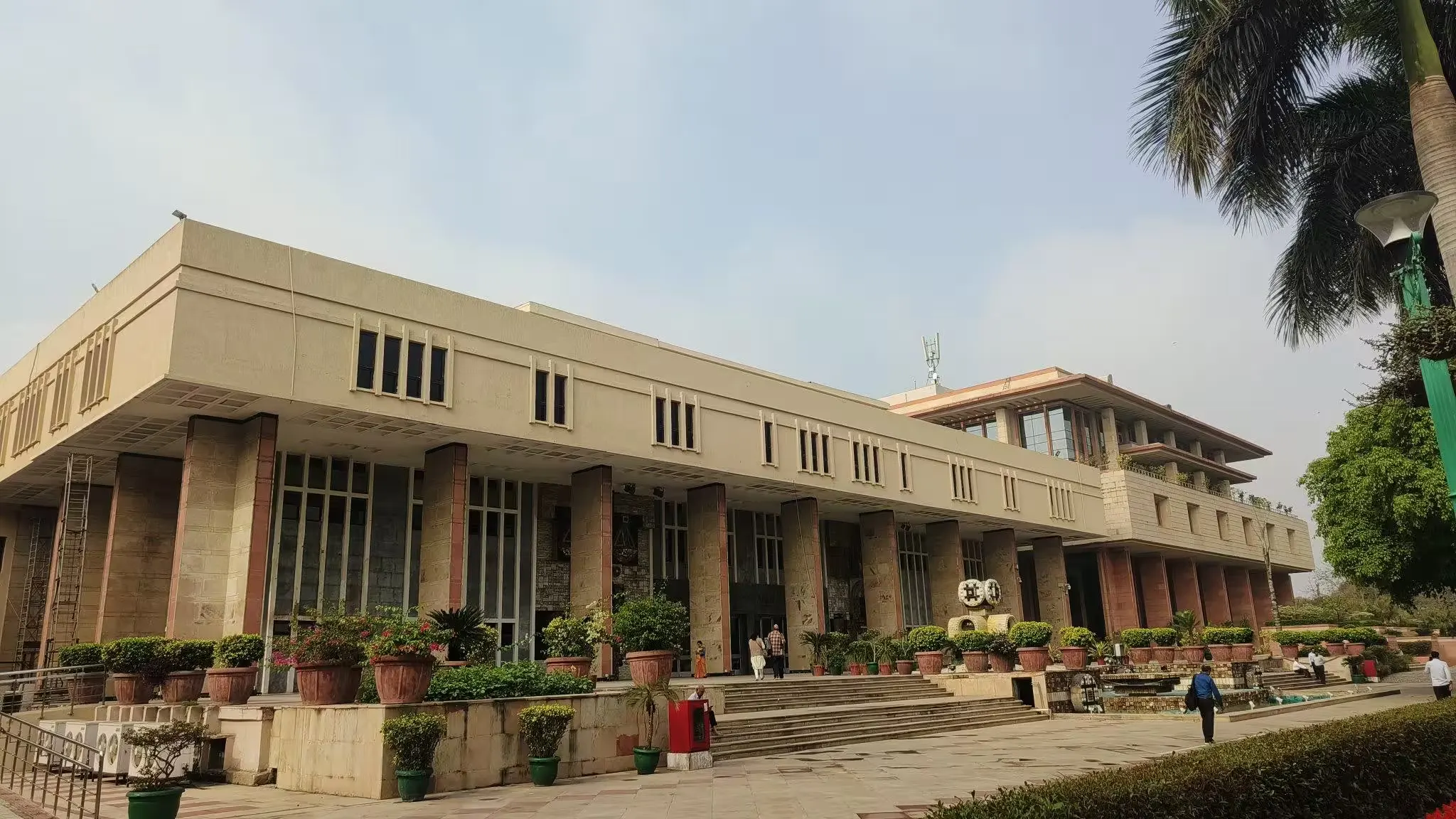
The Delhi High Court on October 21, 2026, severely reprimanded Cockroach Janta Party (CJP) leaders Saurav Das and Ashutosh Ranka during the hearing of their petition challenging an order that extended their judicial custody. Hearing the matter during Dussehra vacations, Justice Subramonium Prasad questioned why the duo bypassed statutory revisional remedies and violated peace bonds by marching to the de-notified Jantar Mantar protest site. Following sharp oral observations by the bench, the petitioners opted to withdraw their writ petition filed under Article 226 of the Constitution.
High Court Questions Revisional Bypass and Peace Bond Breach
During the proceedings, the Delhi High Court pressed counsel Abheek Chimni on why the petitioners directly approached the High Court rather than filing a revision petition before the District Magistrate or trial court. The bench noted that invoking Article 226 for urgent relief during court holidays was misplaced when alternative statutory remedies under the Bharatiya Nagarik Suraksha Sanhita (BNSS) remained readily accessible.
“When your bail bonds are accepted, sureties are given. When a bail bond is broken, there is a procedure in BNSS. Instead of following that procedure… why are you firing your gun today when it might not be required in law?” the court remarked.
The court emphasized that the Special Executive Magistrate (SEM) at the Mandir Marg police station acted within jurisdiction under preventive peace provisions after Delhi Police reported deliberate non-compliance.
CHRONOLOGY OF CJP LEGAL PROCEEDINGS
| Date | Event & Proceedings |
|---|---|
| October 13, 2026 | Detained at Jantar Mantar; released on ₹50,000 peace bonds under BNSS provisions. |
| October 14, 2026 | Re-arrested for staging Tiranga protest; remanded to 5 days of judicial custody by SEM court. |
| October 19, 2026 | SEM extends judicial custody by 2 additional days over improper sureties and threat to public peace. |
| October 21, 2026 | Delhi High Court hears challenge; petitioners withdraw plea to move revisional court. |
‘Barricades Have a Purpose’: Bench Cites Global Unrest and Identity Questions
Addressing arguments regarding peaceful assembly, the High Court underlined that barricades and designated protest zones are deployed for public safety and prevent unlawful elements from hijacking demonstrations. Drawing parallels to violent overseas student demonstrations that escalated into arson, the bench pointed out that breaching police perimeters risks escalating public order situations beyond organizer control.
The bench also questioned the demographic branding of the movement after counsel confirmed that Saurav Das is 27 years old and Ashutosh Ranka is 32 years old.
“Then you are not Gen Z, you are millennials. What started as a student movement has changed. People remain the same, but the cause has changed. Who are you, what is your association, and what is the purpose of the association? When there is apprehension of breach of peace, these questions assume importance,” the bench observed.
Furthermore, the High Court pointed out that Jantar Mantar was previously de-notified as an authorized protest venue, with alternative spaces like Ramlila Maidan, Burari Ground, and CBD Ground designated by authorities.
Background of the Anti-CEC Demonstrations and Arrests
The legal confrontation stems from protests organized by the Cockroach Janta Party (CJP), led by founder Abhijit Dipke, targeting the Election Commission of India over allegations regarding the Special Intensive Revision (SIR) of electoral rolls.
On October 13, 2026, Saurav Das, Ashutosh Ranka, and Ajinkya Shinde entered Jantar Mantar by crossing private premises and locked perimeters. FIRs were registered at Connaught Place and Parliament Street police stations under BNS Sections 223(a), 332, 61(2), 221, 115(2), 132, and 121(1) for trespassing, criminal conspiracy, and obstructing public servants.
Though bound down initially on peace bonds, their subsequent mobilization efforts led police to initiate preventive detention under Sections 126 and 170 of BNSS. On October 19, 2026, Special Executive Magistrate Ritu Raj extended their custody, citing unfit sureties and discrepancy in Aadhaar documentation.
What Happens Next: Future Implications
Following the court’s direction, counsel for Saurav Das and Ashutosh Ranka formally withdrew the writ petition to seek appropriate legal recourse before the District Magistrate and trial court.
Justice Prasad clarified that the High Court made no observations on the merits of the case. The accused are scheduled to be produced before the Special Executive Magistrate for further orders regarding their bail bonds and fresh sureties. The outcome will set an important precedent regarding preventive detention powers and compliance with peace bonds during public demonstrations in the national capital.
Frequently Asked Questions (FAQs)
Why did CJP leaders Saurav Das and Ashutosh Ranka withdraw their High Court petition?
They withdrew their petition after the Delhi High Court orally observed that they should first approach the revisional court (District Magistrate) under statutory BNSS provisions rather than filing a writ under Article 226.
What were the primary charges against Saurav Das and Ashutosh Ranka?
They face charges under BNS provisions for trespass, obstructing public servants, and criminal conspiracy, along with preventive detention under BNSS Sections 126 and 170 for violating peace bond conditions.
Why did the High Court raise questions about Jantar Mantar as a protest site?
The High Court emphasized that Jantar Mantar was de-notified as a protest site and designated alternatives like Ramlila Maidan were available, making deliberate breaches of police perimeters unwarranted.
What did the High Court remark regarding Gen Z and millennials?
Upon learning that Saurav Das is 27 and Ashutosh Ranka is 32, the court noted they are millennials rather than Gen Z, questioning the evolving leadership and objectives behind the student movement.
Analytical Summary
The High Court’s observations underscore a strict judicial stance on preventive procedure and municipal order in the national capital. By directing CJP leaders to exhaust lower statutory remedies rather than fast-tracking writ petitions, the court reasserted the hierarchy of criminal procedure under the BNSS. Moving forward, the burden rests on the petitioners to satisfy the Executive Magistrate with fit sureties and demonstrate compliance with peace undertakings.

Manish Kumar began his professional journey in digital marketing and performance marketing, and currently works as a Digital Marketing Excutive and SEO expert. With over 3 years of professional experience, he handles both strategy and execution. Currently, he manages digital marketing and performance marketing at ‘Shabd Sanchi’ (shabdsanchi.com).