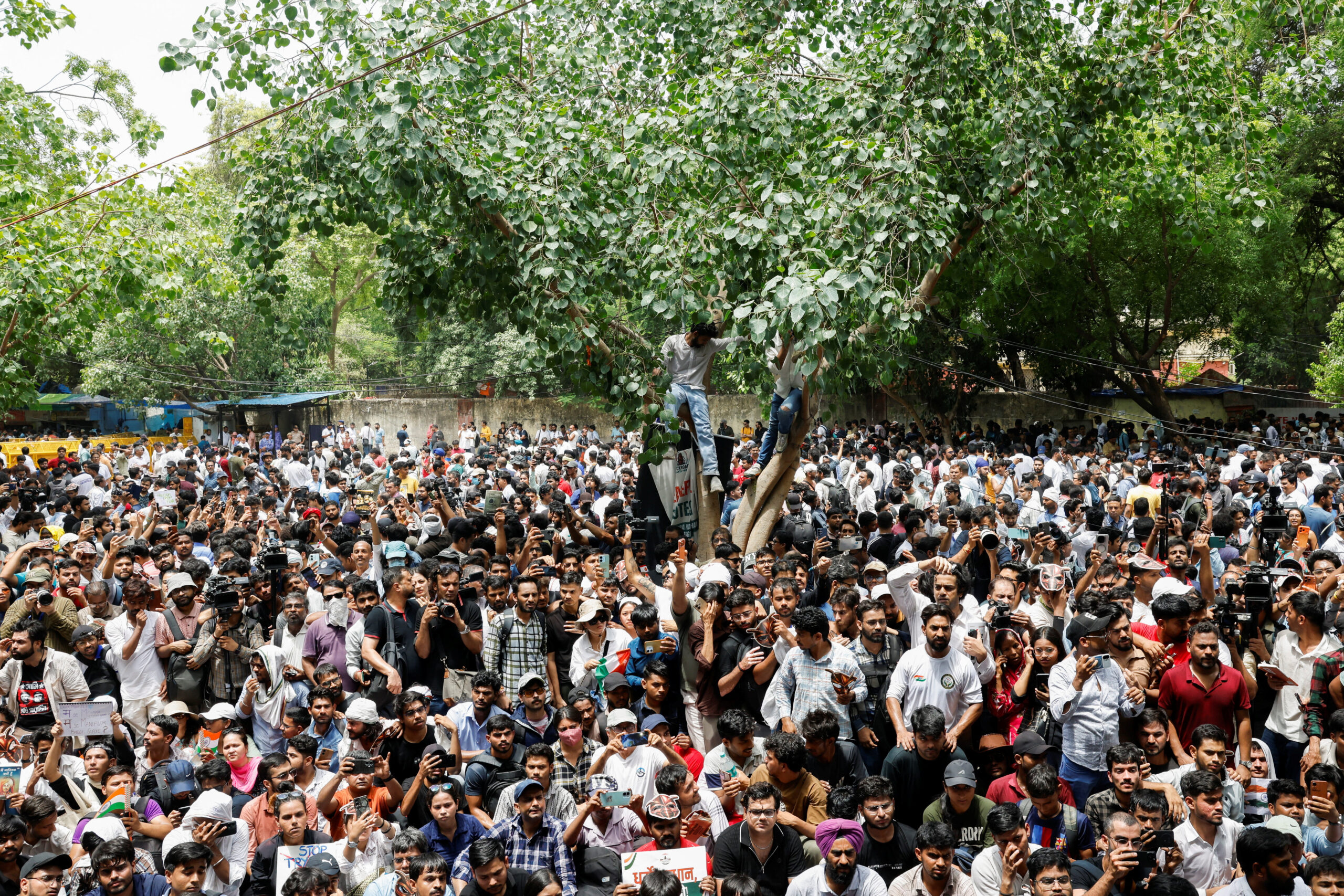
The Cockroach Janta Party Protest led by Abhijeet Dipke witnessed a significant turnout in Delhi, with hundreds of young supporters gathering under tight security arrangements. The demonstration focused on a set of demands that organizers say address concerns related to education, governance, accountability, and public participation in policymaking.
Large Turnout Marks Growing Support for the Movement
Supporters of the Cockroach Janta Party (CJP) assembled at the protest venue from early morning, carrying banners, placards, and party symbols. Security personnel were deployed across key access points to manage crowds and maintain order as participation increased throughout the day.
Many attendees were students and young professionals who said they wanted greater transparency in public institutions. Organizers described the event as a peaceful democratic exercise aimed at highlighting issues that they believe require urgent government attention.
According to party representatives, the gathering exceeded initial expectations, indicating growing public interest in the campaign’s agenda.
Cockroach Janta Party Protest: The Five Major Demands
The central focus of the protest was a list of five demands presented by supporters and party leaders.
1. Greater Accountability in Public Examinations
One of the key demands relates to examination systems and recruitment processes. Protesters called for stronger safeguards to prevent irregularities and ensure fairness in competitive examinations.
Supporters argued that confidence in examination mechanisms is essential for students who invest years preparing for academic and professional opportunities.
2. Independent Investigation Into Alleged Irregularities
Participants demanded independent inquiries into allegations of misconduct linked to examination and recruitment processes.
According to speakers at the event, transparent investigations would help restore public trust and ensure accountability where lapses are identified.
3. Institutional Reforms in Education Administration
The third demand focused on administrative reforms within the education sector.
Protesters called for improved oversight mechanisms, faster grievance redressal systems, and regular audits of examination-related procedures. Organizers said such reforms could reduce the possibility of future controversies.
Youth Participation Emerges as a Major Theme
A notable aspect of the demonstration was the strong presence of young people. Many attendees said they were participating because decisions related to education and employment directly affect their futures.
Students from different regions joined the event, highlighting concerns over transparency and equal opportunity. Several speakers emphasized that youth engagement should remain central to policy discussions involving education and recruitment.
The organizers also encouraged participants to use democratic channels to raise concerns and engage with public institutions.
4. Enhanced Transparency in Government Decision-Making
The fourth demand called for greater transparency in administrative decision-making.
Supporters urged authorities to make key information more accessible to citizens, particularly regarding policies that impact students and job seekers. Protest leaders argued that proactive disclosure of information can reduce uncertainty and improve public confidence.
5. Structured Dialogue With Stakeholders
The final demand centered on establishing regular consultations between policymakers, educational experts, students, and civil society groups.
Party representatives said institutionalized dialogue could help identify issues earlier and lead to more effective policy implementation. They argued that involving stakeholders in discussions would create a more responsive governance framework.
Heavy Security Deployment at the Protest Site
Authorities maintained a visible security presence throughout the event. Barricades were installed in several areas, and personnel monitored crowd movement to ensure public safety.
Despite the large turnout, the protest remained largely peaceful. Organizers repeatedly urged participants to follow instructions from law enforcement agencies and avoid disruptions.
Officials monitored developments closely as speeches, discussions, and public interactions continued during the day.
What the Protest Could Mean Going Forward?
The scale of participation has drawn attention to the issues raised by the Cockroach Janta Party and its supporters. Political observers note that youth-focused movements often gain momentum when they address concerns related to education and employment.
Whether the demands lead to policy discussions or administrative action remains to be seen. However, the turnout indicates that the topics highlighted during the protest resonate with a section of the public.
The coming days may provide greater clarity on how authorities respond and whether further demonstrations or consultations are planned.
Conclusion
The Cockroach Janta Party Protest brought together a sizeable crowd of supporters led by Abhijeet Dipke, with participants focusing on five core demands ranging from examination accountability to institutional reforms and stakeholder engagement. Based on available details, the demonstration remained peaceful while drawing attention to issues that many participants believe deserve wider public discussion and policy consideration.
FAQs
1. What is the Cockroach Janta Party Protest?
The Cockroach Janta Party Protest is a demonstration organized by supporters of the Cockroach Janta Party (CJP) under the leadership of Abhijeet Dipke. The protest aims to highlight concerns related to education, accountability, transparency, and governance.
2. Who is leading the Cockroach Janta Party Protest?
The protest is being led by Abhijeet Dipke, who has emerged as a prominent face of the movement and has been addressing supporters during the demonstrations.
3. What are the five major demands raised by the protesters?
The protesters have focused on five key demands:
- Greater accountability in public examinations
- Independent investigations into alleged irregularities
- Reforms in education administration
- Increased transparency in government decision-making
- Regular dialogue between policymakers and stakeholders
4. Why are so many young people participating in the protest?
Many students and young professionals believe that issues related to examinations, education policies, and employment opportunities directly affect their future prospects. As a result, youth participation has become a significant feature of the movement.
5. Where is the Cockroach Janta Party Protest taking place?
The protest is being held in Delhi, where authorities have deployed security personnel and crowd-management measures due to the large turnout.
6. Has the protest remained peaceful?
According to available information, the protest has remained largely peaceful, with organizers urging participants to follow democratic and non-violent methods while expressing their concerns.
7. What impact could the protest have?
The demonstration has drawn attention to concerns related to education and governance. Observers believe the movement could influence public debate and potentially encourage discussions on reforms if the demands receive wider support.
8. Are authorities expected to respond to the demands?
There has been no official announcement regarding specific actions. However, the scale of the turnout may increase pressure for discussions or responses from relevant authorities in the coming days.
For more information, follow Shabdsanchi‘s social media pages today and stay updated.
- Facebook: shabdsanchi
- Instagram: shabdsanchiofficial
- YouTube: @shabd_sanchi
- Twitter: shabdsanchi