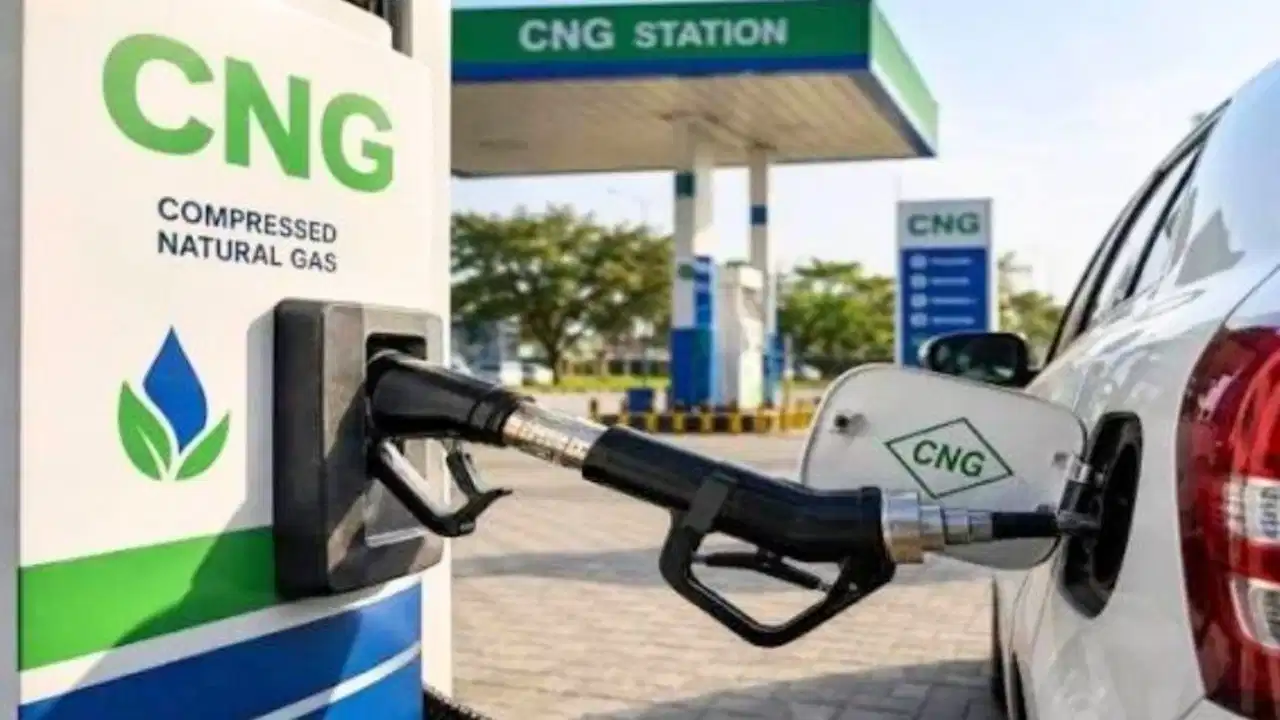
Indraprastha Gas Limited (IGL) has announced a price revision for Compressed Natural Gas (CNG) across the Delhi-National Capital Region (NCR). The retail price of CNG has increased by ₹3.89 per kg, directly impacting daily commuters, cab aggregators, auto-rickshaw operators, and private vehicle owners reliant on eco-friendly transport. With the latest revision effective from 6:00 AM on August 29, 2026, retail CNG price Delhi stands at ₹86.98 per kg, while rates in neighboring cities like Noida and Ghaziabad have touched ₹95.59 per kg.
Revised City-Wise CNG Rates Across Delhi-NCR
Fuel taxation structures—specifically state-level Value Added Tax (VAT)—vary across regional borders. Consequently, the final retail cost per kilogram reflects minor regional variations across Delhi, Uttar Pradesh, and Haryana.
| City / District | Revised CNG Price (₹/kg) | Previous CNG Price (₹/kg) | Price Increase |
| Delhi | ₹86.98 | ₹83.09 | ₹3.89 |
| Noida & Greater Noida | ₹95.59 | ₹91.70 | ₹3.89 |
| Ghaziabad | ₹95.59 | ₹91.70 | ₹3.89 |
| Gurugram | ₹92.01 | ₹88.12 | ₹3.89 |
| Meerut, Muzaffarnagar & Shamli | ₹95.47 | ₹91.58 | ₹3.89 |
| Rewari | ₹91.59 | ₹87.70 | ₹3.89 |
| Karnal | ₹91.32 | ₹87.43 | ₹3.89 |
| Kanpur, Hamirpur & Fatehpur | ₹98.31 | ₹94.42 | ₹3.89 |
Why Are CNG Prices Increasing in Delhi-NCR?
The primary driver behind this adjustment is the sharp surge in international Liquefied Natural Gas (LNG) benchmarks. City Gas Distribution (CGD) entities like IGL rely significantly on imported spot LNG to satisfy regional domestic and transport demand.
- Global Energy Market Supply Volatility: Geopolitical tension in West Asia and shipping logistics bottlenecks along crucial maritime transit corridors—such as the Strait of Hormuz—have constrained Asian LNG supply chains.
- Benchmark Price Escalation: Spot Asian LNG prices (JKM benchmark) spiked from ~$11/MMBTU earlier in the year to over $23/MMBTU, forcing utility providers to absorb higher input costs.
- Fifth Price Revision of the Year: This adjustment marks the fifth price increase implemented by IGL in 2026, following four sequential revisions in May that added ₹6/kg to retail rates.
Impact on Commuters, Taxis, and Commercial Freight
The cumulative ₹9.89/kg rise in CNG prices since the beginning of the year narrows the traditional cost-per-kilometer advantage CNG held over conventional diesel and petrol options.
- Auto and Cab Fares: Associations representing app-based cab drivers and auto-rickshaw unions are pushing municipal transit authorities for fare structure revisions to offset shrinking profit margins.
- Commercial Freight Logistics: Light commercial vehicles carrying essential consumer goods across inter-state NCR routes face higher operational overheads, which may trigger marginal price adjustments across retail supply chains.
Frequently Asked Questions (FAQs)
What is the new CNG price in Delhi after the August 2026 hike?
Following the recent ₹3.89 per kg increase by Indraprastha Gas Limited (IGL), the revised retail CNG price in Delhi is ₹86.98 per kg. Prior to this revision, CNG was sold at ₹83.09 per kg across capital fuel stations.
Why does CNG cost more in Noida and Ghaziabad than in Delhi?
CNG prices differ across state borders due to varying local sales tax and Value Added Tax (VAT) levies imposed by individual state governments. Uttar Pradesh applies higher tax structures on natural gas compared to Delhi, pushing rates in Noida and Ghaziabad to ₹95.59 per kg.
How many times have CNG prices increased in Delhi-NCR in 2026?
IGL has revised CNG prices upwards five times in 2026. Four phase revisions occurred during May 2026 (adding ₹6/kg cumulatively), followed by the August revision of ₹3.89/kg, taking total increases to nearly ₹10/kg this year.
Conclusion
The latest ₹3.89 per kg hike by IGL reflects persistent global energy supply constraints and elevated international LNG prices. While CNG remains a cleaner alternative to liquid fossil fuels, narrowing price margins highlight the vulnerability of domestic transport costs to global market shifts. Commuters and commercial transport fleets across Delhi, Noida, Ghaziabad, and Gurugram must now adjust their operational budgets to accommodate the revised fuel tariffs.