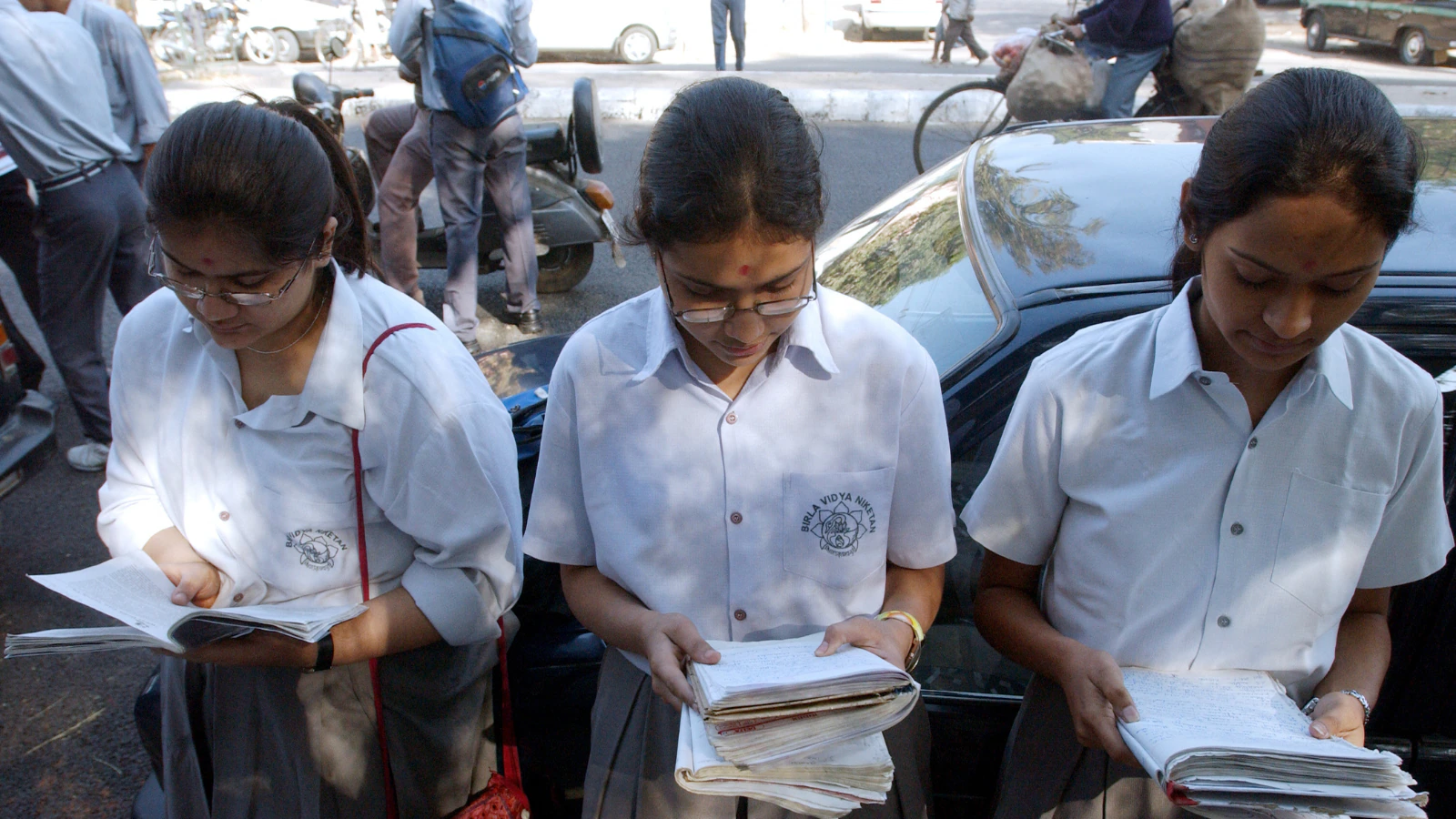
The Central Board of Secondary Education (CBSE) conducted the Class 12 Physics examination today across various centers in India and abroad. As one of the most anticipated papers for science stream students, the CBSE Class 12 Physics Exam 2026 Analysis suggests a balanced paper that favored conceptual clarity over rote learning. While teachers labeled it “easy to moderate,” many students found the numerical-heavy sections slightly time-consuming.
Balanced Paper with a Mix of Theory and Numericals
The three-hour examination, held from 10:30 AM to 1:30 PM, adhered strictly to the NCERT curriculum. Experts noted that the paper was designed to cater to both average students and high achievers. While the theoretical derivations were straightforward, the application-based questions required a deeper understanding of the core principles.
Section-Wise Difficulty Breakdown
The question paper was divided into five sections, ranging from Objective Type Questions to Long Answer s. Here is a detailed look at how each section performed:
- Section A (MCQs & Assertion-Reason): This section was rated moderate. While some questions were direct, others involved calculations that tested students’ mental agility right at the start.
- Section B & C (Short Answers): These sections proved to be the “deciding factor” for many. Questions on Nuclei, Wave Optics, and Semiconductor Diode circuits required precise analytical skills.
- Section D (Case-Based Questions): Focusing on the Photoelectric Effect and Galvanometers, these questions were manageable for those who had practiced application-oriented problems.
- Section E (Long Answers): This was the highest-scoring part of the paper, featuring standard derivations from Electrostatics and Ray Optics.
Challenges in Time Management
A common sentiment among the student community was the length of the paper. Although the numerical problems were not overly complex, the meticulous calculations required in the middle sections left little time for a final revision. Some students reported that the MCQ section took longer than anticipated, forcing them to rush through the descriptive parts.
Expert Opinion on Conceptual Depth
Academic directors and HODs from various reputed schools highlighted that the 2026 paper focused heavily on “Higher Order Thinking Skills” (HOTS). Abhishek Sharma, a senior academic expert, pointed out a minor technical observation regarding a unit error in the area measurement in Question 23b, though it didn’t significantly hinder the overall solving process.
“The paper was a comprehensive evaluation of a student’s journey through the syllabus,” noted a Delhi-based Principal. “It leaned more towards classical theory and derivations, which is a relief for students who prepared consistently using previous years’ question banks.”
CBSE Class 12 Physics Exam 2026 Analysis: Key Takeaways
Comparison with Previous Year
Compared to the 2025 examination, the 2026 Physics paper was perceived as slightly more approachable but significantly lengthier. The shift towards real-world applications in optics and electronic devices reflects the board’s move toward competency-based education.
Scoring Opportunities for Students
For a “sincerely prepared” student, securing 80-85% marks seems plausible. However, reaching the perfect 100 might be challenging due to potential sign errors in numericals or overlooked requirements in multi-step questions.
To learn more, follow Shabdsanchi’s social media pages today and stay updated.
- Facebook: shabdsanchi
- Instagram: shabdsanchiofficial
- YouTube: @shabd_sanchi
- Twitter: shabdsanchi