India’s higher education system is experiencing an unprecedented crisis of trust. In the wake of widespread paper leaks, last-minute cancellations, and administrative failures surrounding nationwide entrance exams—most notably the National Eligibility cum Entrance Test (NEET) and UGC-NET—a collective wave of indignation has swept across the nation. What began as localized student anger on digital platforms has matured into a nationwide demand for high-level political accountability. In a sharp and uncompromising public intervention, a group of India’s most distinguished academics, public intellectuals, and civil rights activists addressed a formal open letter to Union Minister for Education Shri Dharmendra Pradhan. Citing the grave physical condition of climate activist Sonam Wangchuk and young student protesters fasting at Jantar Mantar, the signatories explicitly stated that it would be honourable to resign as Education Minister, owning moral responsibility for the government’s systemic failures in conducting fair and secure public examinations.
The Catalyst: Sonam Wangchuk and Student Fasting at Jantar Mantar
20 Days of Indefinite Fast
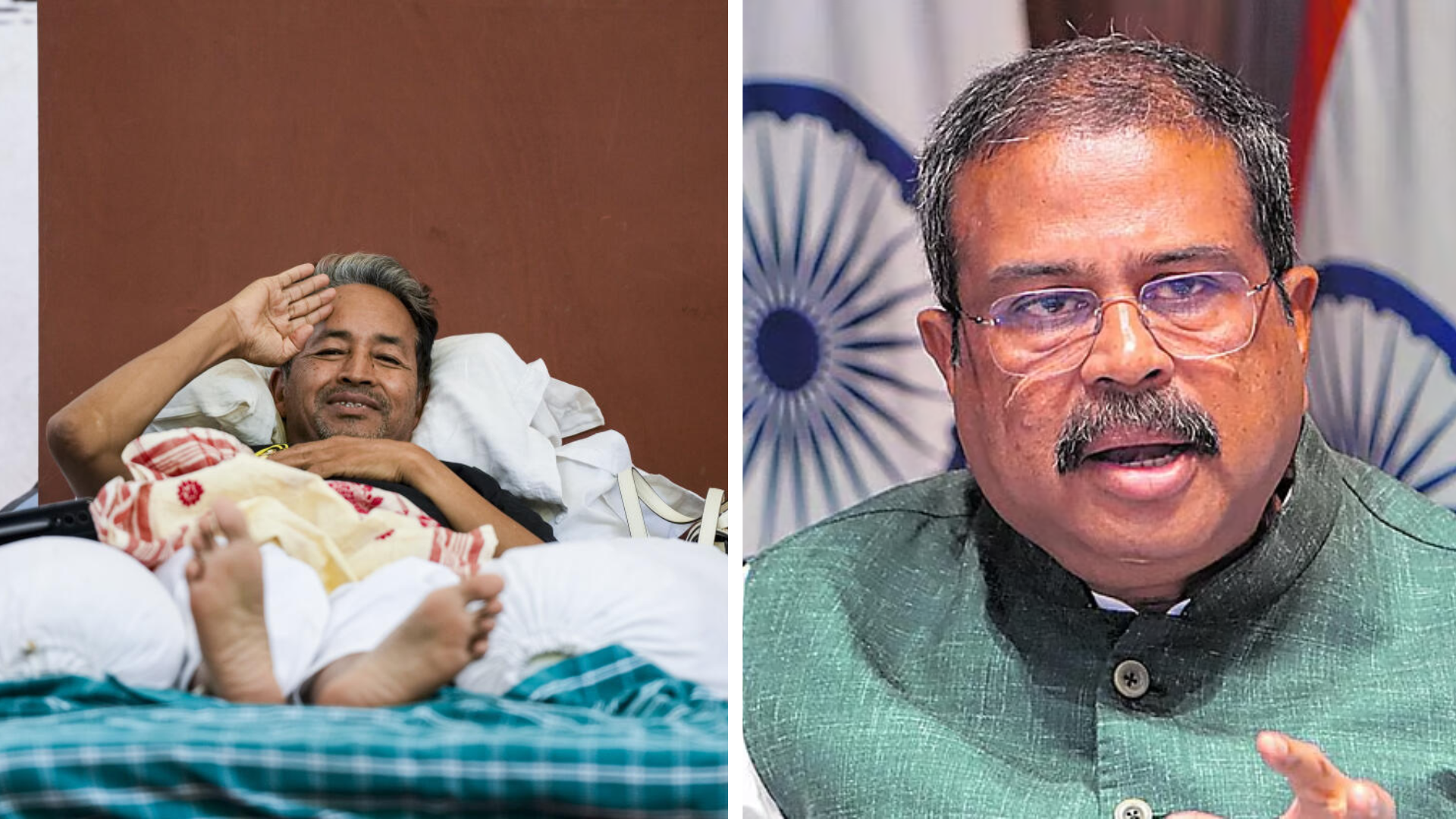
The immediate catalyst for the open letter was the deteriorating health of renowned educator and climate activist Sonam Wangchuk. Joining forces with the Cockroach Janta Party (CJP) and student organizations such as the All India Students’ Association (AISA), Wangchuk embarked on an indefinite hunger strike at Delhi’s historic protest site, Jantar Mantar.
By mid-July, Wangchuk’s fast had crossed the 20-day mark. Having lost significant body weight, doctors and supporters warned that his life—alongside the lives of several young PhD scholars and undergraduate students fasting alongside him—was in imminent danger.
“Posterity will hold you squarely responsible for it, and deem your conduct to be utterly dishonourable for clinging to office by sacrificing precious lives,” the open letter warned Minister Dharmendra Pradhan.
Demands for Systemic Accountability
The protesting students and activists have maintained a single-minded mandate: no compromises on exam integrity. The series of irregularities in NEET-UG—an exam that determines the fate of over 23 lakh medical aspirants annually—exposed deep structural vulnerabilities within the National Testing Agency (NTA). Protesters argue that when millions of young lives are thrown into uncertainty due to institutional incompetence, administrative procedural delays are insufficient; high-level political accountability must be established.
Inside the Open Letter: What Eminent Scholars Wrote
Core Excerpts and Moral Responsibility
The open letter sent to Dharmendra Pradhan cut directly through standard political deflection, centering the dialogue entirely on personal and institutional morality.
The signatories emphasized that while a minister may feel compelled to follow party directives or bureaucratic procedures, individual ethical duty cannot be abdicated. Citing the supreme value of human life and the democratic duty owed to Indian youth, the letter stated:
“On the other hand, it would be honourable to resign as education minister, owning moral responsibility for the government’s failures. You may believe that you are following your party’s and government’s directive by not resigning, but nobody in the ultimate analysis can evade moral responsibility for his own actions.”
The core argument hinges on the democratic principle of ministerial responsibility. In constitutional democracies, when a department under a minister’s watch experiences structural collapse resulting in national crisis and distress, the minister steps down—not necessarily as a confession of personal guilt, but as an act of institutional integrity.
Prominent Signatories
The open letter carries substantial intellectual weight, signed by some of India’s most recognized professors emeritus, writers, and human rights defenders:
- Prof. Romila Thapar (Professor Emeritus, JNU)
- Prof. Prabhat Patnaik (Professor Emeritus, JNU)
- Prof. Utsa Patnaik (Professor Emeritus, JNU)
- Prof. Zoya Hasan (Professor Emeritus, JNU)
- Prof. C.P. Chandrasekhar (Professor Retd., JNU)
- Prof. Sunanda Sen (Professor Retd., JNU)
- Prof. Neera Chandoke (Professor Retd., Delhi University)
- Harsh Mander (Writer and Social Activist)
- John Dayal (Writer and Activist)
Broader Context: The National Testing Agency (NTA) & Systemic Decay
The Failure of Centralized Testing
The current unrest goes beyond a single paper leak; it represents a critique of the centralizing tendencies within Indian education over the past decade. The creation of centralized, monolithic testing bodies like the NTA was intended to streamline entrance procedures. However, educationists argue that it created single points of failure, commercialized test preparation, and stripped state boards and university departments of their academic autonomy.
Organizations like the All India Forum for Right to Education (AIFRTE) have publicly backed the student protests, noting that centralization, commercialization, and outsourcing to private vendors have compromised the sanctity of public competitive exams.
+------------------------------------------------------------------------+
|                 CRISIS OF INDIAN EXAM GOVERNANCE                       |
+------------------------------------------------------------------------+
|                                                                        |
|   1. Structural Flaws   --> Centralization & Outsourcing to NTA        |
|   2. Direct Impact      --> Paper Leaks, Grace Marks, Ranks Inflation  |
|   3. Human Cost         --> Student Distress, Suicides & Loss of Trust |
|   4. Moral Demand       --> Ministerial Resignation & Total Overhaul   |
|                                                                        |
+------------------------------------------------------------------------+
The Human Cost on Aspirants
For lakhs of students from rural and middle-class backgrounds, competitive exams represent their primary vehicle for social mobility. Years of arduous preparation and financial sacrifices by families are rendered void when papers are leaked or exams are cancelled hours before schedule. When top scholars noted in their letter that it would be honourable to resign, they articulated the frustration felt by millions of families across the nation.
Political Response and Civil Society Mobilization
Despite growing pressure from public intellectuals, student unions, and opposition parties, the Union Government has largely resisted calls for ministerial resignations. Instead, official responses have focused on setting up internal investigation committees and transferring administrative personnel within the NTA.
However, civil society mobilization has continued to gather momentum:
- Parliament Marches: Student groups organized marches toward Parliament to highlight the plight of aspirants.
- Support Across Spectrum: Diverse organizations, ranging from trade unions to teachers’ associations, have extended formal solidarity to the Jantar Mantar fast.
- Open Letters to the Prime Minister: Subsequent appeals have been directed to Prime Minister Narendra Modi, urging an immediate end to official silence and the initiation of direct dialogue with fasting youth.
Frequently Asked Questions (FAQs)
1. Why did eminent scholars state it “would be honourable to resign” for Dharmendra Pradhan?
Eminent scholars and academics wrote an open letter urging Union Education Minister Dharmendra Pradhan to take moral responsibility for repeated exam paper leaks, administrative failures in NEET and UGC-NET, and the endangerment of student lives on hunger strike at Jantar Mantar.
2. Who signed the open letter to Education Minister Dharmendra Pradhan?
The open letter was signed by prominent intellectuals and retired professors, including Romila Thapar, Prabhat Patnaik, Utsa Patnaik, Zoya Hasan, C.P. Chandrasekhar, Neera Chandoke, Sunanda Sen, Harsh Mander, and John Dayal.
3. What were the primary demands of Sonam Wangchuk and student protesters?
Sonam Wangchuk and student protesters demanded full accountability for examination irregularities, systemic reform of national testing mechanisms, and the resignation of Education Minister Dharmendra Pradhan.
4. What are the main issues associated with the National Testing Agency (NTA)?
Key concerns include excessive centralization of national entrance exams, allegations of paper leaks, lack of transparency in scoring and grace marks, outsourcing of examination infrastructure, and erosion of state autonomy in higher education admissions.
5. Has Dharmendra Pradhan resigned following the scholars’ letter?
No formal resignation has been tendered by Education Minister Dharmendra Pradhan. The government’s stance has focused on administrative measures, police actions, and committee investigations, leading to continued criticism regarding political accountability.
Conclusion: A Turning Point for Indian Educational Governance
The open letter from India’s leading scholars stating that it would be honourable to resign represents more than a political critique; it is a call for moral accountability in public governance. When national examination systems collapse repeatedly, affecting the futures of millions of young citizens, the issue transcends administrative procedures.
Whether or not Minister Dharmendra Pradhan steps down, the sustained protests led by students and supported by civil society have permanently altered the discourse on educational governance in India. The nation’s youth and intellectual leaders have made it clear that institutional credibility cannot be restored without genuine accountability, transparency, and deep structural reform.
For more information, follow Shabdsanchi‘s social media pages today and stay updated.
- Facebook: shabdsanchi
- Instagram: shabdsanchiofficial
- YouTube: @shabd_sanchi
- Twitter: shabdsanchi