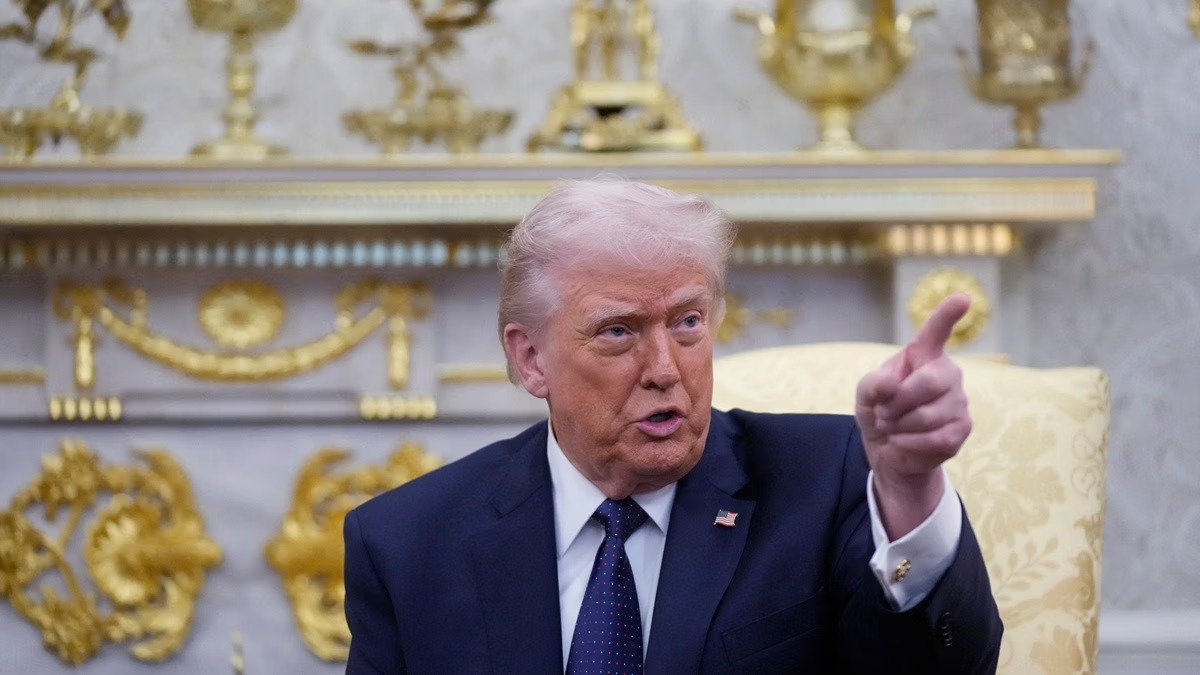
US President Donald Trump warns Iran of unprecedented retaliation if the country blocks oil shipments through the critical Strait of Hormuz. Amid the escalating conflict, Trump stated the US would strike back twenty times harder to ensure global energy markets remain stable. The ongoing war has already caused major fluctuations in international oil prices.
The United States has issued a severe ultimatum to the Islamic Republic. As the conflict stretches into its tenth day, Donald Trump warns Iran that any disruption to the Strait of Hormuz will trigger a massive military response. This vital shipping lane carries roughly one-fifth of the world’s oil supply.
Trump delivered this message following a brief spike in global oil prices. He addressed Republican lawmakers at his golf club near Miami, referring to the recent Middle East operations as a “short-term excursion.” His primary goal, he claimed, is to eliminate specific evils and stabilize the region quickly.
However, the rhetoric escalated sharply on social media just hours later. The US President declared that blocking oil flow would result in America hitting Iran “TWENTY TIMES HARDER” than previous strikes. He threatened the complete destruction of the nation’s infrastructure, warning that “Death, Fire, and Fury will reign upon them.”
The Threat to the Strait of Hormuz
The Strait of Hormuz remains the most critical choke point for global energy. Any blockade here immediately threatens major economies worldwide. Currently, Iranian attacks in this region have nearly halted commercial tanker traffic.
Drones and missiles have repeatedly targeted essential oil and gas infrastructure. Furthermore, attacks on merchant vessels near the strait have resulted in the tragic deaths of at least seven mariners. The International Maritime Organisation continues to monitor the deteriorating safety conditions in these waters.
Global Oil Markets React
The mere threat of a blockade sent shockwaves through financial sectors. Oil prices briefly skyrocketed to nearly $120 per barrel. This marked the highest valuation seen since 2022.
Investors initially panicked over the appointment of Ayatollah Mojtaba Khamenei as Iran’s new supreme leader. Markets interpreted this leadership change as a sign of prolonged conflict. Consequently, fuel prices across the United States began to climb rapidly.
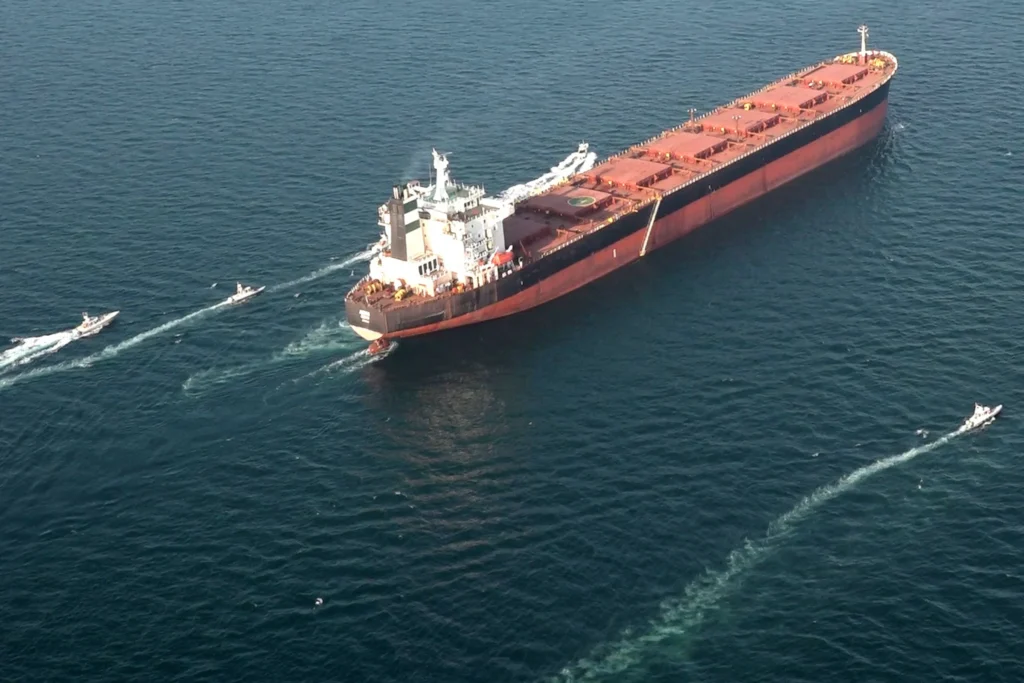
However, the panic subsided slightly as the day progressed. US stock markets recovered from steep early losses, finishing with solid gains. Oil prices eventually retreated toward the $90 mark as investors hoped for a swift resolution to the conflict.
Escalating Tensions and Military Action
The military conflict shows few signs of immediate de-escalation. The United States and Israel launched this combined offensive just over a week ago. Since then, millions of citizens have sought shelter as bombs continue to fall across the region.
Strikes have heavily damaged military bases, government buildings, and utility installations. Foreign businesses are rapidly evacuating their personnel from regional hubs. Even civilian infrastructure, including at least one school, has been hit during the crossfire.
Strikes on Tehran and Isfahan
Recent days witnessed some of the heaviest air raids since the war began on February 28. Dozens of massive explosions echoed across Tehran. Iranian state media has largely refrained from reporting detailed casualty figures or infrastructure damage.
Simultaneously, the Israeli military confirmed a wide-scale wave of strikes. They targeted the city of Isfahan and several locations in southern Iran. Key targets successfully hit included the drone headquarters of the Islamic Revolutionary Guard Corps.
In retaliation, Iran-backed Hezbollah forces fired multiple rockets into Israel from Lebanon. The Israeli military maintained high alerts throughout the day, actively warning civilian populations about incoming Iranian missiles.
Iran’s New Leadership
Amidst the military chaos, a significant political shift occurred in Tehran. Ayatollah Mojtaba Khamenei succeeded his late father as the supreme leader. His 86-year-old father, Ayatollah Ali Khamenei, was killed during the opening salvo of the current war.
The younger Khamenei is only the third supreme leader in the history of the Islamic Republic. The secretive 56-year-old cleric maintains exceptionally close ties to the powerful Revolutionary Guard. Thousands of citizens recently gathered in Tehran squares to pledge their allegiance, chanting anti-Western slogans.
Trump’s View on Khamenei’s Successor
Analysts widely consider the new supreme leader to be even less compromising than his predecessor. He now holds the final authority on all major state policies. This includes absolute control over Tehran’s highly disputed nuclear development programme.
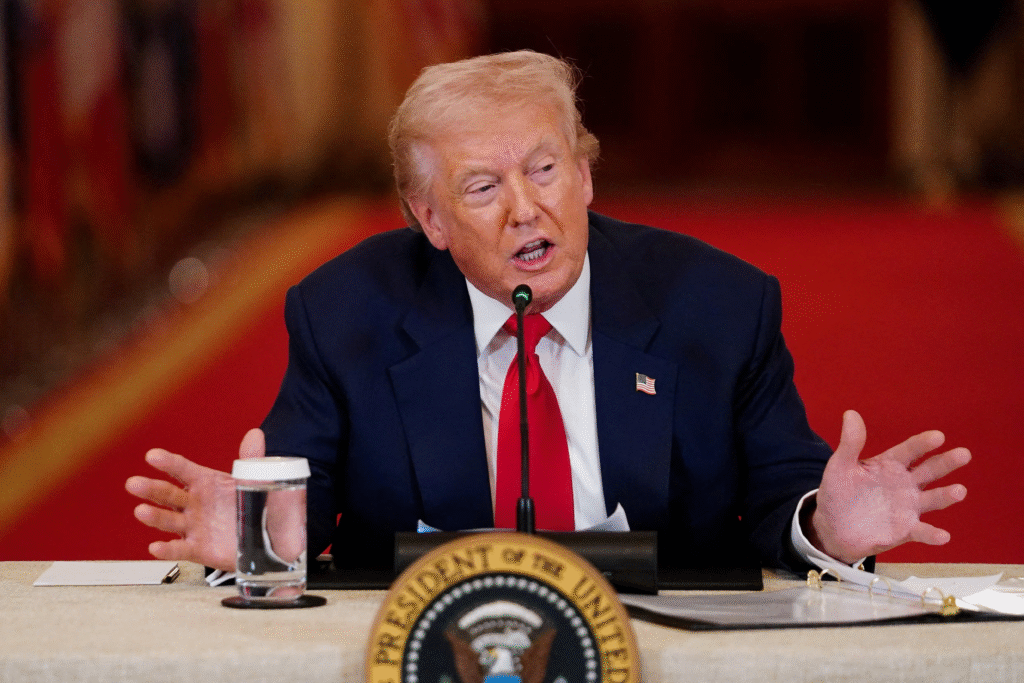
President Trump publicly expressed his disappointment regarding Mojtaba Khamenei’s ascension. He suggested he would have preferred a leader drawn from an “internal” group of candidates. Trump noted that such a model worked well recently in Venezuela.
Furthermore, Trump hinted at the possibility of extensive regime change. He mentioned the concept of “building a new country,” implying potential US involvement in restructuring a post-war Iran. Israel has already identified the new supreme leader as a potential military target.
The Nuclear Facility Factor
The underlying cause of the current conflict centers heavily on nuclear ambitions. Trump told reporters the war started because Iran was constructing a new nuclear development site. This secret facility was allegedly meant to replace a site the US bombed last year.
Currently, the US administration claims it is nearing its primary military objectives. Trump stated they are close to eliminating Iran’s ballistic-missile stockpile. They also aim to destroy the country’s manufacturing capacity to produce and launch these advanced weapons.
Despite severe damage to key nuclear sites during the 12-day war last June, risks remain high. Intelligence indicates Iran still possesses highly-enriched uranium. This dangerous material sits just one technical step away from reaching weapons-grade levels.
Diplomatic Efforts and Putin’s Role
While military actions dominate the headlines, back-channel diplomacy continues. President Trump recently held a telephone conversation with Russian President Vladimir Putin. They discussed the ongoing war and its severe impact on global markets.
According to Yuri Ushakov, Putin’s foreign affairs adviser, the Russian leader proposed several diplomatic solutions. Putin aims for a quick political settlement to end the hostilities. These ideas follow his recent discussions with various Gulf leaders and Iranian President Masoud Pezeshkian.
Despite these high-level talks, the Iranian stance remains defiant. Kamal Kharazi, a senior foreign policy adviser to the supreme leader’s office, issued a stark warning. He firmly stated to international media that the Islamic Republic is fully prepared for a long and grueling war.
To learn more, follow Shabdsanchi’s social media pages today and stay updated.
- Facebook: shabdsanchi
- Instagram: shabdsanchiofficial
- YouTube: @shabd_sanchi
- Twitter: shabdsanchi