


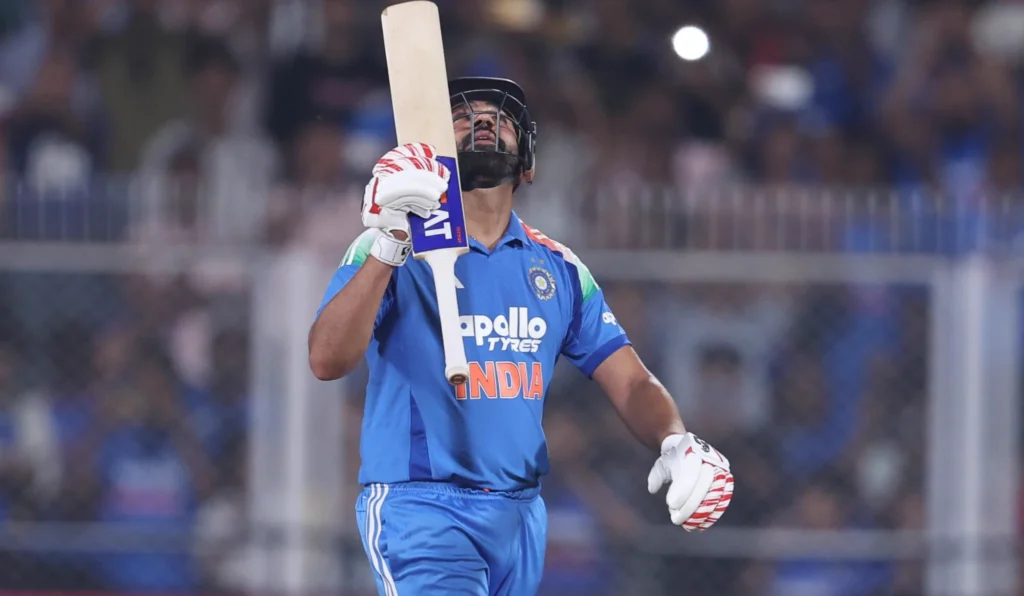
Indian veteran opener Rohit Sharma achieved another historic milestone in international cricket on October 3, 2026, becoming the fastest batter in One Day International (ODI) history to reach 10,000 runs as an opener during the third and final ODI against West Indies at Mullanpur.
Historic Milestone for Rohit Sharma in Mullanpur
The third and final ODI of the series at Mullanpur turned into a historic event for Indian cricket. After having already completed 12,000 total ODI runs and scoring a brilliant century during the second match, Rohit Sharma reached yet another landmark in his legendary career.
Having won the toss, Indian captain Shubman Gill decided to bat first on a pitch that promised good bounce. Taking full advantage of the powerplay overs, Rohit Sharma reached the 10,000-run mark as an opener in only his 202nd innings. This achievement made him the fastest batter in cricket history to cross the figure in that position, comfortably eclipsing previous records set by all-time greats.
“Rohit Sharma’s consistency at the top of the order remains unmatched in modern white-ball cricket.” — International Cricket Council (ICC) Match Commentary.
Only three other legends in international cricket history have scored over 10,000 runs as an opener in ODI cricket. Rohit Sharma joined an elite list that includes India’s Sachin Tendulkar (15,310 runs), Sri Lanka’s Sanath Jayasuriya (12,740 runs), and West Indies’ Chris Gayle (10,179 runs).
| Batter | ODI Runs as Opener | Innings Taken to 10,000 Runs |
|---|---|---|
| Sachin Tendulkar | 15,310 | 235 |
| Sanath Jayasuriya | 12,740 | 328 |
| Chris Gayle | 10,179 | 282 |
| Rohit Sharma | 10,000+ | 202 |
Early Blows: Jayden Seales Stuns India with Twin Strikes
Despite the celebration surrounding Rohit Sharma’s milestone, India’s batting lineup was quickly put under immense pressure by the West Indies fast bowling attack. Pacer Jayden Seales produced an extraordinary opening spell, removing two of India’s premier top-order batters in quick succession.
In the third over of the match, Shubman Gill was dismissed for just 1 run after strangling a delivery down the leg side into the hands of wicketkeeper Shai Hope. On the very next delivery, Jayden Seales bowled Virat Kohli through the gate for a golden duck (0), leaving the Indian team reeling early at the crease.
Following the double blow, Ruturaj Gaikwad stepped out to join Rohit Sharma in the middle. Together, the duo began rebuilding the innings, absorbing the pressure exerted by the West Indian seamers during the opening powerplay.
Complete Playing XIs for 3rd ODI at Mullanpur
Both teams fielded modified lineups for the final match of the series at Mullanpur:
India (Playing XI):
- Rohit Sharma
- Shubman Gill (c)
- Virat Kohli
- Ruturaj Gaikwad
- KL Rahul (w)
- Nitish Kumar Reddy
- Naman Dhir
- Anshul Kamboj
- Kuldeep Yadav
- Mohammed Siraj
- Gurnoor Brar
West Indies (Playing XI):
- John Campbell
- Jewel Andrew
- Shai Hope (w/c)
- Amir Jangoo
- Sherfane Rutherford
- Keemo Paul
- Matthew Forde
- Alzarri Joseph
- Gudakesh Motie
- Jayden Seales
- Vitel Lawes
Tactical Analysis and Series Context
With India already holding an unassailable 2-0 lead in the series, the home team utilized the third match to give crucial gametime to fresh talent, including Anshul Kamboj, Naman Dhir, and Gurnoor Brar. However, the early wickets of Gill and Kohli showcased the tactical discipline of the Board of Control for Cricket in India (BCCI) selected squad under pressure when facing high-quality pace bowling from Jayden Seales.
The West Indies bowling unit, led by captain Shai Hope’s sharp fielding choices, demonstrated significant bounce and movement with the new ball. How India navigates the middle overs following the initial collapse will provide vital insights for the selection committee heading into upcoming ICC tournaments.
Frequently Asked Questions (FAQs)
How many runs did Rohit Sharma need to reach 10,000 runs as an opener?
Rohit Sharma completed the milestone during the 3rd ODI against West Indies in Mullanpur. He reached 10,000 ODI runs as an opener in just 202 innings, making him the fastest player to achieve this feat in cricket history.
Who dismissed Virat Kohli and Shubman Gill in the 3rd ODI?
West Indies fast bowler Jayden Seales dismissed both Shubman Gill and Virat Kohli in consecutive deliveries. Gill was caught behind for 1 run, while Kohli was bowled for a golden duck (0).
Which players have scored 10,000 ODI runs as an opener?
Only four batters have scored 10,000 ODI runs as an opener: Sachin Tendulkar (15,310), Sanath Jayasuriya (12,740), Chris Gayle (10,179), and Rohit Sharma. Rohit Sharma is the fastest among them to reach the mark.
What is the series score between India and West Indies?
India currently holds an unassailable 2-0 lead in the three-match ODI series against West Indies. The third match at Mullanpur serves as the final fixture of the series.
Who is captaining India in the 3rd ODI at Mullanpur?
Shubman Gill is captaining the Indian cricket team in the 3rd ODI against West Indies at Mullanpur, having won the toss and elected to bat first.
Strategic Summary & Long-Term Implications
Rohit Sharma’s milestone as the fastest opener to 10,000 ODI runs redefines white-ball consistency standards in modern cricket history. Achieving this mark in just 202 innings places him comfortably ahead of legendary figures like Sachin Tendulkar and Chris Gayle.
However, the early collapse of India’s top order—featuring early dismissals of Shubman Gill and Virat Kohli at the hands of Jayden Seales—highlights ongoing vulnerabilities against early movement. As India continues testing depth in its playing XI with young inclusions, the stability provided by senior batters like Rohit Sharma remains the cornerstone of India’s ODI strategic setup. Moving forward, balancing young talent alongside record-breaking senior players will determine India’s tactical strength in upcoming multi-nation campaigns.