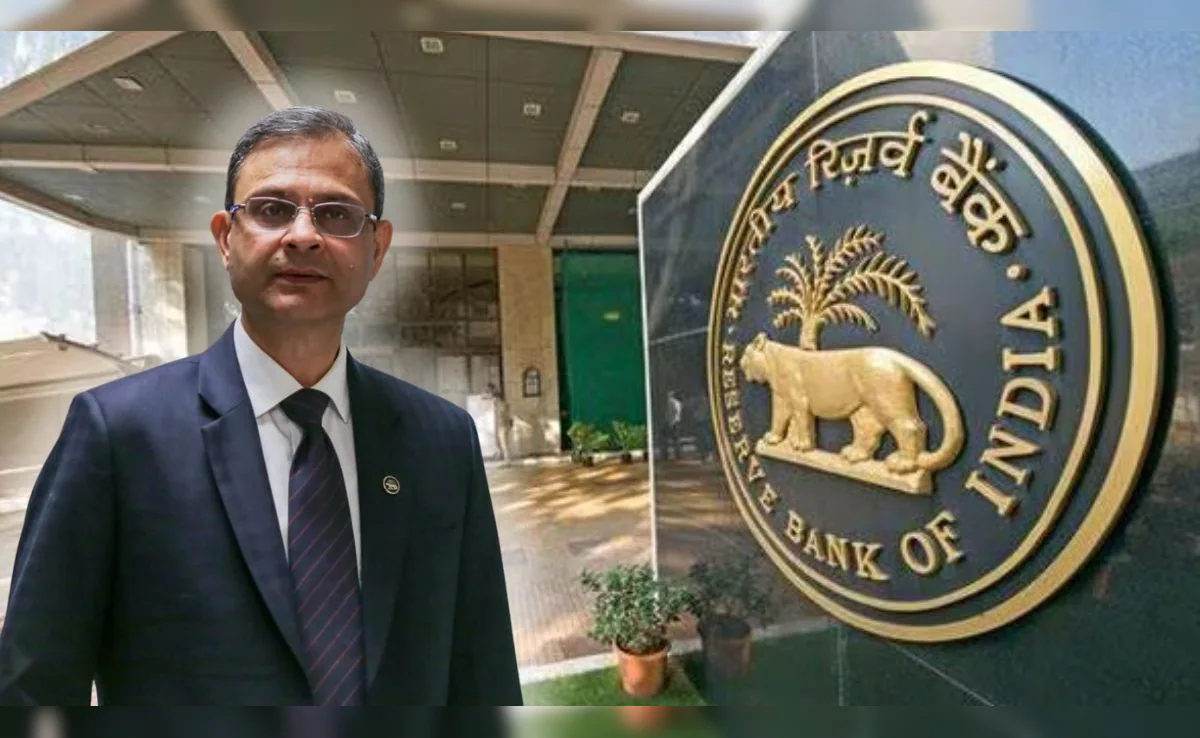
The Reserve Bank of India (RBI) opted for stability in its latest review, keeping the benchmark lending rate steady. In the first RBI Monetary Policy 2026 announcement following the Union Budget, Governor Sanjay Malhotra confirmed that the repo rate remains at 5.25%. This decision by the Monetary Policy Committee (MPC) reflects a balanced approach toward sustaining economic growth while keeping a close watch on shifting inflation dynamics and global market uncertainties.
The three-day deliberations of the Monetary Policy Committee concluded with a unanimous decision to maintain the status quo. This move was widely anticipated by financial analysts who expected the central bank to prioritize domestic stability following recent fiscal announcements. Governor Malhotra highlighted that the Indian economy remains on a firm footing, bolstered by strong internal demand and a strategic trade breakthrough with the United States.

Growth Outlook and US Trade Impact
A significant factor influencing the central bank’s confidence is the recently inked trade agreement with Washington. The Governor noted that reduced tariff pressures from this deal provide a cushion for the Indian manufacturing and export sectors. As India continues to outpace other major economies in terms of speed, the “neutral” stance of the policy suggests that the central bank is not in a hurry to tighten or loosen the screws on interest rates immediately.
Revised Inflation Projections in RBI Monetary Policy 2026
While the rates remained untouched, the RBI has marginally adjusted its outlook on price rises. The inflation projection for the first quarter (March-May 2026) of the upcoming financial year has been revised to 4%, up from the previous estimate of 3.9%. Looking further ahead into the second quarter, the central bank expects inflation to settle around 4.2%.
For the current financial year ending next month, the overall retail inflation estimate stands at 2.1%. However, the ongoing quarter is expected to see a slightly higher figure of 3.2%. These adjustments indicate that while the long-term target remains within reach, seasonal fluctuations and global supply chains require constant monitoring.
GDP Growth Estimates and Economic Health
The Governor expressed optimism regarding the “growth momentum” visible in high-frequency data. The real GDP growth for the current financial year is pegged at 7.4%. This aligns closely with the findings of the Economic Survey, which placed the growth corridor between 6.8% and 7.2% for the subsequent year.
Specific projections for the next financial year (FY 2026-27) suggest a growth rate of 6.9% in Q1 and a slight acceleration to 7% in Q2. This trajectory underscores India’s resilience despite the “global uncertainty” mentioned by the Governor during his address.

New Measures for Digital Frauds and Recovery
Beyond the macro numbers, the RBI introduced several consumer-centric initiatives. A new framework is on the cards to compensate victims of small-value digital transaction frauds. Under this proposal, customers could receive compensation of up to Rs 25,000 for losses incurred through fraudulent digital means.
Additionally, the central bank is cracking down on unethical practices in the lending sector. Draft guidelines will soon be issued to address the “misselling” of loans and the aggressive tactics used by recovery agents. These steps are aimed at strengthening the trust of the common man in the banking ecosystem.
To learn more, follow Shabdsanchi’s social media pages today and stay updated.
- Facebook: shabdsanchi
- Instagram: shabdsanchiofficial
- YouTube: @shabd_sanchi
- Twitter: shabdsanchi