GENEVA / MOSCOW — The World Health Organization (WHO) has formally requested detailed epidemiological data from Russian health authorities following the unexplained death of a research worker at a Siberian facility handling deadly pathogens. While official Russian statements confirm that all close contacts tested negative for active infection, the incident has triggered widespread international scrutiny regarding bio-containment protocols and the latent public health risks of pneumonic plague (Yersinia pestis).
The Siberian Laboratory Fatality: What We Know So Far
Uncertainty surrounds the exact operational breach that led to the researcher’s death in Siberia. Russian regulatory bodies reported that preliminary environmental and diagnostic screenings revealed “no microorganisms associated with the patient’s professional activities.”
Despite these reassuring preliminary reports, global health organizations and foreign governments remain on high alert.
“There is no current indication of a broader threat to the United States,” confirmed the U.S. Centers for Disease Control and Prevention (CDC), following public remarks by Washington officials emphasizing active surveillance. Similarly, the U.K. Health and Safety Authority noted the immediate risk to western populations remains “very low.”
The incident highlights the dangerous double-edged sword of high-containment pathogen research: live cultures of Yersinia pestis must be preserved in specialized facilities to develop updated diagnostics, evaluate antibiotic resistance, and synthesize next-generation vaccines against endemic wild strains.
What Is Pneumonic Plague and How Does It Differ?
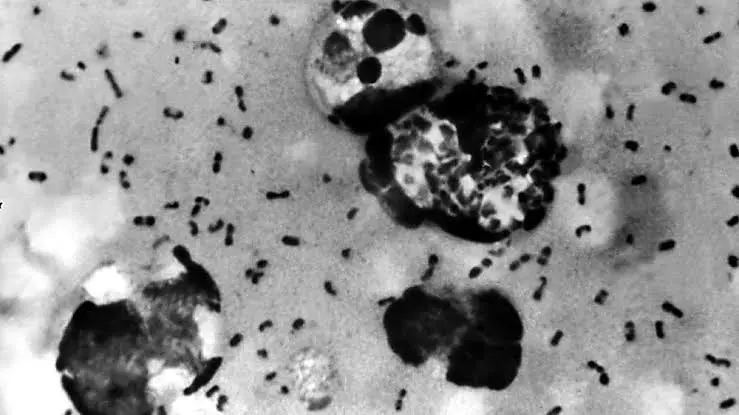
Plague is a severe disease caused by the enterobacterium Yersinia pestis. While historically associated with medieval pandemics, the pathogen remains naturally active today. Clinical medicine categorizes plague into three distinct physiological manifestations:
- Bubonic Plague: The most common form, targeting the lymphatic system to cause swollen, painful lymph nodes (buboes).
- Septicaemic Plague: Occurs when the bacterium multiplies directly within the bloodstream, often causing tissue necrosis.
- Pneumonic Plague: The most severe, virulent, and lethal iteration, occurring when the infection takes root directly within the pulmonary system.
Pneumonic plague can develop secondarily from untreated bubonic or septicaemic infections that spread into the lungs, or primarily through direct exposure to infectious particles.
Transmission Vectors: How Yersinia pestis Spreads
Unlike bubonic plague, which requires vector transmission via infected fleas or direct contact with wild hosts like rodents, pneumonic plague spreads directly between humans via respiratory droplets.
When an infected individual coughs, microscopic droplets carrying live bacterial colonies enter the air. Anyone breathing in these aerosols within close physical range can contract primary pneumonic plague without ever interacting with an animal host.
[Infected Rodent/Flea] ──(Bite/Contact)──> [Bubonic/Septicaemic Plague]
                                                   │
                                            (Blood Spread)
                                                   ▼
[Airborne Droplets] <──(Coughing/Sneeze)─── [PNEUMONIC PLAGUE]
        │
        └──(Inhalation)──> [Primary Human Host]
Historical epidemiological models suggest that pneumonic plague was the principal driver behind the devastating mortality spikes during the 14th-century Black Death, which wiped out significant portions of the Eurasian population.
Global Endemic Reality and Laboratory Necessity
Public concern often peaks during laboratory-associated scares, yet Yersinia pestis has never been fully eradicated. The WHO reports between 1,000 and 3,000 global cases annually, predominantly across central Africa, but with persistent sporadic cases recorded across China, Russia, India, and the southwestern United States.
Over 200 distinct rodent species serve as natural reservoirs for the bacterium globally.
“Plague itself has not disappeared: the bacterium that causes it, Yersinia pestis, persists in animal reservoirs across many parts of the world,” explained Prof. Piero Olliaro, Professor of Poverty-Related Infectious Diseases at the University of Oxford. “Sporadic human cases therefore continue to occur, but established surveillance, infection-control measures, and effective antibiotic treatment are important tools for limiting their impact.”
Academic institutions maintain live samples specifically because naturally occurring zoonotic strains continue to pose operational spillover risks to human populations.
“Plague is not a historical disease,” stated Dr. Zania Stamataki, Associate Professor of Viral Immunology at the University of Birmingham. “Diagnostics, vaccine development, and surveillance for antibiotic resistance all require laboratories that hold and study the live organism. This work is vital to prepare against outbreaks.”
Incubation, Symptoms, and Modern Treatment Options
Pneumonic plague features an exceptionally rapid incubation window—often developing within 24 to 48 hours following initial exposure.
Primary Symptoms Include:
- Sudden onset of high fever and severe chills.
- Rapidly deteriorating shortness of breath and acute chest pain.
- Persistent coughing producing liquid, bloody, or mucopurulent sputum.
- Rapid progression toward respiratory failure and endotoxic shock.
Without immediate intervention, pneumonic plague carries a mortality rate approaching 100%. However, early diagnosis allows modern medicine to successfully clear the infection.
“Pneumonic plague is a very severe manifestation of plague disease,” noted Dr. Malick Gibani, Clinical Associate Professor in Bacterial Vaccinology at Imperial College London. “It is treatable with antibiotics, particularly if started early. That’s why anyone with high-risk potential exposure might be offered post-exposure prophylaxis with antibiotics and/or quarantine.”
Standard therapeutic regimens rely on broad-spectrum antibiotics—including streptomycin, gentamicin, doxycycline, or fluoroquinolones—administered immediately upon suspected exposure.
Analytical Outlook: What Happens Next?
The death at the Siberian facility underscores the delicate balance required between necessary biological defense research and stringent international oversight. Moving forward, three critical developments will dictate the trajectory of this event:
- WHO Transparency Demands: The WHO will continue pressing Moscow for full diagnostic profiles, genetic sequencing of strains involved in the lab’s current studies, and detailed operational logs from the Siberian facility.
- Post-Exposure Protocols: Health agencies will monitor all laboratory personnel and close contacts throughout extended incubation windows using post-exposure prophylactic antibiotics to confirm zero secondary transmission.
- Global Biosafety Audit Practices: This incident will likely spark renewed calls among international regulatory bodies for mandatory, standardized safety audits across all international BSL-3 and BSL-4 facilities handling re-emerging zoonotic pathogens.
While the immediate threat of a wider outbreak remains low due to existing antibiotic efficacy and quick quarantine protocols, the case serves as a sharp reminder that ancient pathogens remain an ongoing biological reality.
Frequently Asked Questions (PAA)
How quickly do symptoms of pneumonic plague appear?
Symptoms of pneumonic plague develop extremely fast, typically appearing within 24 to 48 hours after initial exposure to the bacteria.
Can pneumonic plague be cured with modern medicine?
Yes, pneumonic plague is curable with standard antibiotics like doxycycline or gentamicin, provided treatment begins within hours of initial symptom onset.
How does pneumonic plague differ from bubonic plague?
Pneumonic plague infects the lungs and spreads through airborne droplets, whereas bubonic plague targets the lymphatic system through infected flea bites.
Is pneumonic plague contagious between humans?
Yes, pneumonic plague is the only form of plague that spreads directly from person to person via airborne respiratory droplets from coughing.
Is there a vaccine available for pneumonic plague?
There is currently no widely available, long-lasting vaccine for pneumonic plague, making early antibiotic intervention and biosafety containment the primary defenses.

Manish Kumar began his professional journey in digital marketing and performance marketing, and currently works as a Digital Marketing Excutive and SEO expert. With over 3 years of professional experience, he handles both strategy and execution. Currently, he manages digital marketing and performance marketing at ‘Shabd Sanchi’ (shabdsanchi.com).