




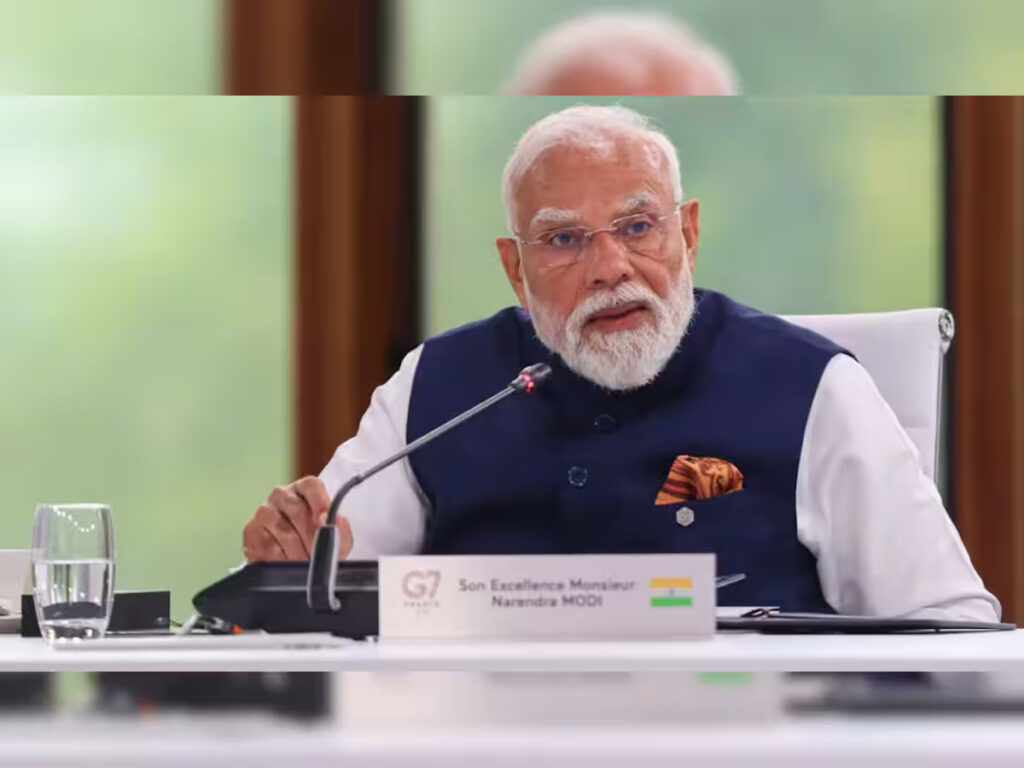
Indian Prime Minister Narendra Modi advocated for robust, trust-based international partnerships during his address at the G7 Outreach Session in France. The high-level dialogue brought together global leaders to confront pressing challenges, including severe debt vulnerabilities in developing nations, emerging health crises, and the ongoing war in Ukraine.
Shaping Global Order: PM Modi at G7 Outreach
The summit provided a critical platform for India to voice the concerns of the Global South. Speaking to international leaders, Prime Minister Modi highlighted that sustainable development cannot occur without mutual confidence among nations. He urged the international community to reform existing financial structures to better support vulnerable economies.
India’s participation underscores its rising influence in global governance and economic strategy. By focusing on collective resilience, the Prime Minister positioned India as a bridge between developing nations and advanced economies. The discussions aimed to create actionable frameworks for long-term economic stability.
Addressing Debt and Financial Vulnerabilities
A central theme of the session was the growing debt crisis affecting several lower-income countries. Diplomatic channels indicate that India pushed for transparent lending practices to prevent sovereign defaults. Unresolved financial distress in these regions often triggers broader geopolitical instability, impacting global trade routes.
International financial institutions must adapt to these changing realities. The economic fallout from prolonged conflicts has worsened inflation worldwide, making structural reforms even more urgent. Leaders present agreed that coordinated fiscal tracking is essential to mitigate these vulnerabilities.
Global Health and the Ebola Response
Beyond economic challenges, the leaders analyzed international health emergencies, focusing closely on containment strategies for the Ebola outbreak. Prime Minister Modi shared India’s experience in digital healthcare deployment and mass resource mobilization. He emphasized that equitable access to medical counter-measures remains a non-negotiable priority for global health security.


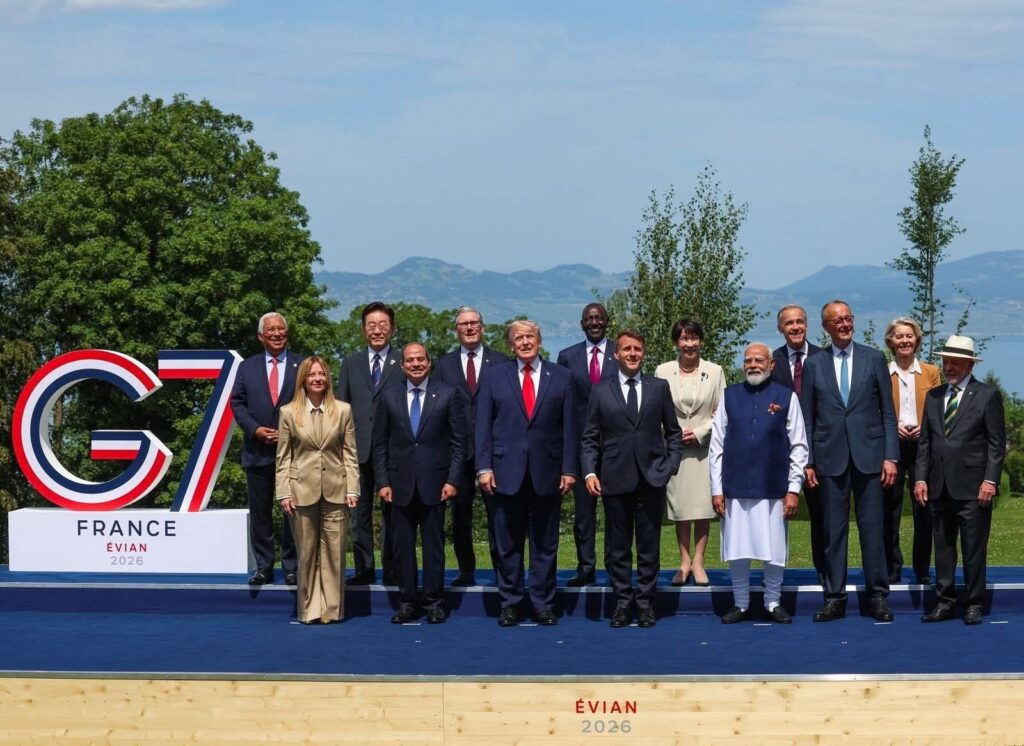
The G7 nations acknowledged the need for a decentralized manufacturing pipeline for vaccines and essential medicines. Lessons from recent pandemics show that centralized supply chains fail during acute crises. Strengthening local healthcare infrastructure across Africa and Asia was identified as a core objective.
Diplomatic Dialogues on the Ukraine Conflict
The volatile situation in Europe dominated the political segment of the outreach session. India maintained its principled stance, advocating for an immediate cessation of hostilities in Ukraine. Modi reiterated that diplomacy and structured dialogue are the only viable paths to sustainable peace.
The conflict has severely disrupted global food security and energy markets. Developing countries bear the brunt of these disruptions through skyrocketing commodity prices. The G7 leaders explored alternative supply corridors to stabilize the distribution of fertilizers and grain.
Sideline Meetings: Modi and Trump bilateral Talks
On the sidelines of the main session, Prime Minister Modi held a brief introductory meeting with U.S. President Donald Trump. This interaction set the stage for comprehensive bilateral talks scheduled later during the summit. The exchange covered key aspects of trade, regional security, and technology transfers.
Key Areas of Indo-US Bilateral Focus:
- Strategic Defense Partnerships in the Indo-Pacific
- Trade Tariff Rationalization and Market Access
- Joint Ventures in Critical and Emerging Technologies
The relationship between New Delhi and Washington remains a cornerstone for regional balance in Asia. Observers note that this brief meeting signaled strong diplomatic continuity despite shifting domestic politics in both nations. The upcoming bilateral agenda expects to deliver concrete agreements on supply chain diversification.
FAQs
What was the main theme of PM Modi’s address at the G7 Summit?
During the outreach session titled “Forging New Partnerships and Rebuilding International Solidarity,” Prime Minister Narendra Modi emphasized that the contemporary world suffers from a critical “trust deficit” rather than a resource crunch. He noted that in an interconnected global landscape where energy, digital identity, and food security intersect, international cooperation has become an absolute necessity for humanity.
What did India propose regarding economic and financial vulnerabilities at the session?
A major focus for PM Modi at G7 Outreach was urging global financial bodies to move beyond traditional “donor-recipient” paradigms. India called for restructuring development assistance into balanced partnerships of equal ownership, preventing smaller or lower-income countries from sliding into unsustainable sovereign debt crises.
How did the Prime Minister address maritime security and international law?
The Prime Minister pointed out that a lack of respect for international law remains the biggest obstacle to global solidarity. He highlighted the urgent need to secure crucial trade routes like the Strait of Hormuz, emphasizing that protecting international seafarers who sustain maritime trade must be a priority for the global community.
What India-led global initiatives were highlighted during the summit?
The Prime Minister showcased India’s “humanity-first” approach to global crises by highlighting several successful India-led international coalitions. These included:
- The International Solar Alliance (ISA) for renewable energy.
- The Coalition for Disaster Resilient Infrastructure (CDRI) for emergency management.
- The Global Biofuel Alliance for sustainable energy resources.
- Mission LiFe and the ‘Ek Ped Maa Ke Naam’ environment preservation campaigns.
What was discussed during the sideline interaction between PM Modi and US President Donald Trump?
Seated side-by-side during the session, the two leaders exchanged warm pleasantries ahead of their formal bilateral dialogue. Official briefs indicate that their upcoming meetings are slated to comprehensively address supply chain diversification, tariff rationalizations, and deeptech collaboration in the Indo-Pacific region.