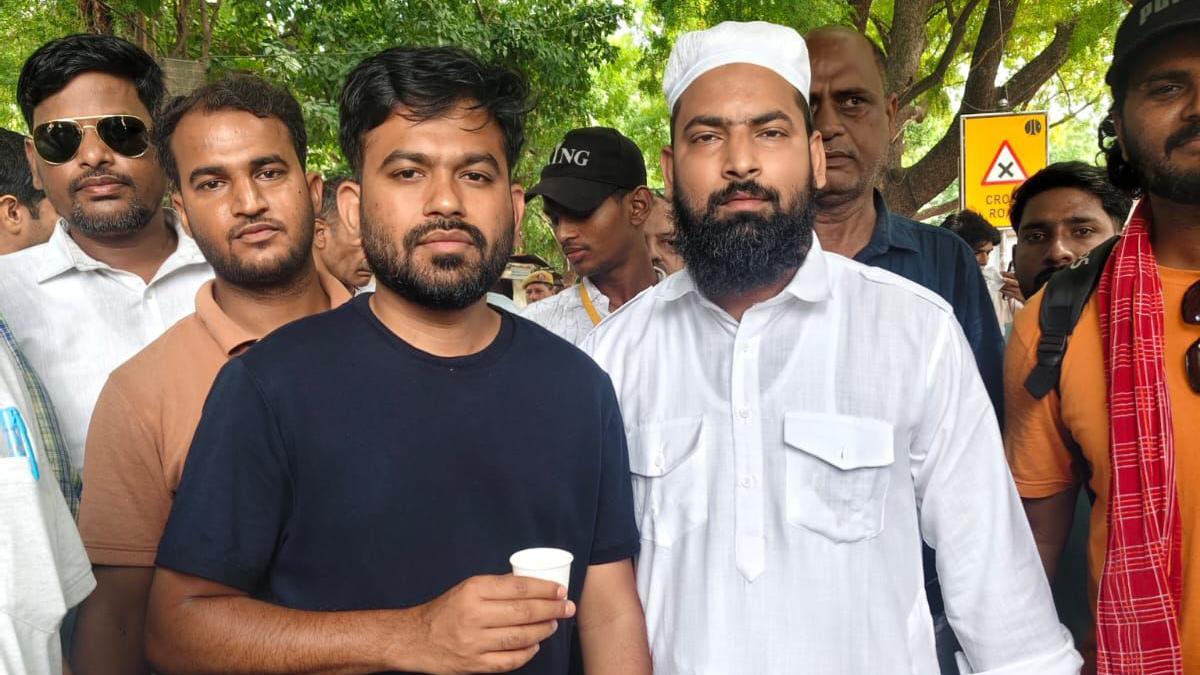
A law graduate who spent weeks coordinating basic food and water supplies for demonstrators at New Delhi’s Jantar Mantar has now found himself at the center of a major constitutional debate before the apex court of India. The mohammad junaid cjp petition, filed as an intervention application in the Supreme Court, details alarming allegations of illegal abduction, blindfolded transport, and coercive interrogation by law enforcement officers.
What began as a humanitarian effort to ensure that student protesters did not go hungry during prolonged demonstrations has turned into a high-stakes legal scrutiny of police powers, personal liberty, and procedural due process under Indian law.
Background of the Jantar Mantar Demonstrations
During the large-scale demonstrations organized around student rights and grievances at Jantar Mantar, hundreds of young citizens gathered to voice their demands. Sustaining such gatherings over several weeks required logistical support, particularly basic amenities like drinking water and meals.
Mohammad Junaid Malik, a 26-year-old law graduate and judicial service aspirant, voluntarily organized food kitchens to cater to the crowd. Malik held no executive post or administrative position within the political or organizational leadership of the Cockroach Janta Party (CJP) or student unions. His role remained exclusively focused on community coordination and humanitarian aid. However, as media visibility around the community kitchen grew, so did state surveillance surrounding its financial backend.
Key Allegations Detailed in the Mohammad Junaid CJP Petition
The mohammad junaid cjp petition, submitted through Advocate-on-Record Neha Rathi within ongoing proceedings concerning police conduct during the protests, outlines a sequence of events alleging severe abuse of state authority.
Midnight Interception and Blindfolded Transport
According to the court filings, Junaid Malik was intercepted late at night while returning from Dr. Ram Manohar Lohia (RML) Hospital in New Delhi after receiving medical treatment for a dog bite.
- A group of police personnel operating in an unmarked vehicle allegedly stopped Malik and his friend.
- Their personal mobile devices were seized and forcibly unlocked without a warrant or legal documentation.
- The plea asserts that the duo was blindfolded, placed in a moving vehicle, and transported for several hours to an undisclosed, non-official location.
Interrogation Over Funding and Threat of Coercive Action
Inside an informal interrogation setup, senior officials allegedly subjected the volunteers to continuous intimidation. The central point of questioning was not criminal wrongdoing, but the financial sources backing the protest’s food counters.
- Officers aggressively demanded names of donors financing the food distribution.
- Allegations in the petition state that officers threatened the volunteers with strict preventive detention statutes, including the National Security Act (NSA), if they failed to name specific financial backers.
- The next morning, the blindfolded volunteers were driven to a remote forested area near the Dehradun–Mussoorie highway—hundreds of kilometers from Delhi—and abandoned on the roadside with instructions not to activate their phones immediately.
Alleged Intimidation and Raids on Family Members
The mohammad junaid cjp petition highlights that police scrutiny extended beyond the volunteer to his family members.
- Local police teams allegedly raided Malik’s family home in Ghaziabad, demanding bank account ledgers, identity cards, and financial records without producing search warrants.
- Family members, including his father and extended relatives, were summoned to local police stations and held for hours of questioning regarding Junaid’s whereabouts and finances.
Constitutional Implications and Legal Precedents
Constitutional Guarantees at Stake
| Article | Key Right | Context / Implication |
|---|---|---|
| Article 14 | Equality Before Law | Arbitrary Police Action |
| Article 19 | Freedom of Expression | Right to Peaceful Assembly |
| Article 21 | Right to Life & Liberty | Protection Against Illegal Custody |
Violations of Article 14, 19, and 21
The petition argues that the actions of law enforcement infringe upon fundamental constitutional guarantees:
- Article 14 (Equality Before Law): Arbitrary detention without official logging or standard procedures reflects unequal application of the law.
- Article 19(1)(b) & (1)(a): Penalizing individuals for providing food or support at a peaceful assembly indirectly suppresses the fundamental freedom to assemble and express dissent.
- Article 21 (Protection of Life and Personal Liberty): Unregistered detention, physical restraint, blindfolding, and coercive questioning strike at the core of personal liberty.
Non-Compliance with DK Basu Guidelines on Arrest
The landmark Supreme Court judgment in D.K. Basu v. State of West Bengal (1997) laid down mandatory protocols for any arrest or detention:
- Identification tags for interrogating officers.
- Preparation of an official Memo of Arrest witnessed by at least one family member or respected citizen.
- Formal entry in the station General Diary regarding the detention location and officers in charge.
- Notification to a family member or friend within 8 to 12 hours of detention.
The mohammad junaid cjp petition points out that none of these mandatory safeguards were followed during the night of the detention, rendering the entire exercise procedurally unlawful.
Proceedings in the Supreme Court and Response of Authorities
When the intervention application came up before the Supreme Court, senior advocate Prashant Bhushan presented the facts, highlighting that a young citizen was picked up, blindfolded, and dumped on a highway simply for distributing food. The plea requested:
- Immediate court protection against coercive action for Junaid Malik and his family.
- A judicial inquiry into the alleged illegal detention and procedural lapses by the police.
- Directives to preserve all relevant CCTV footage, toll plaza records, and digital evidence to verify the vehicle routes.
In response, the law officers representing state authorities opposed the listing of the intervention plea, arguing that law enforcement agencies were acting within their mandate to investigate external funding and public order concerns. However, civil rights advocates maintain that investigating funding sources must adhere to statutory Criminal Procedure rules rather than informal detentions.
The Broader Impact on Right to Dissent and Civic Volunteering
The legal claims presented in the mohammad junaid cjp petition raise important questions for civic participation in India:
- Chilling Effect on Humanitarian Support: If providing food, medical aid, or water at protest sites exposes citizens to unaccountable police questioning, voluntary civic support during public demonstrations could be severely discouraged.
- Accountability of Unmarked Surveillance: The use of unnumbered vehicles, blindfolds, and unofficial interrogation centers creates a dangerous precedent that undermines public trust in law enforcement accountability.
- Institutional Role of Judiciary: The Supreme Court’s scrutiny of this application serves as a critical check on state power, ensuring that administrative agencies remain bound by constitutional limits.
Frequently Asked Questions (FAQs)
What is the core focus of the Mohammad Junaid CJP petition?
The mohammad junaid cjp petition is an intervention application filed in the Supreme Court alleging that a food volunteer was illegally detained, blindfolded, interrogated about protest funding, and abandoned on a distant highway without due legal process.
Who is Mohammad Junaid Malik?
Mohammad Junaid Malik is a 26-year-old law graduate and judicial services aspirant who voluntarily organized food and water stalls for participants during the demonstrations at Jantar Mantar, New Delhi.
Why were the police investigating the food volunteer?
According to petition filings, law enforcement officers were seeking details regarding the financial sources backing the community kitchen and attempting to trace potential funding networks behind the broader protest.
Which constitutional rights were allegedly violated?
The petition cites violations of Article 14 (Right to Equality), Article 19 (Freedom of Speech and Assembly), and Article 21 (Right to Life and Personal Liberty), along with non-compliance with the Supreme Court’s D.K. Basu guidelines on arrest and detention.
What relief has been sought from the Supreme Court?
The applicant has requested judicial protection against police harassment for himself and his family, an independent inquiry into the illegal detention allegations, and orders to preserve digital and location evidence.
Conclusion
The mohammad junaid cjp petition brings to light a critical tension between police investigative powers and constitutional safeguards for individual liberty. Whether in times of public protest or ordinary law enforcement, adherence to established procedures—such as issuing formal notices, maintaining arrest memos, and respecting fundamental rights—remains the bedrock of the rule of law. As the Supreme Court considers these allegations, the legal community and civil society await directives that reinforce constitutional protections for every citizen.
For more information, follow Shabdsanchi‘s social media pages today and stay updated.
- Facebook: shabdsanchi
- Instagram: shabdsanchiofficial
- YouTube: @shabd_sanchi
- Twitter: shabdsanchi