




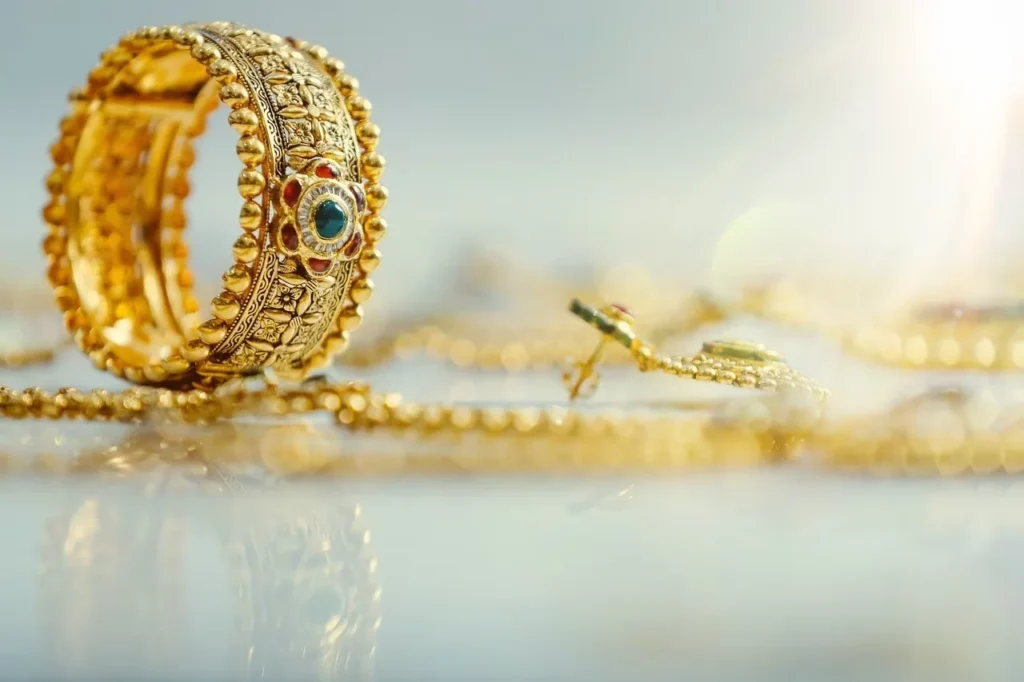
The organized retail gold and diamond sector faces a fascinating divergence between short-term quarterly hiccups and long-term structural tailwinds. Kalyan Jewellers shares recently experienced sudden near-term volatility, dropping nearly 7% to 8% before staging a healthy 4% recovery to settle around the ₹369–₹374 zone. This erratic price movement followed the company’s Q1 FY27 business update, where consolidated revenue growth, though robust, marginally missed high-conviction street estimates.
However, global brokerage giant Citigroup (Citi) has looked past the immediate quarterly noise. In its latest institutional coverage, Citi reiterated its high-conviction Buy rating, maintaining a structural target price of ₹750. This target implies that the Kalyan Jewellers share price could more than double from its current market levels.
Here is an institutional-grade breakdown of why the structural long-term thesis for this consumer-discretionary powerhouse remains intact, despite immediate headwinds.
The Q1 FY27 Growth Dilemma: Robust Execution vs. Peak Street Expectations
The primary catalyst for the recent pressure on Kalyan Jewellers stock was not a structural operational failure, but rather the gap between phenomenal performance and sky-high market expectations.
In its headline business update, the company posted a highly respectable 38% year-on-year (YoY) consolidated revenue growth for the June quarter. For any typical retail operation, a near-40% revenue jump during a macroeconomically challenging period is exceptional. However, the street evaluated the numbers against a higher benchmark set by larger peers like Titan Company, which posted roughly 39% growth in its core jewellery segment.
Furthermore, the domestic retail sector navigated unique headwinds during this period:
- The Adhik Maas Factor: The once-in-three-years Adhik Maas lunar period fell entirely within this quarter. This traditional period is widely considered unfavorable for wedding planning and major gold acquisitions, naturally softening regional discretionary footprints.
- Geopolitical Volatility & Gold Spikes: Macro tensions in West Asia and shifting interest rate projections kept gold prices highly elevated, causing temporary buyer hesitation on pure volume scales.
Despite these immediate factors, the company’s standalone operations proved resilient. Domestic same-store sales growth (SSSG) rose by approximately 28%, proving that footfall conversion and customer retention remain strong in tier-1 and tier-2 markets.
Read Also: Maharashtra TET Paper Leak Bihar Connection: Assets Worth Crores Traced to Delhi & Patna
Why Citi Belongs to the Ultra-Bullish Camp: The Asset-Light Pivot
To understand why global brokerages see a massive 100%+ upside in Kalyan Jewellers shares, one must evaluate the structural evolution of its operational architecture. The company is actively transitioning from a capital-heavy, company-owned showroom model to a capital-efficient, franchise-led expansion strategy.
Traditional Retail Model (Capital Heavy) ──> Massive Inventory Debt ──> Depressed ROCE
FOCO / Franchise Model (Asset Light)    ──> Partner Investment  ──> Accelerated Free Cash Flow
This pivot shifts the financial dynamics completely:
- Accelerated Deleveraging: Under the franchise model, regional partner capital funds store setups and physical inventory. This structure allows the parent company to aggressively pay down balance sheet debt, lowering fixed interest obligations.
- ROCE Maximization: By minimizing heavy upfront capital expenditures per location, the Return on Capital Employed (ROCE) scales upward dynamically.
- Rapid Network Scaling: During the June quarter alone, the group successfully added 12 new showrooms across domestic corridors while its digital-first subsidiary, Candere, expanded by 5 physical locations. This brings their total footprint to a massive 524 stores globally.
Additionally, their digital-first platform, Candere, delivered a massive 112% revenue growth, demonstrating the brand’s ability to capture millennial and Gen-Z demographics looking for lightweight everyday premium wear.
Financial Health & Underlying Fundamentals
An examination of the rolling financial metrics indicates that the company’s balance sheet strength easily absorbs temporary macro pressures.
| Key Metric (Consolidated) | Performance & Trajectory | Strategic Significance |
| FY26 Net Profit | Surged 86% YoY to ₹1,350 Crore | Confirms underlying core profitability scaling. |
| Q4 FY26 PAT | Doubled YoY to ~₹410 Crore | High exit-rate momentum entering the new fiscal year. |
| Recycled Gold Revenue Share | Scaled past 46% (55% in June alone) | Protects margins against raw bullion import duties. |
| 5-Year Market CAGR | Compounding effectively at 71.02% | Reflects sustained mid-cap market outperformance. |
Crucial Margin Driver: The massive success of the “Shine with India” gold recirculation campaign has successfully pushed recycled gold to account for more than 46% of June quarter revenue. By encouraging consumers to exchange idle family gold for modern designs, the company significantly reduces its reliance on expensive imported bullion, effectively shielding operating margins from high import tariffs and currency depreciation.
Institutional Consensus vs. Structural Risks
A consensus view among major domestic and foreign institutional investors reveals a heavily positive bias. Alongside Citi’s target price of ₹750, ICICI Securities maintains a strong Buy rating with a target of ₹670, modeling a standalone revenue CAGR of 22% over the near-to-mid term.
However, prudent investors tracking the Kalyan Jewellers share price must balance this optimism against inherent sector-specific risks:
- Natural Diamond Pricing Volatility: Structural, downward price corrections in natural diamonds—driven by the scaling of lab-grown alternatives—could lead to inventory valuation write-downs if consumer preferences shift rapidly.
- Regulatory Changes: Regulatory adjustments, such as sudden shifts in custom duties on duty-free gold corridors or stricter compliance rules regarding cash-to-gold conversions, directly impact short-term liquidity.
- Competitive Intensity: Regional organized chains and legacy market leaders are matching store expansion plans aggressively, keeping marketing costs high across high-street zones.
Conclusion: The Long-Term Horizon
The short-term correction in Kalyan Jewellers shares appears to be a classic case of profit-booking and relative peer comparison, rather than an indicator of structural weakness. With a near-40% revenue growth rate, a successful asset-light franchise expansion strategy, and an innovative margin-protection blueprint through gold recycling, the fundamental machinery of the business remains highly functional.
While seasonal headwinds like the Adhik Maas impacted short-term street modeling, the approaching festive and wedding seasons provide strong catalysts for a multi-quarter volume rebound. For investors aligned with a long-term horizon, Citi’s bullish target of ₹750 highlights the immense growth runway left as India’s unorganized gold market continues to formalize rapidly.
Read Also: Sensex Crashes 1,677 Points as US-Iran Tensions Rise: Why Dalal Street Turned Red Today
Frequently Asked Questions (FAQs)
1. Why did Kalyan Jewellers shares drop despite reporting 38% revenue growth?
The minor drop was primarily caused by market comparisons. While 38% growth is objectively high, market expectations were elevated because a major competitor (Titan) posted slightly higher growth metrics in its core segments, triggering near-term profit-booking by short-term traders.
2. What is the official target price issued by Citi for Kalyan Jewellers stock?
Citigroup has maintained a high-conviction Buy rating with a definitive target price of ₹750, implying that the stock has the structural potential to double from its mid-2026 consolidation range.
3. How does the franchise model benefit Kalyan Jewellers’ balance sheet?
The asset-light franchise model allows external partners to fund store real estate and initial inventory. This frees up internal cash flows, enabling the company to reduce debt, improve capital efficiency, and accelerate store expansion without taking on heavy leverage.
4. What role does recycled gold play in the company’s financial strategy?
Recycled gold accounted for over 46% of the June quarter revenue due to the “Shine with India” campaign. Utilizing consumer-recycled gold reduces the company’s dependence on imported gold bullion, buffering it against volatile international pricing and high import duties.
5. What are the key structural risks to the Kalyan Jewellers share price?
The primary risks include long-term downward price trends in natural diamonds, unexpected regulatory or duty shifts on gold imports by the government, and intense competition from other rapidly expanding organized national jewelry brands.
For more information, follow Shabdsanchi‘s social media pages today and stay updated.
- Facebook: shabdsanchi
- Instagram: shabdsanchiofficial
- YouTube: @shabd_sanchi
- Twitter: shabdsanchi