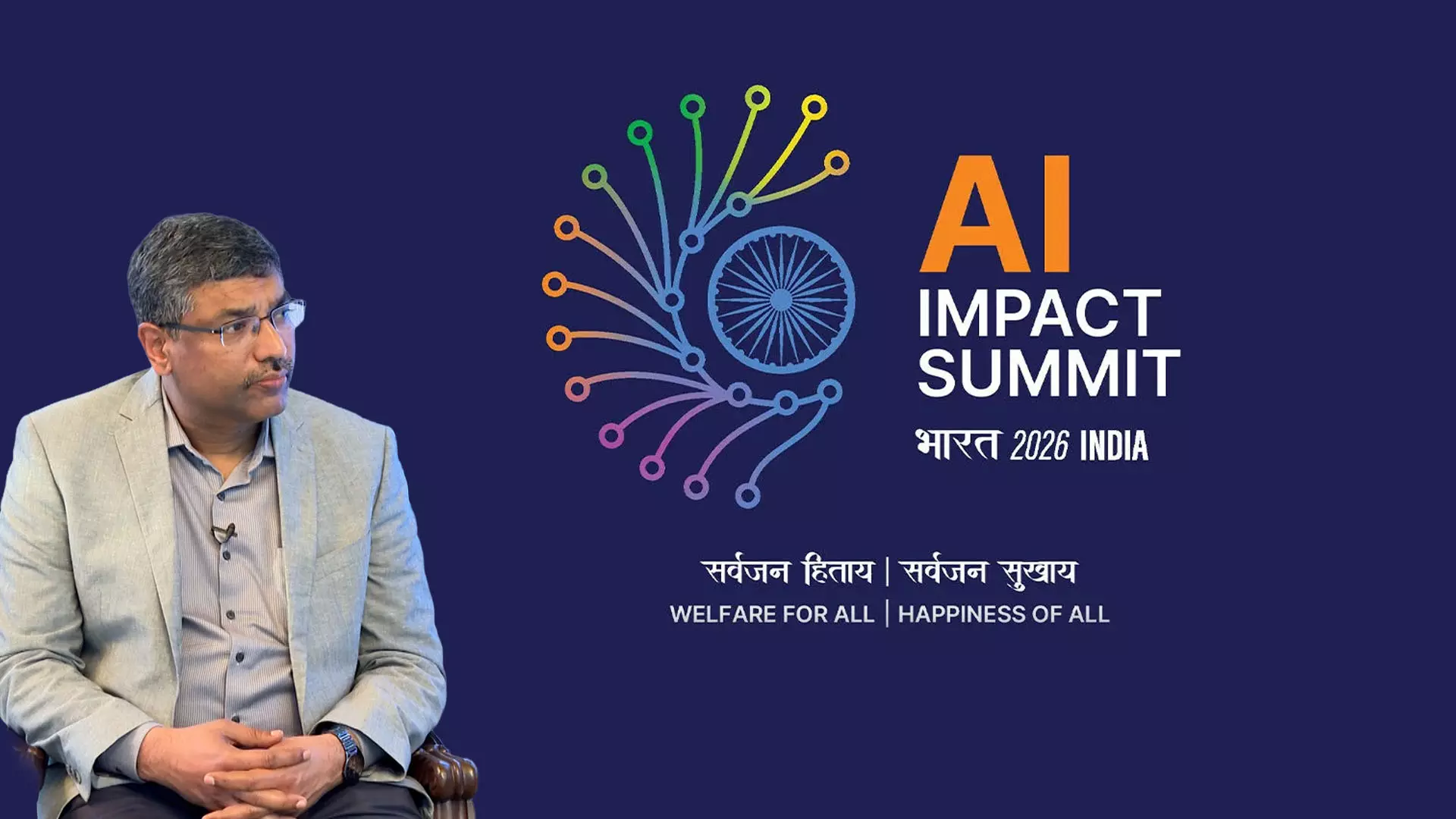
Electronics and Information Technology Secretary S Krishnan has issued a stern directive to tech exhibitors following the controversy involving Galgotias University’s display of a Chinese-made robotic dog. Speaking at the AI Impact Summit 2026, Krishnan emphasized that participants must only showcase “genuine and actual work” to maintain the integrity of national innovation platforms.
The AI Impact Summit, held at the prestigious Bharat Mandapam, was intended to be a beacon of India’s domestic artificial intelligence prowess. However, the event’s narrative shifted when a quadruped robot, presented under the name “Orion” by Galgotias University, was identified by experts as an off-the-shelf product.
Industry observers quickly pointed out that “Orion” was actually the Unitree Go2, a commercially available robot manufactured by the Chinese firm Unitree Robotics. The machine is widely available in India through various distributors for approximately Rs 2-3 lakh, leading to allegations that the university misrepresented a foreign product as an in-house innovation.
Ethical Standards for Tech Exhibitions
The IT Secretary’s intervention underscores a growing concern regarding the “label-engineering” of imported technology. Krishnan stated that the government seeks to foster an environment where true research and development are celebrated, rather than overshadowed by disputes over ownership.
“Exhibitors must not display items that are not theirs,” Krishnan told reporters. He stressed that a strict code of conduct is essential to prevent misinformation from devaluing high-profile summits. The Secretary noted that while he would not adjudicate the specific right or wrong of the current case, the controversy itself was detrimental to the event’s goals.
The Galgotias University Response
Following the backlash, Galgotias University was asked to vacate its pavilion. Reports indicate that the stall’s power supply was disconnected as organizers moved to distance the summit from the escalating row. The university subsequently issued a formal apology, attributing the incident to a communication breakdown.
According to a university statement, the confusion was sparked by a representative who was “ill-informed” about the robot’s technical origins. The institution clarified that while they use such global technologies to train students, they never intended to claim manufacturing credit for the Unitree hardware.
Scrutiny of “Orion” and Project Claims
The controversy gained momentum after a video surfaced of Professor Neha Singh, who was managing the stall, describing the robot to DD News. In the clip, she claimed that the university had invested over Rs 350 crore in AI and that “Orion” had been developed by their Center of Excellence for surveillance tasks.
These claims were met with skepticism by the robotics community, as the physical hardware showed no visible modifications from the standard Chinese model. The university later clarified that Professor Singh was not authorized to speak to the press and was caught up in the “enthusiasm of being on camera.”
Protecting the ‘Made in India’ Brand
This incident has sparked a wider debate about the vetting process for government-backed expos. Critics argue that allowing rebranded foreign products to be showcased at events inaugurated by the Prime Minister dilutes the “Aatmanirbhar Bharat” (Self-Reliant India) mission.
Government sources suggest that future exhibitions may implement stricter documentation requirements for hardware prototypes. This would ensure that only verified, indigenous intellectual property receives a platform at flagship summits.
Future Implications for Academic Research
For academic institutions, this serves as a cautionary tale. While utilizing global platforms like Unitree or Boston Dynamics for software research is standard practice, transparency regarding the hardware’s origin is paramount.
Professor Singh later maintained that the robot was intended to inspire students. However, the fallout suggests that in the high-stakes world of AI and robotics, the distinction between a “teaching tool” and a “developed product” must be explicitly defined to avoid misleading the public and policymakers.
To learn more, follow Shabdsanchi’s social media pages today and stay updated.
- Facebook: shabdsanchi
- Instagram: shabdsanchiofficial
- YouTube: @shabd_sanchi
- Twitter: shabdsanchi