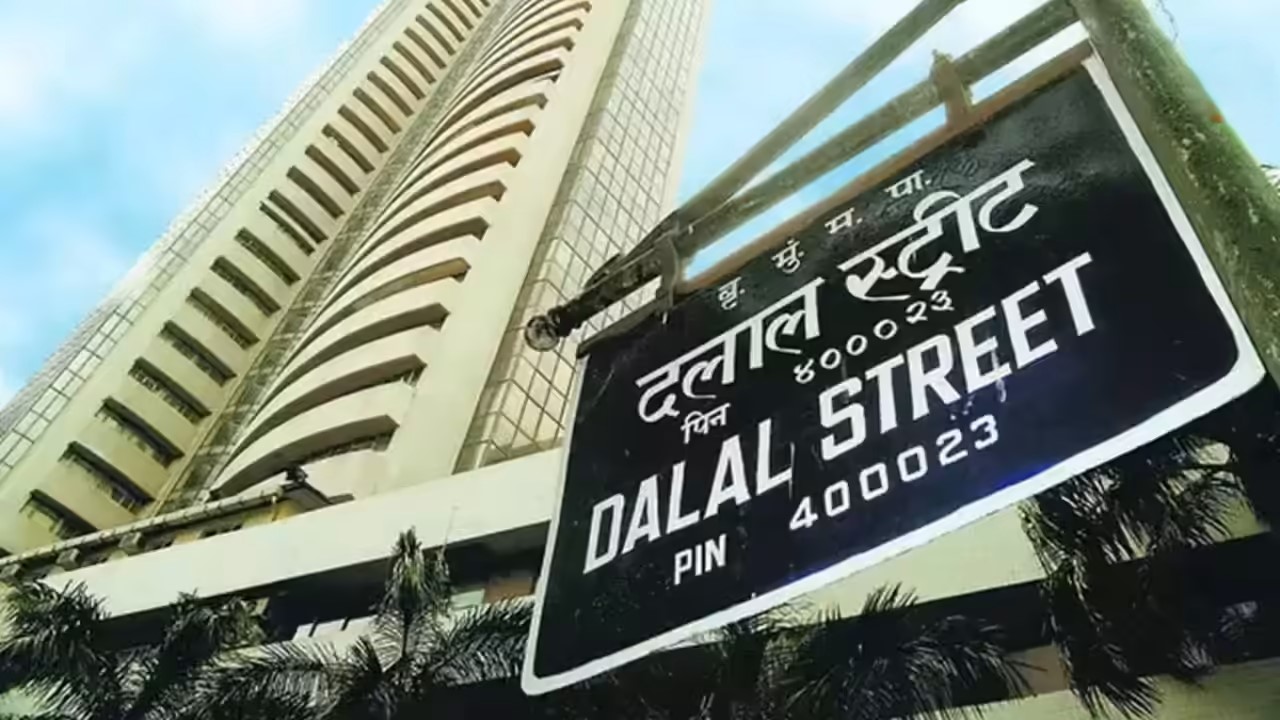
The escalating conflict in the Middle East has triggered a massive Indian stock market crash, leaving investors reeling. Since late February, a staggering Rs 48.29 lakh crore in investor wealth has been wiped out as geopolitical tensions, surging crude oil prices, and sustained foreign outflows violently batter Dalal Street.
What Triggered the Indian Stock Market Crash?
Dalal Street is currently witnessing one of its sharpest corrective phases in recent history. The rapid escalation of the West Asia conflict has forced global investors into a severe risk-aversion mode. Consequently, panic selling has heavily dominated the trading sessions over the past few weeks. Global cues remain decisively negative, forcing market participants to continuously offload their equity holdings across almost all major sectors.
Sensex and Nifty See Steep Declines
The benchmark indices have taken a severe beating since the geopolitical landscape worsened globally. On Monday alone, the BSE Sensex plummeted by 1,836.57 points, closing at a dismal 72,696.39. This represents a steep 2.46 per cent single-day drop. Similarly, the NSE Nifty fell by 601.85 points to settle at the 22,512.65 mark.

Since the broader conflict erupted in late February, the cumulative damage has been historic. The Sensex has lost over 8,590 points, eroding roughly 10.56 per cent of its value. The total market capitalisation of BSE-listed companies has sharply contracted from Rs 463 lakh crore to Rs 415 lakh crore within weeks.
Sectoral Bloodbath: Consumer Durables and Metals Hit Hard
The broader markets have suffered even more severe casualties than the frontline indices. The BSE MidCap Select index dropped by an alarming 3.82 per cent. Meanwhile, the SmallCap Select index declined by 3.66 per cent, wiping out significant wealth for retail participants.
Market breadth remained decisively negative throughout the Monday trading session. Only 635 stocks managed to advance on the BSE, while a staggering 3,798 stocks declined rapidly. All major sectoral indices ended deep in the red. Consumer durables led the downfall by tumbling 4.91 per cent. Other major losers included the metal sector (4.76 per cent), realty (4.75 per cent), services (4.70 per cent), and PSU banks (4.39 per cent).
Also Read: एक घंटे में ₹12 लाख करोड़ स्वाहा: आज शेयर बाज़ार क्यों क्रैश हो रहा है?
The Middle East Crisis and Global Escalation
The root cause of this relentless sell-off lies geographically far from Mumbai. Following recent military strikes involving the United States, Israel, and Iran, the geopolitical situation in West Asia has deteriorated rapidly. Reports of high-profile casualties and subsequent retaliatory attacks targeting military bases across the Gulf region have deeply unsettled global financial centers.
Investors naturally despise uncertainty, and a full-scale regional war presents the ultimate unpredictable variable. The ongoing conflict directly impacts global supply chains, international trade routes, and broader investor confidence. Furthermore, the threat of continuous military retaliation keeps the global markets completely on edge.
Direct Threat to the Strait of Hormuz
Perhaps the most critical concern for the equity markets is the direct threat to the Strait of Hormuz. This narrow waterway serves as a vital transit chokepoint for global oil shipments between Iran and Oman. Any disruption here threatens to choke off a significant percentage of the world’s daily oil supply immediately.
Fears of a prolonged blockade or military conflict in the strait have sent energy markets into an absolute frenzy. For an oil-importing nation like India, this represents a worst-case economic scenario.
Surging Crude Oil Prices and Economic Pressures
Elevated energy prices act as a direct tax on the Indian economy. As crude oil prices surge globally due to the Middle East tensions, the operational costs for Indian companies spike sharply. This harsh reality has significantly contributed to the ongoing Indian stock market crash, as corporate earnings face an immediate threat from shrinking profit margins.
Higher oil prices also tie the hands of the Reserve Bank of India. Central banks cannot easily cut interest rates when energy-driven inflation looms large. Consequently, the “higher for longer” interest rate narrative is gaining strong momentum, further suppressing stock valuations across the board.
FII Selling and Rupee Depreciation
Foreign Institutional Investors (FIIs) have been aggressively pulling money out of emerging markets. The combination of global uncertainty and elevated US bond yields makes Indian equities temporarily less attractive to foreign capital. Sustained foreign outflows are systematically draining essential liquidity from Dalal Street.
Adding fuel to the fire is the sustained downward pressure on the Indian rupee. As foreign funds exit and the oil import bill rises, the rupee faces inevitable depreciation against the US dollar. A weaker currency further discourages foreign investment, creating a vicious, self-fulfilling negative sentiment cycle that is currently gripping the market.
What Should Retail Investors Expect Next?
The retail investing community, which had grown significantly over the past few years, is currently facing a severe reality check. The rapid erosion of wealth in the midcap and smallcap segments has triggered margin calls and forced liquidations. This cascading effect actively accelerates the downward spiral, as forced selling meets an absolute lack of buying interest.
Market analysts firmly suggest that the immediate future remains highly volatile. Until the geopolitical dust settles, upward momentum will be exceedingly difficult to sustain. The fundamental macroeconomic pressures—costlier crude, a weaker rupee, and capital flight—will likely cap any near-term market recovery. Investors are heavily advised to remain cautious and stick to fundamentally strong businesses rather than panic selling.
Also Read: HDFC Bank Shares Plunge 10%: AT1 Bond Row Triggers Fall
To learn more, follow Shabdsanchi’s social media pages today and stay updated.
- Facebook: shabdsanchi
- Instagram: shabdsanchiofficial
- YouTube: @shabd_sanchi
- Twitter: shabdsanchi