New Delhi, November 28, 2026 — INDIA bloc leaders decided on Saturday, November 28, 2026, to jointly oppose the Centre’s Constitution (132nd Amendment) Bill, 2026, ahead of a special parliamentary sitting starting November 30, alleging the delimitation-linked women’s quota harms Scheduled Castes (SCs) and Scheduled Tribes (STs) and threatens democracy.
The pushback comes as the government prepares to reintroduce a revised delimitation and women’s reservation package after an earlier version failed to clear the Lok Sabha in April 2026. With shifting party alignments and a narrow two-thirds threshold, the Delimitation Bill 2026 now sits at the center of India’s constitutional and federal debate.
Why the Delimitation Bill 2026 Is Back Now
The BJP-led Centre is bringing back the legislation after its earlier Constitution (131st Amendment) Bill fell 54 votes short of the required two-thirds majority in the Lok Sabha on April 17, 2026, recording 298 votes in favour and 230 against. Following that setback, the government paused accompanying bills and revised its approach to address state-level anxieties over seat shares.
Under the fresh Constitution (132nd Amendment) Bill, 2026, the government links immediate implementation of one-third reservation for women—including women from SC and ST communities—to a delimitation exercise. To prevent population-based redistribution from slashing representation in slower-growing states, the draft proposes a uniform 50% increase in seats across every State and Union Territory and freezes inter-state seat allocations and boundaries until after 2051.
“The Centre is set to introduce a fresh constitutional amendment Bill in the Lok Sabha on Monday (November 30) to roll out one-third reservation for women by increasing each State and Union territory’s seat allocation in the House and the strength of their legislative assemblies by 50%, and freeze the revised allocations and boundaries until 2051.”
The bill also raises the maximum strength of the Lok Sabha from 550 to 850—comprising up to 815 members from States and 35 from Union Territories—while raising the ceiling on State Legislative Assemblies from 500 to 650. Parliament has scheduled the special sitting with the Lok Sabha reconvening on November 30, the Rajya Sabha on December 2, and sittings concluding on December 3, subject to government business.
Congress and INDIA Bloc Outline Sharp Charges and Demands
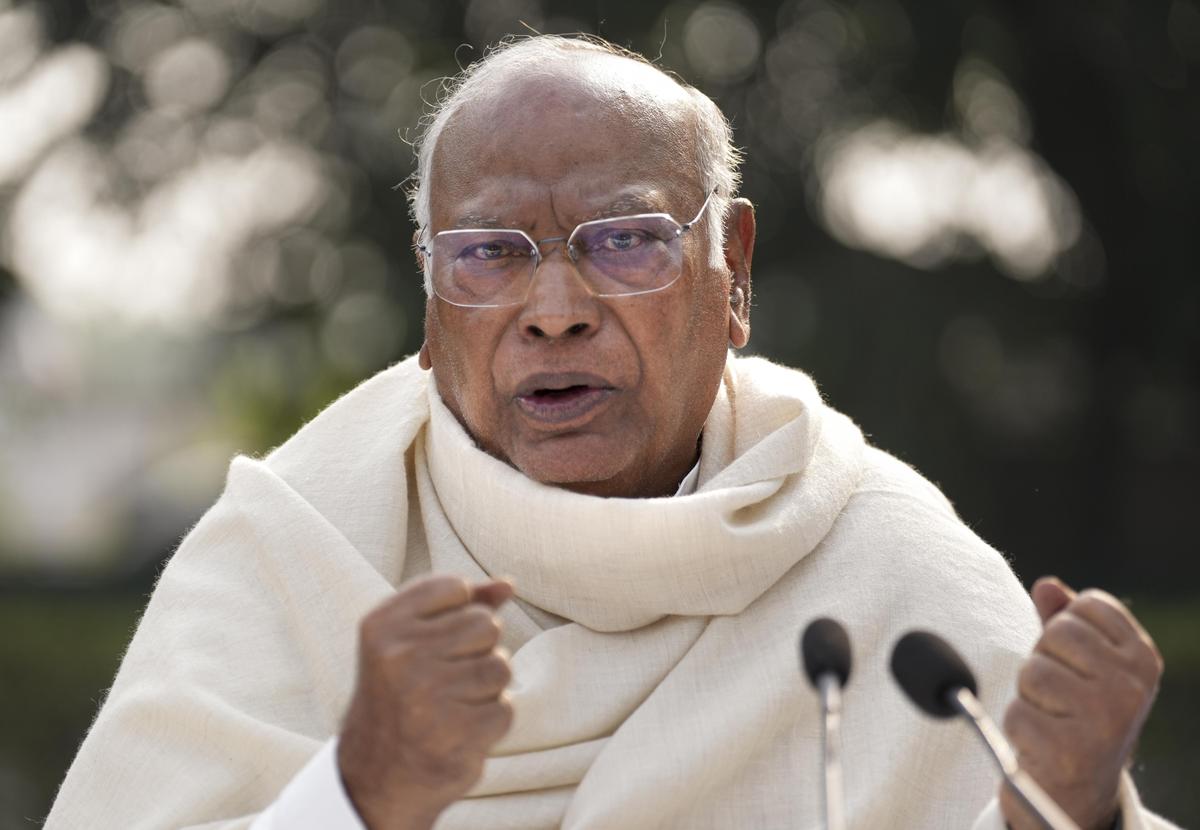
After a two-hour meeting of Opposition floor leaders at the Leader of the Opposition’s residence on November 28, Congress president Mallikarjun Kharge framed the Congress Delimitation Bill opposition around representation fairness and institutional checks. Leaders including Rahul Gandhi, Abhishek Banerjee, Kapil Sibal, Manoj Jha, Jairam Ramesh, Priyanka Gandhi Vadra, and K.C. Venugopal joined the deliberations, while non-bloc invitees such as DMK, AAP, and BJD stayed away.
“Once the power goes into their hands, they will do anything to use this bill as a weapon to remain in power permanently. We will oppose this bill,” Mallikarjun Kharge told reporters after the meeting.
Kharge argued that SC and ST communities will not receive seat increases matching their population growth, claimed the BJP delimitation bill push aims to engineer an “800-paar” tally after the earlier “400-paar” slogan, and warned against altering the Constitution or undermining democratic norms. Independent Rajya Sabha MP Kapil Sibal separately questioned whether an 850-member House can function smoothly and raised alarms over how members of the delimitation body could be appointed to redraw boundaries in states such as Uttar Pradesh, Haryana, and Maharashtra.
Rather than rejecting women’s reservation outright, the INDIA bloc laid down three explicit conditions for its support:
- Keep the current strength of the Lok Sabha unchanged instead of expanding it toward 850.
- Provide women’s reservation immediately within the existing 543 seats.
- Maintain the current allocation of Lok Sabha seats among States for the next 25 years.
Shifting Parliamentary Math and Federal Implications
According to constitutional analyses from PRS Legislative Research and parliamentary records, passing a constitution amendment requires a special majority in both Houses alongside ratification by at least half of State Legislatures under Article 368(2). With 540 sitting members in the Lok Sabha—and 539 eligible to attend if Trinamool Congress MP Kalyan Banerjee remains suspended—the bill would need 359 votes if all 538 voting members apart from the Speaker participate, though absences would lower that threshold.
Delimitation Bill news since April 2026 highlights significant fractures in the Opposition’s arithmetic. Twenty Trinamool Congress MPs broke away in June 2026 to merge with the NDA-backing Nationalist Citizens Party of India (NCPI), leaving disqualification proceedings pending before Lok Sabha Speaker Om Birla.
Meanwhile, the DMK—with 22 MPs—has backed the bill, while the Sharadchandra Pawar-led NCP (SP)—with 8 MPs—indicated on November 27 that it would support the fresh proposal if it guarantees a uniform 50% seat increase. Banking on defectors and regional allies, the BJP is projecting confidence that it can cross the two-thirds mark during the special session.
Beyond vote counts, expanding the Lok Sabha to 815 state seats while leaving the 250-member Rajya Sabha unchanged under Article 80 would shift the ratio between the two Houses from roughly 2.2:1 to 3.3:1. Analysts note that such a shift alters relative weight in presidential and vice-presidential elections, increases Lok Sabha leverage in joint sittings under Article 108, and raises the 15% cap on the Council of Ministers under Article 75 from 81 to 122 members.
Frequently Asked Questions (FAQs)
What does the Constitution (132nd Amendment) Bill, 2026 propose?
It proposes raising the maximum Lok Sabha strength to 850 and State Assembly ceilings to 650, granting a uniform 50% seat increase across States and Union Territories to roll out one-third women’s reservation, and freezing inter-state seat allocations and boundaries until after 2051.
Why is the INDIA bloc opposing the Delimitation Bill 2026?
INDIA bloc leaders argue the bill shortchanges SC and ST representation relative to population growth, risks partisan boundary drawing, and seeks to expand legislative strength to entrench BJP power rather than implementing women’s quota within the existing 543 seats.
How many votes are needed to pass the bill in the Lok Sabha?
If 538 members other than the Speaker are eligible and vote out of 540 sitting MPs—accounting for three vacancies and Kalyan Banerjee’s suspension—359 votes are required for a two-thirds majority, with any absences lowering the cutoff.
How does this bill differ from the earlier April 2026 proposal?
Unlike the Constitution (131st Amendment) Bill that fell 54 votes short on April 17, 2026, the 132nd Amendment explicitly embeds a uniform 50% seat increase across every State and Union Territory and extends the inter-state seat allocation freeze until 2051.
When will Parliament take up the Delimitation Bill?
A special parliamentary sitting is scheduled to begin in the Lok Sabha on November 30, 2026, and in the Rajya Sabha on December 2, 2026, with sittings slated to conclude on December 3, 2026.
What Happens Next
Over the next few days between November 30 and December 3, 2026, floor managers in both the ruling alliance and the INDIA bloc will test whether defections, regional compromises, and attendance math yield the required two-thirds majority. If enacted and ratified by at least half of the states, the legislation will reshape India’s electoral map, cabinet size limits, and federal balance for a generation through 2051; if blocked or delayed, women’s reservation and constituency redrawing will remain entangled in intense constitutional litigation and political standoff.

Manish Kumar began his professional journey in digital marketing and performance marketing, and currently works as a Digital Marketing Excutive and SEO expert. With over 3 years of professional experience, he handles both strategy and execution. Currently, he manages digital marketing and performance marketing at ‘Shabd Sanchi’ (shabdsanchi.com).