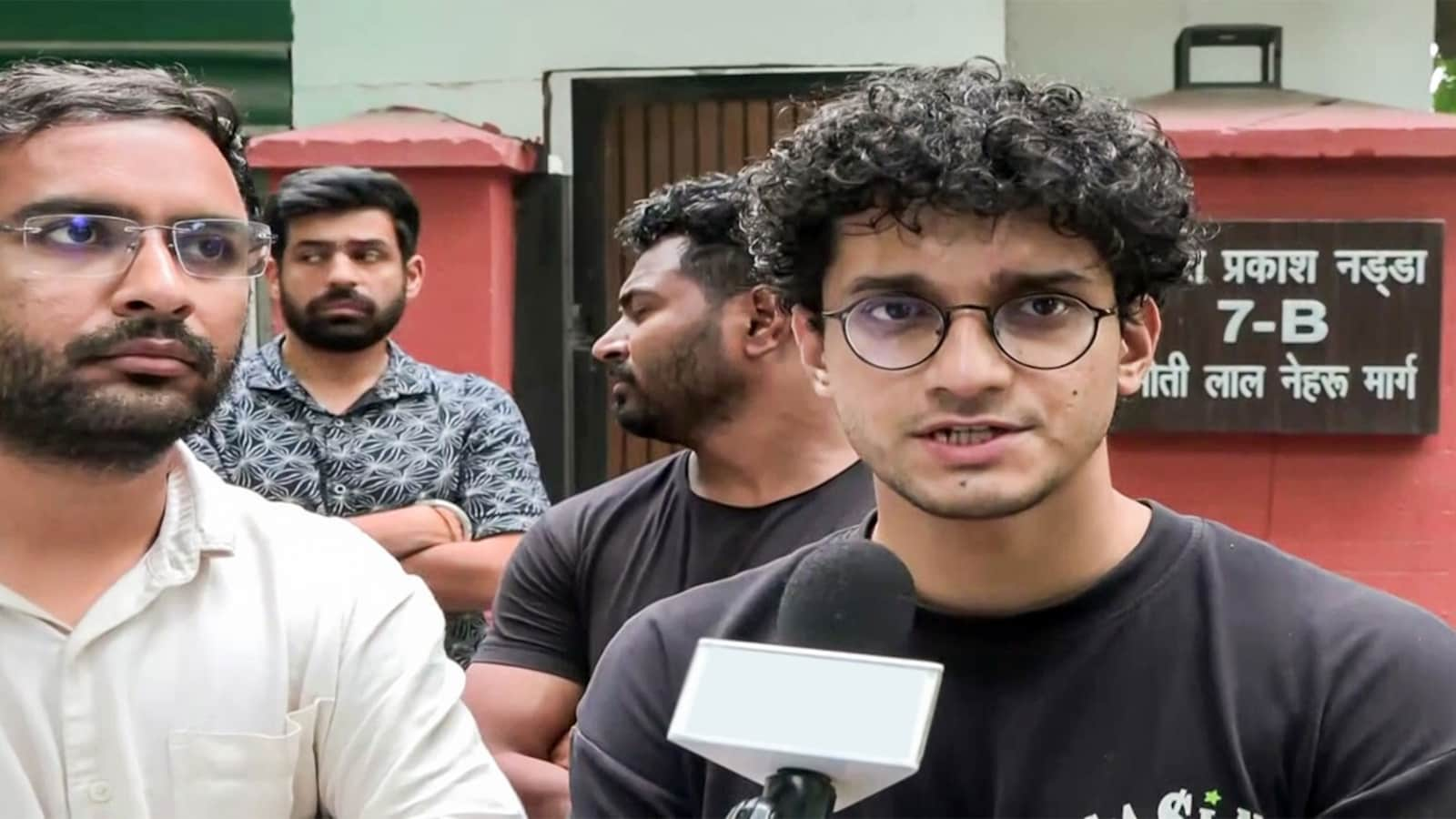
The Central Government informed the Delhi High Court on Thursday, November 26, that Mumbai Police issued a Lookout Circular (LOC) against Cockroach Janata Party (CJP) leader Sourav Das, days after immigration authorities stopped him at Delhi Airport on November 23 while he was traveling to London for an Oxford University event.
The disclosure came during a hearing before Justice Amit Mahajan on a petition challenging the travel restriction, with the court issuing notice to the Centre and setting the next hearing for December 9.
What Happened At Delhi Airport And In Court?
Sourav Das held a valid passport and visa when he arrived at Delhi Airport on November 23 to fly to London, where he was scheduled to speak on the “Cockroach Movement” at Oxford University. Instead of boarding, immigration officials prevented him from flying and flagged issues connected to his passport.
According to Das and CJP, airport officials initially pointed to passport discrepancies and a show-cause notice advising him not to use his passport, rather than explicitly informing him of an active LOC or no-fly status. Later that evening, a show-cause notice was also emailed to him by the immigration department.
“Das’s counsel told the court that no information about the LOC was given to them, and CJP maintained that neither Das nor his lawyers have received a copy of the Lookout Circular.”
When the matter reached the Delhi High Court on November 26, the Central Government stated that Mumbai Police had issued the LOC against Das on November 23. The government also flagged address and document discrepancies—noting Delhi in some records and Puducherry in others—arguing these points could bear on determining Indian citizenship.
Links To The Shivaji Park Protest And Other CJP Leaders
The travel curb has brought renewed scrutiny to an FIR registered after an unauthorized protest at Shivaji Park in Mumbai on October 2, which demanded the resignation of Chief Election Commissioner Gyanesh Kumar. Lookout notices have also been linked to CJP figures Abhijit Dipke and Ashutosh Ranka in connection with that case.
For CJP, a youth-led political outfit, the sequence of events looks like a coordinated clampdown rather than a routine administrative check. Party leaders argue that stopping a speaker bound for an international academic forum in London escalates domestic protest friction into a high-stakes cross-border restriction.
Why This Matters For Travel Rights And Due Process
In Indian jurisprudence, the right to travel abroad is closely tied to personal liberty under Article 21 of the Constitution, making Lookout Circulars a recurring flashpoint between state policing needs and individual rights. Because LOCs are frequently used at immigration checkpoints without advance notice to the subject, petitioners routinely challenge both their substantive grounds and procedural transparency.
Here, the clash between shifting explanations—a passport show-cause notice at the airport versus an LOC cited in court—is central to the legal fight. Ratna Singh, who heads legal affairs for CJP, argued that Das’s passport has neither been cancelled nor impounded, questioning what lawful basis justifies blocking his departure through undisclosed orders and changing rationales.
“CJP’s legal affairs head Ratna Singh stated that Das’s passport has neither been cancelled nor impounded, asking what legal basis exists to stop him when no solid reason was communicated.”
Das described the LOC as an afterthought and accused authorities of targeting educated youth who voice dissent. CJP also criticized the action by asking whether high-profile absconders such as Vijay Mallya, Nirav Modi, and Mehul Choksi faced similar restrictions before leaving the country.
Broader Political And Institutional Implications
Beyond the immediate setback to Das’s Oxford University trip, the dispute tests how law enforcement agencies coordinate across jurisdictions—from a Mumbai protest FIR to Delhi Airport immigration enforcement and Delhi High Court judicial review. If courts scrutinize undocumented or late-disclosed LOC justifications more strictly, agencies may face tighter standards when seeking to halt international travel.
Politically, CJP is framing the episode as an effort to curb opposition voices and international visibility around its “Cockroach Movement”. How the Centre defends both the Mumbai Police LOC and the passport discrepancy claims on December 9 will shape the next phase of the controversy.
Frequently Asked Questions
Why was Sourav Das stopped at Delhi Airport on November 23?
Immigration officials stopped Sourav Das from flying to London for an Oxford University event over passport-related issues, while the Centre later told the Delhi High Court that Mumbai Police had issued a Lookout Circular against him that day.
Which court is hearing Sourav Das’s plea, and when is the next date?
The Delhi High Court, before Justice Amit Mahajan, is hearing the matter, with the next hearing scheduled for December 9.
What is the connection to Mumbai Police and Shivaji Park?
Reports link the Lookout Circular and notices involving CJP leaders—including Abhijit Dipke, Sourav Das, and Ashutosh Ranka—to an FIR over an unpermitted protest at Shivaji Park on October 2.
What did CJP and Sourav Das say about the Lookout Circular?
Das called the LOC an afterthought and said neither he nor his lawyers received a copy, while CJP accused authorities of violating due process and infringing his right to travel despite a valid visa.
What passport issues did the Centre highlight in court?
In Delhi High Court proceedings, the Centre pointed to address mismatches across documents—citing Delhi and Puducherry—and contended they could affect citizenship verification.
What Happens Next
On December 9, the Delhi High Court will take up the matter after the Centre’s response, where the scope, timing, and legal backing of the Mumbai Police Lookout Circular—alongside the passport notice and document discrepancies—will be tested. Whether Das obtains interim relief to travel abroad or remains bound by the restriction until further adjudication will set an immediate precedent for both CJP and future LOC challenges before the court.

Manish Kumar began his professional journey in digital marketing and performance marketing, and currently works as a Digital Marketing Excutive and SEO expert. With over 3 years of professional experience, he handles both strategy and execution. Currently, he manages digital marketing and performance marketing at ‘Shabd Sanchi’ (shabdsanchi.com).