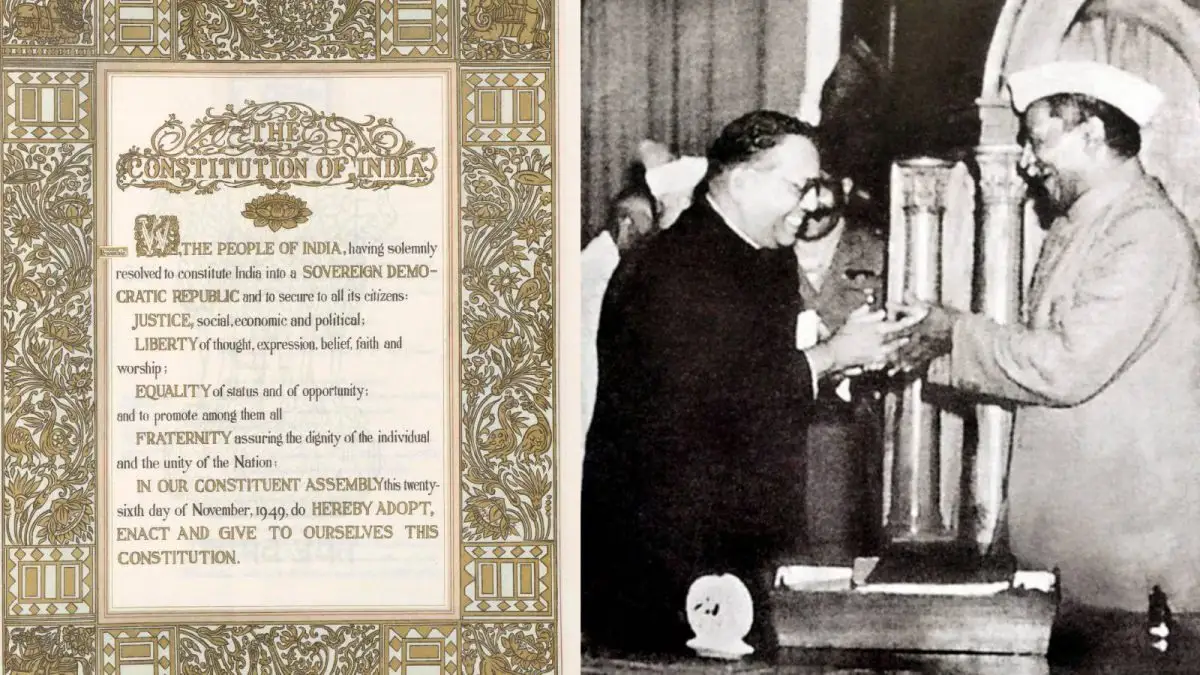
On November 26, 2026, India observes Constitution Day—also known as Samvidhan Diwas—to mark the 77th anniversary of the Constituent Assembly adopting the Indian Constitution on November 26, 1949. Led by Dr. B.R. Ambedkar as chairman of the Drafting Committee, the day commemorates the moment the Preamble of the Indian Constitution and the governing charter were adopted for “We, the People of India”.
While the charter formally came into force two months later on January 26, 1950, making India a republic, November 26 captures the completion of nearly three years of intense parliamentary deliberation. Observing the milestone on November 26 keeps public attention focused on how constitutional text translates into everyday citizenship, institutional accountability, and social reform.
From National Law Day to Samvidhan Diwas
Before 2015, November 26 was marked as National Law Day, a tradition first initiated in 1979 by former Supreme Court Bar Association president Laxmi Mall Singhvi. The shift from a narrower legal observance to Constitution Day widened public ownership beyond courts and bar associations to schools, universities, ministries, and citizens nationwide.
“But the event ‘Constitution Day’ was started only a little over a decade ago when Prime Minister Narendra Modi announced it in October 2015 while laying the foundation stone for the Dr. B.R. Ambedkar Memorial in Mumbai.”
Following the October 2015 announcement and formal notification by the Ministry of Social Justice and Empowerment in November 2015, the observance gained an expanding annual calendar tied to Dr. B.R. Ambedkar‘s 125th birth anniversary milestone. In 2026, initiatives such as the Ministry of Parliamentary Affairs’ multilingual Preamble reading drive across 23 languages on the MyGov portal and youth dialogues across 786 districts reflect how digital outreach now complements traditional civic ceremonies.
How Dr. B.R. Ambedkar and the Assembly Drafted the Charter
The Indian Constitution emerged from more than three years of debate within the Constituent Assembly, beginning with an initial draft prepared in February 1948 by Constitutional Advisor B.N. Rau after an earlier draft preamble in October 1947. Dr. B.R. Ambedkar‘s drafting committee refined that blueprint in 1948, leading to a year of clause-by-clause scrutiny where members examined more than 2,000 amendments before adopting the text on November 26, 1949.
- Bilingual manuscript & art: Handwritten in both English and Hindi with artwork by Nandalal Bose of Santiniketan
- Assembly signatures: Signed by Constituent Assembly members on January 24, 1950, the day Dr. Rajendra Prasad was elected unopposed as India’s first President
- Republic transition: Brought into full force on January 26, 1950, establishing the republic’s operational framework
Rather than treating the charter as a static rulebook, Dr. B.R. Ambedkar framed it as a mechanism for peaceful social change rooted in 19th-century and early 20th-century anti-caste struggles. That design matters today because India’s democratic institutions face recurring debates over electoral administration, representation, and public trust—making constitutional procedures the primary arena where competing political claims are contested.
Shaping the Preamble and Its Constitutional Meaning
Drawing on the December 1946 Objectives Resolution and the July 1946 Declaration of the Expert’s Committee, Dr. B.R. Ambedkar shaped the Preamble of the Indian Constitution with a distinct emphasis on fraternity and human dignity. Its core commitments center on securing Justice (social, economic, and political), Liberty, Equality, and Fraternity within a sovereign democratic republic.
“The original Preamble, adopted on November 26, 1949, did not contain the words ‘socialist’ and ‘secular’. These were inserted in 1976 through the 42nd Constitution Amendment.”
Those additions have periodically sparked legal and political arguments over textual fidelity versus constitutional evolution. In November 2024, the Supreme Court of India upheld the inclusion of “socialist” and “secular” after petitions challenged their validity, explaining that “secular” reflects equal respect for all religions and “socialist” denotes a republic committed to eliminating social, political, and economic exploitation.
Why Rights, Duties, and Everyday Civic Habits Matter Now
As India’s supreme law, the Indian Constitution pairs Fundamental Rights—such as freedom of speech and expression, freedom of conscience and religion, protection against arbitrary arrest and detention, freedom of movement, and cultural and educational guarantees—with Fundamental Duties under Part IVA. It also reinforces structural safeguards against exclusion through the abolition of untouchability and Article 15‘s prohibition on state discrimination based on religion, race, caste, sex, or place of birth.
Constitutional principles are tested in ordinary civic moments rather than only on ceremonial anniversaries:
- Daily public life: Shaping travel, career choices, news consumption, and how citizens question authority during routine police stops
- Schools and families: Cultivating constitutional literacy and fraternity early so civic norms are practiced rather than recited
- Dispute resolution: Channeling social and economic grievances into lawful, constitutional remedies instead of polarization
When citizens connect Constitution Day to practical rights and responsibilities, November 26 serves as an audit of democratic health rather than a routine formality.
Frequently Asked Questions
Why is Constitution Day celebrated on November 26 instead of January 26?
November 26 marks the day the Constituent Assembly formally adopted the Indian Constitution in 1949, whereas January 26, 1950, is celebrated as Republic Day because the Constitution came into force on that date.
Who played the central role in drafting the Indian Constitution and shaping the Preamble?
Dr. B.R. Ambedkar, as chairman of the Drafting Committee, led the revision of Constitutional Advisor B.N. Rau‘s initial draft and shaped the Preamble to emphasize fraternity, human dignity, Justice, Liberty, and Equality.
When did the Indian government officially declare November 26 as Constitution Day?
Prime Minister Narendra Modi announced the redesignation from National Law Day to Constitution Day in October 2015 ahead of Dr. B.R. Ambedkar‘s 125th birth anniversary year, following a 1979 National Law Day initiative led by Laxmi Mall Singhvi.
Were the words “socialist” and “secular” in the original 1949 Preamble?
No, those two words were added in 1976 via the 42nd Constitution Amendment, and the Supreme Court upheld their inclusion in November 2024.
What core protections and duties does the Constitution establish for citizens?
It guarantees Fundamental Rights—including free speech, religious conscience, protection against arbitrary arrest, movement, cultural/educational rights, and Article 15 anti-discrimination protections—alongside Part IVA Fundamental Duties.
What Happens Next
Looking beyond November 26, 2026, the lasting impact of Constitution Day depends on whether institutional debates, civic education, and public policy stay anchored in constitutional guardrails. Judicial interpretations of the Preamble, enforcement of Fundamental Rights and Article 15, and broader participation in Part IVA duties will continue to define how closely India’s everyday democracy matches the promise made on November 26, 1949.

Manish Kumar began his professional journey in digital marketing and performance marketing, and currently works as a Digital Marketing Excutive and SEO expert. With over 3 years of professional experience, he handles both strategy and execution. Currently, he manages digital marketing and performance marketing at ‘Shabd Sanchi’ (shabdsanchi.com).