


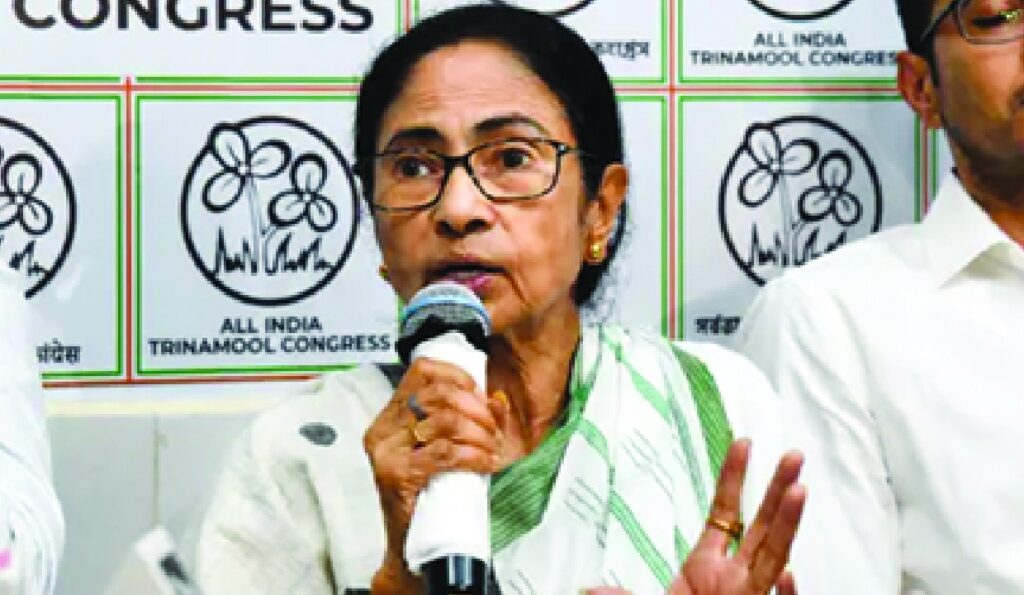
The ongoing TMC political crisis has taken a dramatic turn following reports of a massive internal rebellion within Mamata Banerjee’s Trinamool Congress. Barely two weeks after the party chief’s electoral defeat, nineteen Lok Sabha Members of Parliament have reportedly approached the Speaker to demand recognition as a separate legislative faction, severely threatening the party’s central stability.
Mass Rebellion Shakes Trinamool Congress
The internal fractures within West Bengal’s ruling party have officially spilled over from the state assembly to the national capital. This major development surfaced on Friday when a letter dated May 18, signed by 19 disgruntled Lok Sabha MPs, was sent to the Lok Sabha Speaker. The rebels have formally requested the allocation of a separate seating arrangement and recognition as a distinct bloc in Parliament.
This move indicates that the strategy to challenge the central leadership was set in motion just fourteen days after the party suffered a major blow with Mamata Banerjee’s electoral loss. Political analysts suggest that the speed of this fallout highlights deep-rooted dissatisfaction that had been brewing under the surface for months.
High-Profile Names Join the Rebel Camp
According to sources tracking the TMC political crisis, the list of dissenting parliamentarians includes several high-profile leaders and celebrity politicians who have been faces of the party’s national campaign. Prominent names such as Yusuf Pathan, Saayoni Ghosh, Kakoli Ghosh Dastidar, and Satabdi Roy are reportedly among the signatories.
While eighteen names have been widely discussed in political circles, the identity of one MP remains closely guarded. The inclusion of these influential figures suggests that the rebellion is not a localized grievance but a coordinated effort to reshape the political landscape of West Bengal.
Assembly Faction Already Recognized by Speaker
This parliamentary revolt follows an equally damaging blow to the party’s state unit in Kolkata. On June 3, a group of 58 TMC MLAs—out of the party’s total strength of 80 in the West Bengal Legislative Assembly—had written to the state Assembly Speaker. They requested official recognition as a separate group, distancing themselves entirely from Mamata Banerjee’s core leadership.
The state Assembly Speaker promptly accepted the representation and granted recognition to the rebel faction. Having successfully secured their status at the state level, the dissenting group has now effectively scaled up its operations to New Delhi, escalating the TMC political crisis to a constitutional level.
What Triggered the Sudden Collapse?
Insiders reveal that the immediate trigger for this widespread rebellion was the recent assembly election debacle, where the party chief failed to secure her own seat. This defeat created a power vacuum and severely weakened the leadership’s absolute control over party ranks.
Furthermore, several rebel leaders had previously expressed reservations regarding the centralized decision-making process within the party. The lack of internal democracy and the rising influence of a closed circle of advisers alienated seasoned grassroots politicians, driving them toward open defiance.
FAQs
Q1. What is the current status of the TMC political crisis?
The TMC political crisis has intensified significantly following back-to-back rebellions. Nineteen Lok Sabha MPs have written to the Speaker seeking recognition as a separate group, following a previous move by 58 Bengal MLAs who successfully formed a detached faction within the state assembly.
Q2. Which prominent leaders are involved in the TMC parliamentary rebellion?
According to reports, high-profile parliamentarians and celebrity faces of the party, including Yusuf Pathan, Saayoni Ghosh, Kakoli Ghosh Dastidar, and Satabdi Roy, are among the 19 MPs who signed the letter sent to the Lok Sabha Speaker.
Q3. Will the rebel MPs face disqualification under the anti-defection law?
Whether the anti-defection law applies depends on the total strength of the rebel faction. Under Indian constitutional laws, a split is legally recognized without disqualification only if at least two-thirds of the elected members of the legislative party break away to merge or form a new group.
Q4. What triggered this sudden internal rebellion within the Trinamool Congress?
The immediate trigger was the recent assembly election debacle, where party chief Mamata Banerjee lost her own seat. This defeat created an unexpected power vacuum, severely weakening the central leadership’s control and amplifying long-standing internal grievances regarding a centralized decision-making process.
Q5. When did the rebellion within the party actually begin?
While the Lok Sabha MPs’ letter came to light recently, the official document reveals it was sent to the Speaker on May 18—exactly 14 days after Mamata Banerjee’s electoral defeat. This indicates that the internal rift began immediately after the election results were declared.
For more information, follow Shabdsanchi‘s social media pages today and stay updated.
- Facebook: shabdsanchi
- Instagram: shabdsanchiofficial
- YouTube: @shabd_sanchi
- Twitter: shabdsanchi