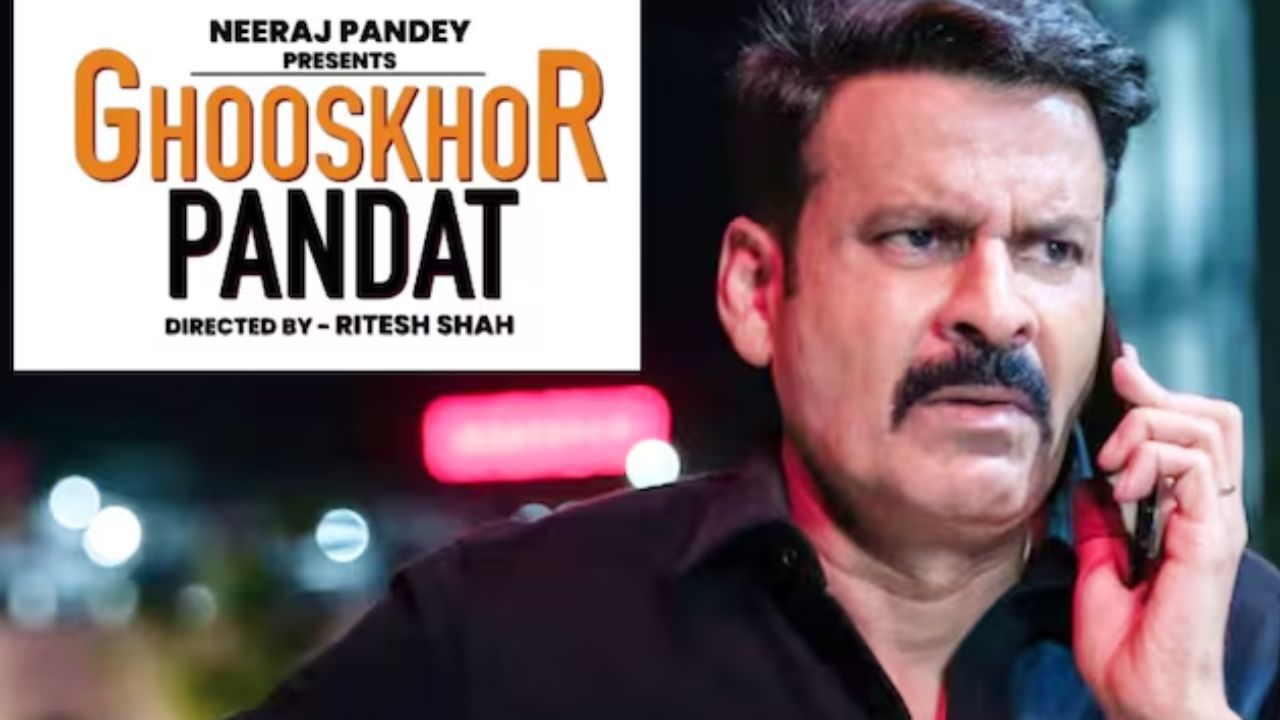
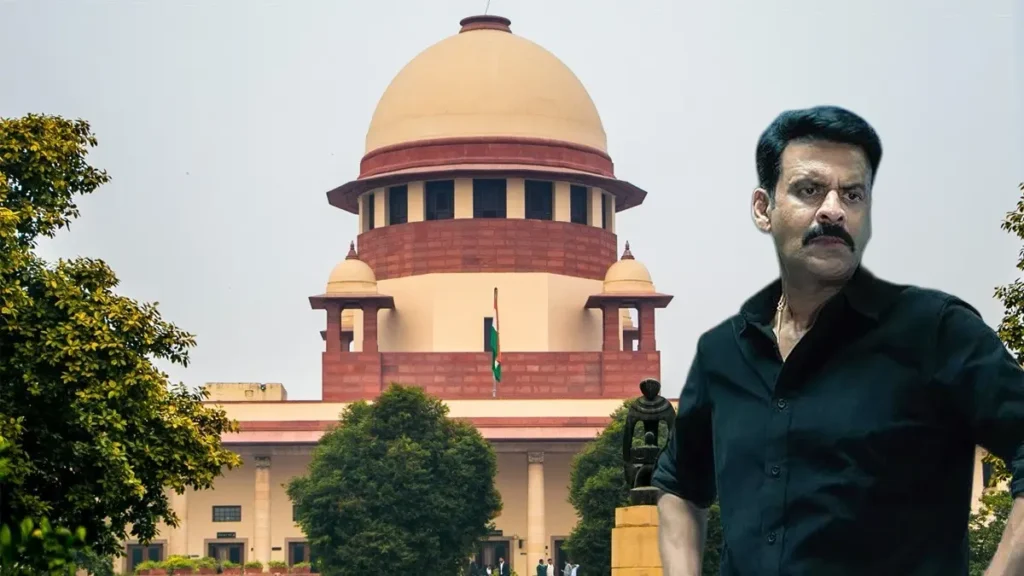
In a significant ruling concerning the intersection of creative freedom and community dignity, the Supreme Court on Thursday directed the producers of the upcoming Hindi film Ghooskhor Pandat to change its title. The bench, led by Justice BV Nagarathna, observed that the original name was derogatory toward a specific community and could potentially disturb public order.
The film, featuring National Award winner Manoj Bajpayee and directed by Neeraj Pandey, had landed in legal trouble following a Public Interest Litigation (PIL). The petitioner alleged that the title linked a specific caste identity with corruption, thereby reinforcing harmful stereotypes and hurting religious sentiments.
The Legal Dispute Over ‘Ghooskhor Pandat’
The controversy erupted when the promotional material for the Netflix-backed project began circulating online. Mahender Chaturvedi, an Acharya specializing in Indian scriptures, filed a PIL through advocate Vineet Jindal. The plea argued that the term “Pandat” (a colloquial variant of Pandit) denotes scholarship and ethical conduct.
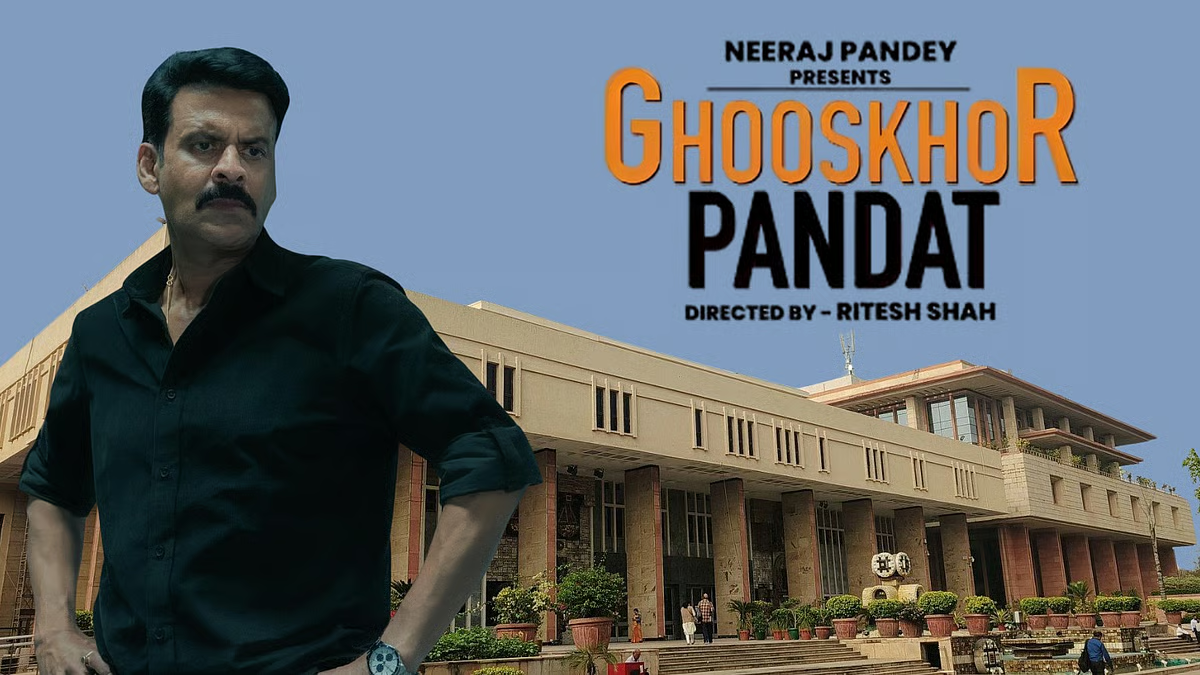
By prefixing it with “Ghooskhor” (bribe-taker), the petitioner contended that the filmmakers were vilifying an entire community. The court agreed with the sentiment that such nomenclature crosses the line of “reasonable restrictions” placed on free speech in India.
Article 19 and the Limits of Free Expression
During the hearing, the Supreme Court engaged in a deep deconstruction of Article 19 of the Constitution. While Article 19(1)(a) guarantees the fundamental right to freedom of speech and expression, the bench reminded the filmmakers of Article 19(2), which empowers the state to impose restrictions in the interest of public order, decency, or morality.
Advocate Vinod Kumar Tiwari, representing the legal nuances of the case, noted that the Preamble’s vision of equality precludes the defamation of any social section. The court’s oral observations were particularly sharp regarding the responsibility of content creators in a diverse nation.
Justice Nagarathna on Fraternity and Modern ‘Wokeness’
Justice Nagarathna highlighted that the framers of the Indian Constitution were acutely aware of the country’s vast diversity. She noted that the concept of “Fraternity” was introduced specifically to ensure that no group feels denigrated by another.
The bench expressed disappointment over the current trend in media. “Being woke is one thing, but creating this kind of unrest when there is already unrest in the country is another,” Justice Nagarathna remarked. The court emphasized that filmmakers and journalists are expected to be aware of the social consequences of their creative choices.
Implications for OTT Platforms and Content Regulation
The ‘Ghooskhor Pandat’ row once again brings the lack of a stringent regulatory mechanism for Over-The-Top (OTT) platforms into the spotlight. Unlike theatrical releases governed by the Central Board of Film Certification (CBFC), digital content often operates in a gray area, leading to frequent legal interventions.
The petitioner had raised concerns that without a formal check, content that promotes caste-based stereotyping could easily bypass social accountability. The court’s directive to not only change the title but also review the narrative content suggests a tightening of judicial scrutiny over digital media.
What Happens Next for the Neeraj Pandey Film?
Following the Supreme Court’s order, the makers are now required to submit a new title and ensure that the film’s narrative does not violate the principles of communal harmony. The film, which was highly anticipated due to the Bajpayee-Pandey collaboration, will now see a delayed or rebranded release.
Legal experts suggest this ruling sets a precedent for how community-specific terms can be used in commercial cinema. It reinforces the idea that “creative liberty” is not an absolute right and must be balanced against the collective dignity of citizens.
The Historical Significance of the Term ‘Pandit’
The petition argued that historically, the term ‘Pandit’ signifies moral authority and spiritual guidance. Linking it to immoral conduct was seen as an attempt at vilification. By ordering the title change, the Supreme Court has signaled that while satire and critique are welcome, the use of caste-markers as synonyms for vice is legally indefensible.
The court concluded that no section of society should be denigrated under the guise of entertainment. The film must now be released under a title that adheres to the standards of “morality and public order” as defined by the bench.
To learn more, follow Shabdsanchi’s social media pages today and stay updated.
- Facebook: shabdsanchi
- Instagram: shabdsanchiofficial
- YouTube: @shabd_sanchi
- Twitter: shabdsanchi