


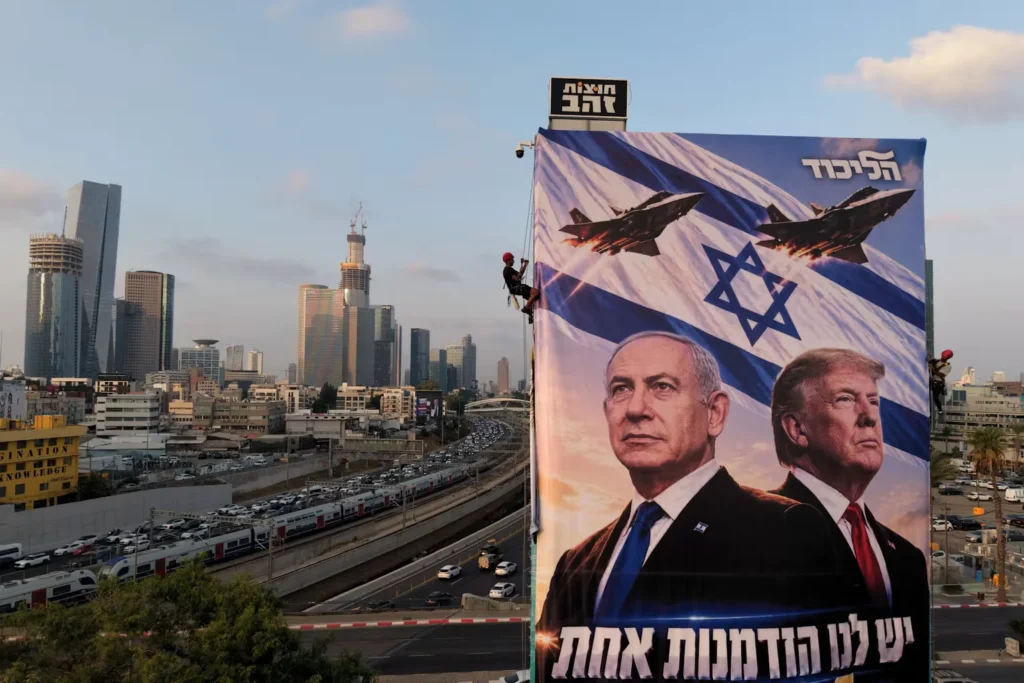
As millions of Israelis head to the polls on October 27, 2026, a glaring omission defines the national conversation: the complete absence of serious debate regarding Palestinian statehood. While international pressure mounts and global recognition of a Palestinian state reaches 159 countries, mainstream Israeli political parties—from the ultra-nationalist incumbent coalition to key opposition challengers—have maintained a strict silence on the issue.
This political vacuum places Israel increasingly at odds with world opinion. Yet, within domestic polling booths, strategic calculations and post-October 7 security fears have pushed the Palestinian question to the absolute margins of the campaign trail.
The Global Diplomatic Shift vs. Domestic Silence
The international landscape surrounding the Israeli-Palestinian conflict shifted dramatically in September 2025. During that period, diplomatic heavyweights including the UK and France, alongside Australia, Andorra, Canada, Luxembourg, Malta, Monaco, Portugal, and San Marino, formally recognized the state of Palestine.
This milestone means that nearly half of the G7 and four of the five permanent members of the UN Security Council—China, France, Russia, and the UK—now recognize Palestine as a legitimate state. Economic repercussions have followed swiftly. The UK and other international allies recently ramped up pressure by imposing targeted sanctions on violent Israeli settler groups and goods originating from illegal settlements.
Despite these high-stakes geopolitical developments and the ongoing conflict in Gaza, neither the ruling administration nor major opposition factions have engaged substantively with the record of Prime Minister Benjamin Netanyahu’s government on the Palestinian question.
The Political Landscape: Hardline Coalition vs. Cautious Opposition
The political parties comprising Netanyahu’s ultra-nationalist government campaign aggressively on the platform of “destroying Hamas” while flatly rejecting Palestinian statehood and actively promoting the expansion of Israeli settlements.
Netanyahu remains heavily dependent on extreme-right partners, including:
- Religious Zionism, led by Finance Minister Bezalel Smotrich.
- Jewish Power, led by National Security Minister Itamar Ben-Gvir.
These factions advocate for the formal occupation of the entire West Bank, backed by controversial proposals for “voluntary Palestinian emigration”.
Meanwhile, the key centrist and right-leaning contenders challenging Netanyahu—Gadi Eisenkot, leader of Yashar (Straight), and Naftali Bennett, leader of Yachad (Together)—have attempted to carve out a distinct moderation. Both have promised to restore order to the West Bank by curbing settler violence, rejecting both settlement expansion and forced displacement.
However, Eisenkot—widely viewed in polls as the strongest candidate to challenge Netanyahu—supports settlements compliant with Israeli law and has heavily criticized the massive E1 settlement project (which threatens to split the West Bank in half). Crucially, both Eisenkot and Bennett share the government’s baseline stance of flatly rejecting Palestinian statehood.
Economic Isolation and the IDF Manpower Crisis
The disconnect between Israeli leadership and international consensus poses severe secondary threats to the nation’s stability:
- Economic Sanctions & Trade: Following the EU’s consideration of broader sanctions—including potential suspension of preferred trading-nation status—Netanyahu suggested utilizing cryptocurrencies to bypass restrictions. This drew an immediate, stern rebuke from the Bank of Israel, which insisted that preserving traditional economic ties with primary trading partners is vital to preventing economic collapse.
- Military Strain: The ongoing multi-front conflicts have severely strained the Israel Defense Forces (IDF). IDF Chief of Staff Eyal Zamir recently warned a security cabinet meeting of an unprecedented manpower crisis, stating he was raising “ten red flags before the IDF collapses into itself” while deployed across Gaza, the West Bank, southern Lebanon, and Syria.
Why Palestinian Statehood Is Not an Election Winner
Opinion polling indicates that the silence on Palestinian self-determination is a deliberate electoral strategy. A profound shift in voter sentiment has taken root across Israel since the deadly October 7 attacks. Younger demographics, in particular, have adopted hardline views, with over 16% of first-time voters backing the far-right parties of Ben-Gvir and Smotrich, according to data from Yedioth Ahronoth.
“The majority of people in Israel reject the idea of a two-state solution, viewing international criticism as hypocrisy and a rising wave of global antisemitism.”
Instead of long-term diplomatic horizons, the ballot box remains dominated by immediate security concerns, the cost of living, and accountability for the October 7 security failures. Latest polling averages show an Eisenkot-led coalition marginally ahead with 54 seats to a potential Netanyahu-led bloc’s 50 seats, leaving roughly 16 undecided seats up for grabs.
Frequently Asked Questions
Why is Palestinian statehood missing from the 2026 Israeli election debate?
Following the October 7 attacks, Israeli voter sentiment has shifted firmly toward hardline security stances, making the two-state solution deeply unpopular among the electorate.
How many countries currently recognize Palestinian statehood?
As of late 2025, 159 countries worldwide—including G7 members like the UK and France—officially recognize the state of Palestine.
What is the stance of opposition leaders Gadi Eisenkot and Naftali Bennett?
While they oppose settlement expansion and vow to curb settler violence, both Eisenkot and Bennett align with the current government in flatly rejecting Palestinian statehood.
How are international sanctions impacting Israel’s economy?
Sanctions targeting illegal settlements have prompted warnings from the Bank of Israel that isolating primary trading partners could severely damage the national economy.
What are the main issues driving voters to the polls?
Voters are primarily focused on national security, the cost of living, and accountability for the October 7 security failures rather than long-term diplomatic solutions.
Conclusion
As the election results are finalized and a ruling coalition takes shape, Israel’s next leaders will immediately confront an escalating diplomatic chill, mounting international sanctions, and a constrained military apparatus. While domestic political survival currently dictates total silence on Palestinian statehood, the structural realities of international isolation mean that the Palestinian question remains the definitive core challenge facing the nation’s future.


Manish Kumar began his professional journey in digital marketing and performance marketing, and currently works as a Digital Marketing Excutive and SEO expert. With over 3 years of professional experience, he handles both strategy and execution. Currently, he manages digital marketing and performance marketing at ‘Shabd Sanchi’ (shabdsanchi.com).