




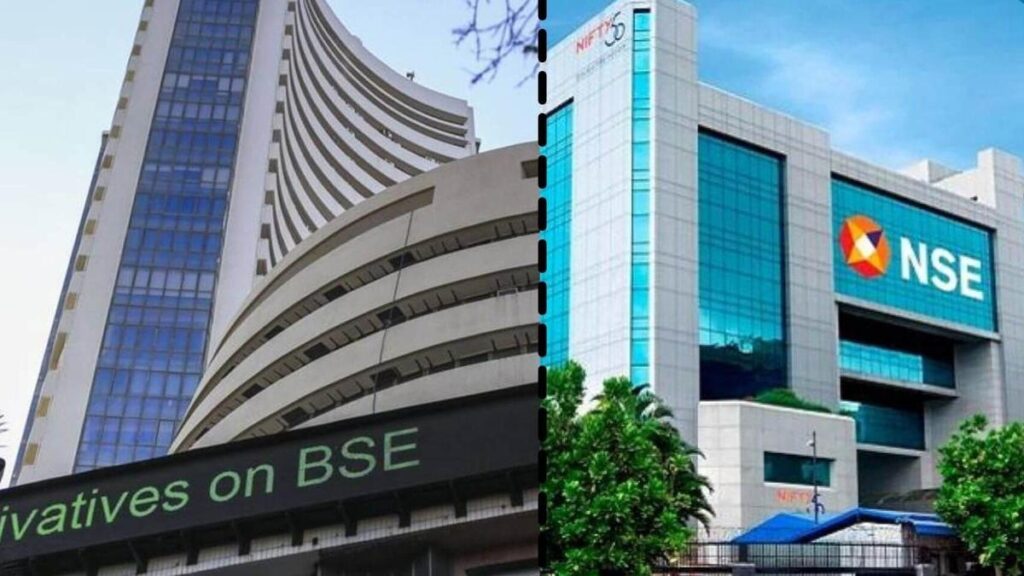
The National Stock Exchange of India (NSE) completed its historic stock market debut on September 24, with its shares listing at ₹1,800 apiece on the BSE, marking a 0.8% premium over its issue price of ₹1,785. The stock gained momentum post-listing, surging up to 4% to reach ₹1,839. This positive debut effectively breaks a persistent pattern of discounted stock market listings among India’s mega initial public offerings.
| NSE IPO AT A GLANCE | |
|---|---|
| Parameter | Metric / Detail |
| Issue Price | ₹1,785 per share |
| BSE Listing Price | ₹1,800 per share (+0.8%) |
| Peak Day-1 Price | ₹1,839 per share (+4.0%) |
| Total Issue Size | ₹22,560 crore ($2.7 billion) |
| Market Capitalisation | ₹4.56 lakh crore ($54+ billion) |
| Overall Subscription | 5.7x (505.81 million total bids) |
| Anchor Book Capital | ₹6,746 crore (37.79 million shares) |
Historic Listing Defies Recent Trends
The market response to the ₹22,560-crore IPO stands out when compared against historical listings of similar scale. Historically, India’s largest public issues have struggled on their debut days.
Hyundai Motor India’s 2024 debut saw shares decline over 7%, while Life Insurance Corporation of India (LIC) dropped nearly 8% on debut in 2022 despite robust demand. Even the ₹18,000-crore Paytm IPO traded at a significant discount upon listing.
By opening at ₹1,800 and advancing toward ₹1,839 by 11:04 AM, the NSE share price demonstrated institutional buyer backing despite regulatory headwinds affecting market volumes.
| Mega-IPO Debut Performance Comparison (Day 1) | ||
|---|---|---|
| NSE (2026) | [+4.0%] | ==================== |
| Paytm (2021) | [-9.0%] | —————— |
| LIC (2022) | [-7.8%] | —————– |
| Hyundai India (2024) | [-7.2%] | ————— |
Financial Metrics and Market Valuation
At ₹1,839 per share, the National Stock Exchange achieved a market capitalisation of ₹4.56 lakh crore. This valuation positions the bourse among the world’s 10 largest listed exchanges and makes it India’s tenth-largest listed company by market value.
The ₹22,560-crore public issue represents India’s second-largest IPO on record, positioned just behind Hyundai Motor India’s 2024 issue. The transaction was structured entirely as an Offer for Sale (OFS) of 126.4 million equity shares, meaning all proceeds went to existing shareholders without fresh capital dilution for the exchange.
Prior to opening to retail investors, the exchange raised ₹6,746 crore from institutional anchor investors by allocating 37.79 million equity shares at ₹1,785 per share.
| Top Indian Listed Exchanges: Valuation Comparison | ||
|---|---|---|
| Metric | NSE (National Stock Ex) | BSE (Bombay Stock) |
| Market Capitalisation | ₹4.56 Lakh Crore | ₹1.32 Lakh Crore |
| Earnings Valuation | 43x Fiscal 2026 Price | 47x Trailing P/E |
| Listing Status | Listed on BSE | Listed on NSE |
Subscription Breakdown and Institutional Demand
The public issue concluded with an overall subscription rate of 5.7 to 6 times, generating total bids for 505.81 million shares against an available pool of 88.64 million shares.
Demand distribution across investor categories revealed distinct trends:
- Qualified Institutional Buyers (QIBs): Led overall bidding with heavy oversubscription, absorbing primary allocations.
- Non-Institutional Investors (NIIs): High-net-worth individuals demonstrated robust participation, clearing allocated tranches.
- Retail Individual Investors: Bidding remained cautious, with demand only slightly exceeding the quota allotted to retail participants.
Tighter derivative trading regulations enacted by the Securities and Exchange Board of India (SEBI) led management to trim the initial offering size and adjust valuation parameters ahead of launch.
| NSE IPO Subscription Breakup | ||
|---|---|---|
| QIB Demand | : | [==========] Heavy |
| NII Demand | : | [========] High |
| Retail Demand | : | [==] Fully Subscribed |
Peer Comparison: NSE vs BSE
The listing creates a direct comparison with primary competitor BSE Limited, which went public in 2017.
According to LSEG financial data:
- BSE Valuation: Currently trades at a market cap of ₹1.32 lakh crore with a trailing price-to-earnings (P/E) multiple of 47 times.
- NSE Valuation: Listed at an issue price representing 43 times projected fiscal 2026 earnings.
The multi-billion dollar listing adds to primary market activity in 2026, where Indian IPOs have collectively raised $9.9 billion across more than 190 deals. Recent successful listings including LG Electronics India and HDB Financial Services have supported capital issuance momentum, with Jio Platforms scheduled to list later in the calendar year.
Frequently Asked Questions (FAQs)
What was the listing price of the NSE share price on the BSE?
The NSE share price listed at ₹1,800 per share on the BSE, representing a 0.8% premium over its issue price of ₹1,785 per share. The stock later rose to ₹1,839 during early trading.
How much capital was raised through the NSE IPO?
The NSE IPO raised a total of ₹22,560 crore ($2.7 billion), making it the second-largest IPO in Indian stock market history. The issue was purely an Offer for Sale (OFS), with no direct proceeds accruing to the exchange.
What is the current market capitalisation of the National Stock Exchange?
Upon listing, the National Stock Exchange achieved a market value of ₹4.56 lakh crore. This valuation ranks NSE among the 10 largest listed exchanges globally and as India’s tenth-biggest listed company.
How does NSE’s valuation compare with BSE Limited?
NSE listed at an IPO valuation of 43 times fiscal 2026 projected earnings. In comparison, competitor BSE trades at a market valuation of ₹1.32 lakh crore, carrying a trailing P/E multiple of 47 times.
What was the overall subscription rate for the NSE IPO?
The NSE IPO was subscribed nearly six times (5.7x) overall, attracting bids for 505.81 million equity shares against the 88.64 million shares offered to the public.
Strategic Summary and Long-Term Outlook
The successful debut of the NSE share price establishes an important structural precedent for India’s capital markets. By listing at a premium despite regulatory tightening in derivatives trading, the market has demonstrated price discovery capacity for infrastructure institutions.
Looking ahead, market focus will shift toward institutional governance under public scrutiny and volume adaptation under updated SEBI derivatives guidelines. The stock’s performance relative to BSE will serve as a primary benchmark for market infrastructure valuations as additional mega-issuances, such as Jio Platforms, prepare to enter the primary market.