


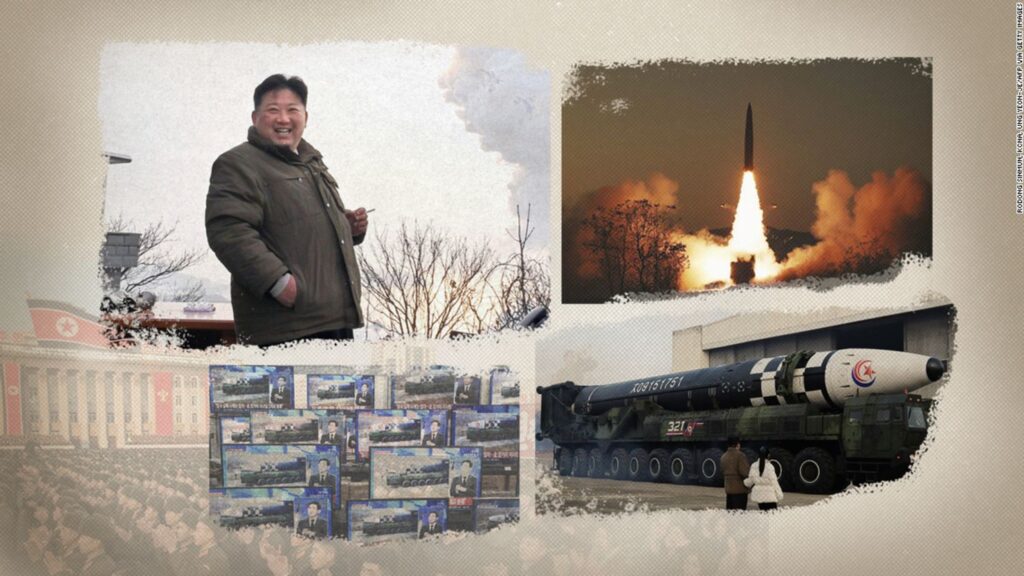
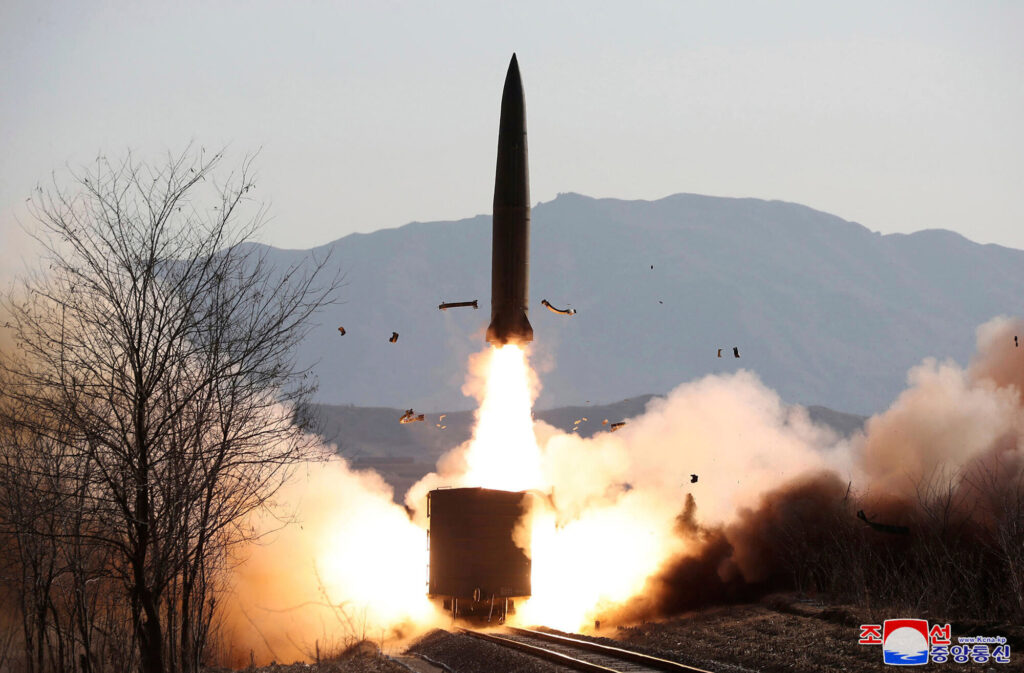
North Korea fired an unidentified projectile, presumed to be a ballistic missile, off its eastern coast on Saturday. This North Korea missile launch coincides with major joint military exercises between the United States and South Korea, raising immediate security concerns across the region.
Details of the Latest Weapon Test
The projectile was launched toward the sea off the eastern coast of the Korean peninsula. Authorities in Seoul quickly confirmed the event through a brief message to the press. However, they did not immediately provide detailed specifications regarding the missile’s exact type, flight distance, or maximum altitude.
South Korean intelligence agencies are currently analyzing the raw flight data. They are working closely with their American military counterparts to determine the precise capabilities of the weapon tested. Early assessments suggest it is part of Pyongyang’s ongoing effort to modernize its tactical arsenal.
Reaction from Japan and Border Security
Neighboring Japan also detected the launch early Saturday morning. The Japanese Coast Guard issued an immediate alert to commercial vessels navigating in the region. They advised maritime traffic to remain vigilant and report any falling debris to maritime authorities.
According to Japan’s public broadcaster NHK, citing defense ministry sources, the projectile appeared to have landed safely. It splashed down in the sea just outside Japan’s exclusive economic zone (EEZ). This indicates a calculated flight trajectory designed to test hardware without directly violating Tokyo’s territorial waters.
Ongoing US-South Korea Military Exercises
The timing of this weapon test is highly significant for regional watchers. It occurred just five days after Seoul and Washington initiated large-scale joint military drills. These allied forces regularly conduct strategic operations to ensure combat readiness across the peninsula.

Both nations maintain that these exercises are strictly defensive in nature. They are primarily designed to test combined defensive postures against potential military threats originating from Pyongyang. The current drills involve extensive field training, aerial maneuvers, and computer-simulated command post exercises.
Pyongyang’s Stance on Joint Military Drills
Historically, the isolated, nuclear-armed state views these allied exercises with intense suspicion. North Korean state media frequently issues harsh condemnations whenever such military drills occur. The regime officially characterizes these joint operations as “dress rehearsals” for an armed invasion of their sovereign territory.
Consequently, Pyongyang often responds to these exercises by conducting its own aggressive military demonstrations. A North Korea missile launch during these specific periods is a well-documented pattern. It serves as a tactical show of force and a calculated message of deterrence directed at Washington and Seoul.
Diplomatic Efforts and Stalled Negotiations
Amid these rising military tensions, diplomatic channels remain largely inactive. However, allied leaders continue to discuss potential strategies for future engagement. Just two days prior to the launch, South Korea’s prime minister held high-level talks in Washington.
He met with US President Donald Trump to review the broader security environment. Their discussions heavily focused on finding viable pathways to reopen dialogue with the North Korean leadership. Both sides acknowledged the complex geopolitical challenges involved in bringing Pyongyang back to the negotiating table.
Historical Context of the 2019 Nuclear Talks
Meaningful diplomacy between Washington and Pyongyang has been completely suspended since 2019. The high-profile summit between President Trump and North Korean leader Kim Jong Un in Hanoi ended abruptly without a concrete agreement. The core disagreement centered on the pace of sanctions relief.
Pyongyang demanded immediate economic relief, while Washington insisted on verifiable denuclearization steps first. Since that diplomatic collapse, North Korea has aggressively resumed its ballistic missile testing program. The regime has systematically advanced its solid-fuel rocket technology and expanded its tactical nuclear delivery systems.
International Sanctions and UN Resolutions
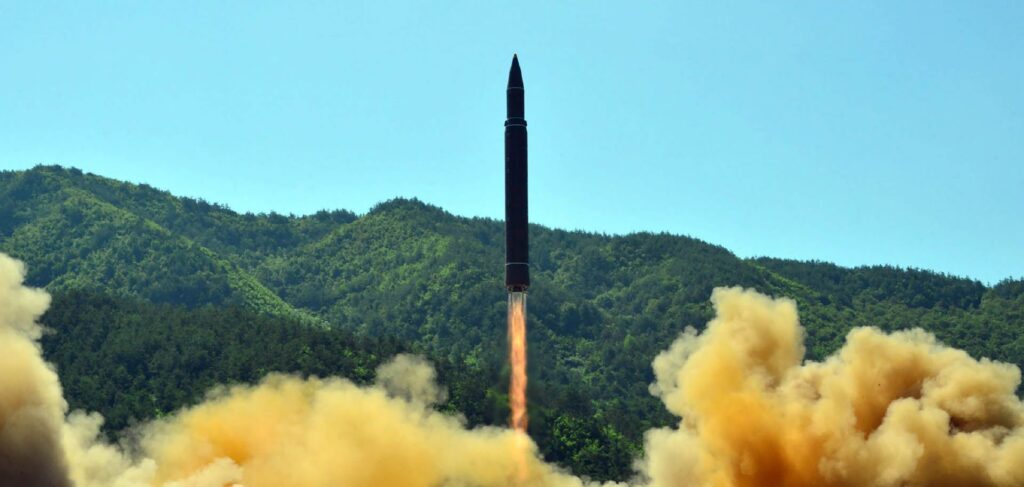
The continued testing of ballistic technology directly defies international law. Multiple United Nations Security Council resolutions explicitly prohibit North Korea from conducting any launches using ballistic missile technology. Despite heavily enforced economic sanctions, the regime continues to fund its military expansion.

These sanctions have severely restricted the country’s ability to trade globally. However, North Korea has adapted by utilizing illicit maritime supply chains and cyber operations to fund its weapons programs. The international community consistently condemns these launches as destabilizing actions.
The Broad Impact on East Asian Stability
This continuous cycle of military drills followed by retaliatory missile tests creates a volatile security environment. East Asia remains one of the most heavily militarized and strategically sensitive regions globally. South Korea and Japan heavily rely on the extended nuclear deterrence provided by the United States.
Meanwhile, North Korea seeks to expand its nuclear arsenal to ensure absolute regime survival. These competing security interests make the prospect of lasting peace on the Korean peninsula incredibly difficult to achieve. Regional markets and international observers continue to monitor these developments with growing apprehension.
To learn more, follow Shabdsanchi’s social media pages today and stay updated.
- Facebook: shabdsanchi
- Instagram: shabdsanchiofficial
- YouTube: @shabd_sanchi
- Twitter: shabdsanchi