

NEW DELHI — In an escalating showdown over electoral integrity, AISA President Neha Bora, Cockroach Janta Party (CJP) legal head Ratna Singh, and thousands of student-led activists flooded the streets of central Delhi over the October 10–11, 2026 weekend. The mass agitation directly targets Chief Election Commissioner (CEC) Gyanesh Kumar, demanding his immediate resignation alongside a complete rollback of the Election Commission of India’s (ECI) controversial Special Intensive Revision (SIR) exercise.
Despite heavy security deployments, transport curbs, and repeated police detentions across RK Ashram, Dilli Haat, and Connaught Place, the youth-led movement has shown zero signs of retreat.
High-Stakes Tactical Play on Delhi’s Streets
What unfolded over the weekend demonstrated both the agility of modern street protests and the growing frustration with state intervention. At RK Ashram Metro Station, law enforcement officers mistakenly detained a lookalike of Neha Bora, who uses they/them pronouns, believing they had neutralized a key organizer.
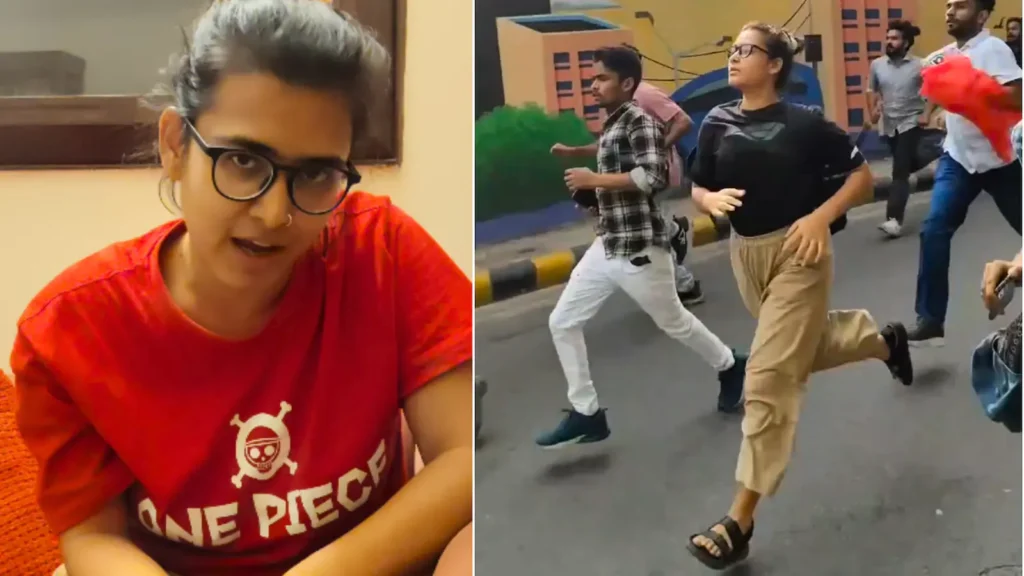
Simultaneously, the actual 29-year-old AISA leader was spotted sprinting through Connaught Place flanked by supporters, successfully bypassing security perimeters to hold an impromptu assembly.
“First, the complete shutdown of the capital, now the detention and barricading of every citizen… Jantar Mantar 2.0 is on!” Neha Bora posted on social media during the chaotic weekend rally.
Concurrently, Ratna Singh was trapped inside her vehicle near her Jangpura residence by nearly two dozen Delhi Police personnel claiming verbal instructions “from above”. Refusing to back down, Singh live-streamed the encounter from inside her car, later addressing a press conference on October 11 to declare the state’s actions a sign of administrative panic.
Behind the Surge: The Electoral Roll Controversy
The current wave of public anger is rooted in the 2026 Special Intensive Revision (SIR) of electoral rolls, overseen by CEC Gyanesh Kumar.
Student groups like AISA, SFI, and AISF, along with civil society organizations like CJP, argue that the SIR process led to arbitrary voter deletions through automated Form-7 processing, disproportionately impacting marginalized and young voters.
Key Drivers of the Protests
- Automated Roll Deletions: Opposition and student groups allege over 130 million entries were flagged or removed under controversial categories like “absent, shifted, or deceased” without adequate ground verification.
- Demand for Accountability: Demonstrators are calling for criminal liability regarding fraudulent Form-7 filings and the resignation of CEC Gyanesh Kumar.
- Systemic Student Grievances: Movement organizers emphasize that the electoral roll anger is linked to years of broader frustration over centralized examination systems and national education policies.
- Immediate Resignation of Chief Election Commissioner Gyanesh Kumar
- Complete Scrutiny & Rollback of Special Intensive Revision (SIR)
- Criminal Prosecution for Fraudulent Bulk Deletions via Form-7
- Safeguards for Peaceful Assembly and Student Protests in Delhi
Strategic Value Addition: The Intergenerational Political Shift
The defining feature of this mobilization is not merely its viral digital footprint, but its deliberate bridging of generational divides. The 29-year-old Bora—a JNU PhD scholar who previously completed a 23-day hunger strike at Jantar Mantar in July 2026—represents a post-organizational style of politics that explicitly rejects personal savior narratives.
“This mesmerisation is a problem… It comes from the intelligentsia who want to find a ‘pure’ leader behind whom they can all rally. They don’t exist,” Bora noted in recent interviews, highlighting that change stems from sustained group action rather than individual icons.
This grassroots persistence has drawn former parliamentarians and political veterans back into active street resistance. Senior figures including Renuka Chowdhury (72), former West Bengal Chief Minister Mamata Banerjee, CPI(M) leader Brinda Karat, activist Nivedita Menon, and JNU student leader Aishe Ghosh have stood physically alongside younger activists.
This alignment presents a challenging dynamic for the administration: standard police tactics used against student groups lose effectiveness when deployed against senior political figures and veteran parliamentarians in full public view.
Analytical Summary & What Happens Next
The political dynamics in Delhi signal a structural shift in how civil dissent is organized in India. The combination of decentralized digital organizing, real-time tactical mobility, and cross-generational backing has enabled protesters to sustain momentum despite large-scale security operations.
Moving forward, the focus shifts to the Supreme Court of India, which is hearing petitions regarding the structural validity of the 2025–2026 Special Intensive Revisions and ECI operational guidelines. Should executive authorities continue to rely solely on preventive detentions without addressing core policy grievances regarding voter registration integrity, street demonstrations are likely to spread to other state capitals, further testing institutional resilience.
Frequently Asked Questions (PAA)
Who is Neha Bora and why are they in the news?
Neha Bora is a 29-year-old PhD scholar at JNU and the national president of the All India Students’ Association (AISA), currently leading high-profile street protests in Delhi demanding electoral roll reforms and the resignation of CEC Gyanesh Kumar.
What triggered the October 2026 protests in Delhi?
The demonstrations were sparked by widespread allegations of voter roll manipulation and improper deletions during the Election Commission of India’s Special Intensive Revision (SIR) exercise.
What is the Cockroach Janta Party (CJP)?
The Cockroach Janta Party (CJP) is a youth-led political organization in India that has spearheaded recent public campaigns and legal actions regarding civic rights, student issues, and electoral transparency.
Why are protesters demanding the resignation of CEC Gyanesh Kumar?
Protesters allege that under CEC Gyanesh Kumar’s leadership, the ECI failed to prevent fraudulent bulk deletions of legitimate voters through automated Form-7 filings during the SIR process.
Has the Supreme Court intervened in the Election Commission controversy?
Yes, the Supreme Court of India has issued notices to the Election Commission of India regarding the legal validity of the SIR procedures and voter roll deletions.


Manish Kumar began his professional journey in digital marketing and performance marketing, and currently works as a Digital Marketing Excutive and SEO expert. With over 3 years of professional experience, he handles both strategy and execution. Currently, he manages digital marketing and performance marketing at ‘Shabd Sanchi’ (shabdsanchi.com).