





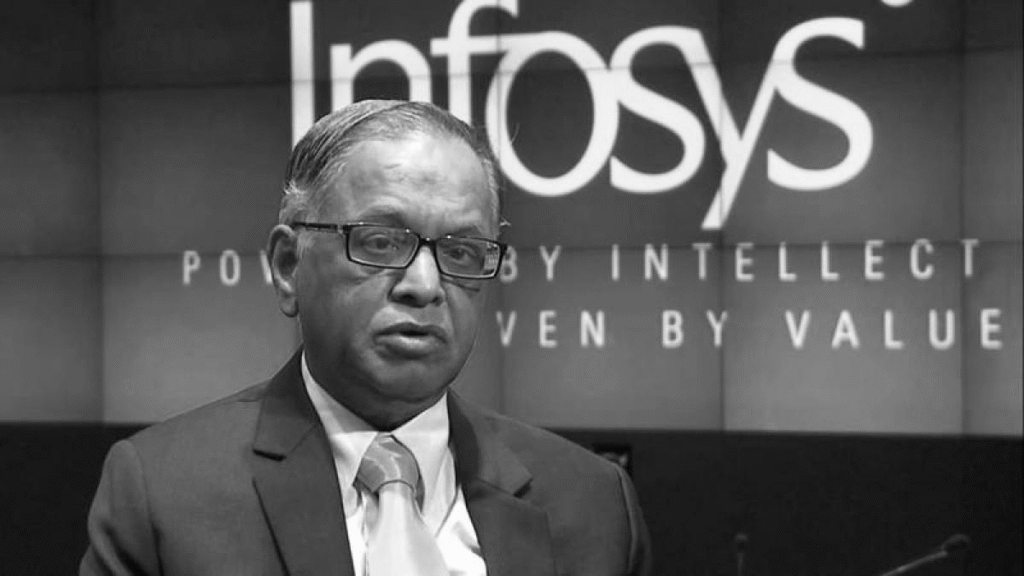
Amid growing anxiety over generative artificial intelligence replacing white-collar jobs, the Infosys founder has a clear message for the country’s youth. Speaking recently, the views of Narayana Murthy on AI emphasize preparation over panic. He believes that technology rewards individuals who learn fast and utilize these advanced tools to enhance their daily productivity.
Master the Technology, Do Not Fear It
Murthy, who recently sparked a nationwide debate with his remarks on a 70-hour workweek, has now shifted his focus to the rapid advancement of machine learning. He argues that artificial intelligence is not an automatic equalizer in the workplace. Instead, it serves as a powerful multiplier for those who already possess strong cognitive skills and a willingness to adapt.
“My own experiments with using generative AI for productivity have shown me that a smarter mind will get better quality and better level of productivity from using these assistive technologies,” he explained during a recent media interaction.
Narayana Murthy on AI: A Tool for the Disciplined
The technology veteran stressed that young professionals should view these advancements as assistive instruments rather than adversaries. By combining discipline, continuous learning, and hard work, individuals can stay relevant in a rapidly changing corporate landscape.
The responsibility, he noted, lies entirely with the workforce to adapt to these new systems. Consequently, there is absolutely no need for young engineers, developers, and executives to feel threatened if they are actively upgrading their skill sets.
The Global Context of Job Insecurity
The discussion surrounding automation-led job displacement has intensified globally over the past few months. Recently, US-based artificial intelligence firm Anthropic launched a series of highly capable, workplace-focused applications under its Claude platform.
These enterprise solutions allow large organizations to automate complex workflows across finance, legal, human resources, and software engineering. Traditionally, these operational areas required massive teams of white-collar workers, raising legitimate concerns about the future demand for human capital.
Impact on Legacy IT and Modernization
This rapid technological evolution is already unsettling major investors in the global IT services sector. There is a growing market concern that intelligent automation will significantly eat into long-running consulting and system modernization contracts.
For example, IBM recently experienced its steepest one-day share decline in over two decades. This severe market reaction followed claims that newly developed tools can now seamlessly understand, translate, and modernize COBOL codebases.
Why COBOL Automation Worries Investors
COBOL is a legacy programming language created in the late 1950s that continues to run critical infrastructure in global banking, aviation, and government sectors. Historically, upgrading these older systems has been a highly lucrative, time-consuming, and consultant-heavy business for enterprise IT firms worldwide.


The possibility that intelligent software could compress years of manual modernization work into mere days forces the entire industry to rethink its economic model. If machines can reliably rewrite legacy code, the traditional billing model based on human hours will inevitably face disruption.
Looking Ahead for Indian IT Professionals
India’s massive IT sector employs millions of professionals who primarily handle outsourced operations, software maintenance, and backend development. As Western clients tighten their operational budgets and explore automated solutions, Indian IT service providers are accelerating their internal training programs to keep up.
Industry experts suggest that this transition will not necessarily eliminate employment but will create entirely new roles. These future jobs will likely center around AI ethics, prompt engineering, data curation, and complex system integration. Therefore, the focus must shift from writing basic code to solving complex business problems using available digital tools.
To learn more, follow Shabdsanchi’s social media pages today and stay updated.
- Facebook: shabdsanchi
- Instagram: shabdsanchiofficial
- YouTube: @shabd_sanchi
- Twitter: shabdsanchi