



Veteran actor Nana Patekar passed away at 75 on Thursday, October 8, 2026, after suffering a severe cardiac arrest at his residence in Dona Paula, Goa. Rushed to Manipal Hospital, doctors performed continuous CPR for 45 minutes, but he was declared dead at 5:20 AM IST.
The sudden demise of the three-time National Film Award-winning legend has sent shockwaves through Indian cinema and drawn condolences from Prime Minister Narendra Modi and industry peers. Dr. Shekhar Salkar, Chief of Oncology at Manipal Hospital, confirmed that a medico-legal case (MLC) has been registered and a post-mortem examination will be conducted to determine the exact physiological triggers.
What Is Cardiac Arrest and Why Is It Instantly Fatal?
A cardiac arrest occurs when an abrupt electrical disturbance in the heart causes it to suddenly stop pumping blood effectively. Blood flow to the brain, lungs, and vital organs ceases immediately, leading to loss of consciousness within seconds and rapid respiratory failure if intervention is delayed.

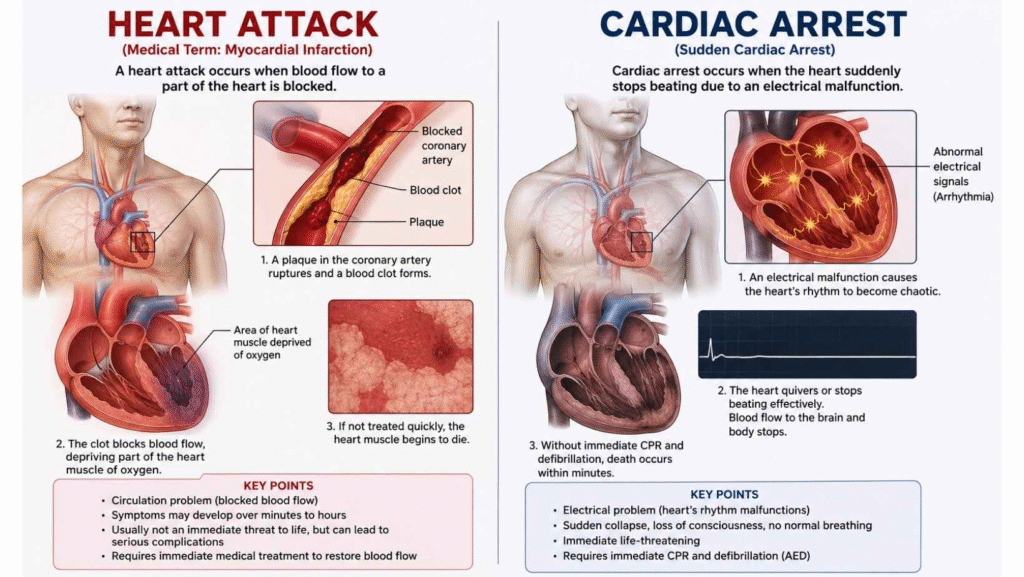
Medical experts emphasize that understanding the distinction between a heart attack and a cardiac arrest is vital for emergency response:
- Heart Attack (Circulation Issue): Blood flow to a specific part of the heart muscle becomes blocked, typically due to a clot in a coronary artery. The heart continues to beat, though the muscle is damaged.
- Cardiac Arrest (Electrical Issue): The heart’s electrical system malfunctions, causing rapid, chaotic rhythms like ventricular fibrillation or complete standstill (asystole). The heart stops pumping blood entirely.
While a heart attack can trigger a cardiac arrest, they are distinct clinical conditions.
Subtle Red Flags: Does Cardiac Arrest Give Prior Warnings?
Although cardiac arrest occurs suddenly, underlying coronary artery disease or arrhythmia may trigger red flags hours or weeks in advance.
According to Dr. Anshul Kumar Jain, Director of Cardiology at CK Birla Hospital, and Dr. Amit Handa, Consultant Cardiologist at Kailash Hospital, adults over 50 should never ignore the following symptoms:
“Symptoms like unexplained shortness of breath, recurrent dizziness, sudden fatigue, or atypical chest pain must be medically evaluated immediately rather than attributed to stress or acidity.”
| Symptom Category | Associated Indicator | Action Required |
|---|---|---|
| Respiration | Unexplained shortness of breath | Immediate ECG / Medical Exam |
| Neurological | Fainting spells (Syncope) during exertion | Urgent Emergency Assessment |
| Circulatory | Recurrent palpitations with lightheadedness | Continuous Cardiac Monitoring |
| Physical Pain | Tightness spreading to jaw, neck, or back | Emergency Services Activation |
Indian Cardiovascular Data: A Growing Public Health Concern
Sudden cardiac deaths represent a major public health challenge across India. A landmark study published by the Indian Journal of Medical Research (IJMR)—involving researchers from AIIMS, Safdarjung Hospital, PGIMER, and the Indian Council of Medical Research (ICMR)—analyzed sudden deaths in India and highlighted critical demographic patterns:
- Young Adults (Ages 18–45): Cardiovascular events accounted for 42.6% of all sudden deaths, with a male-to-female ratio of 4.5:1.
- Primary Cause: Coronary artery disease and myocardial infarction were responsible for 85% of cardiovascular deaths in younger groups.
- Older Demographics (Ages 46–65): Cardiovascular failure caused 72.1% of sudden deaths.
Globally, the World Health Organization (WHO) estimates that cardiovascular diseases claim nearly 19.8 million lives annually, accounting for roughly 32% of all global fatalities.
Emergency Action Plan: What To Do If Someone Collapses

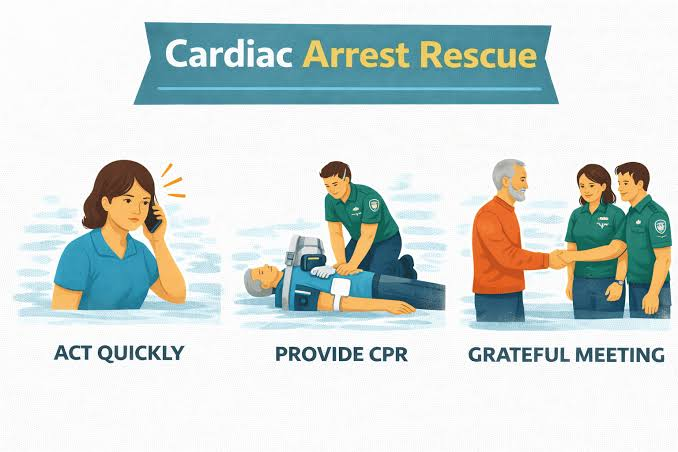
When a person suddenly collapses and becomes unresponsive, immediate action is critical before emergency medical services arrive.
- Check Responsiveness & Breathing: Shake the person gently and shout. If there is no response and they are not breathing or only gasping, treat it as a cardiac arrest.
- Call Emergency Services: Immediately dial 112 (India’s integrated emergency line) or send someone to call for an ambulance.
- Perform Hands-Only CPR: Place your hands in the center of the chest and push hard and fast at a rate of 100 to 120 compressions per minute, allowing complete chest recoil.
- Deploy an AED: If an Automated External Defibrillator is available, turn it on and follow the clear voice prompts to administer a shock if advised.
- Continue Until Help Arrives: Do not stop compressions until paramedic personnel take over or the person shows visible signs of life.
Frequently Asked Questions (FAQs)
What was the cause of Nana Patekar’s death?
Nana Patekar died due to a sudden and severe cardiac arrest at his residence in Goa at the age of 75.
Is a cardiac arrest the same as a heart attack?
No, a heart attack is a circulation problem caused by blocked blood flow, whereas a cardiac arrest is an electrical malfunction that causes the heart to stop pumping completely.
What are the main warning signs of an impending cardiac arrest?
Early signs include sudden shortness of breath, chest discomfort, unexplained fainting, severe dizziness, and unusual fatigue.
What should an untrained bystander do during a cardiac collapse?
An untrained bystander should immediately call 112 and begin continuous, hard-and-fast chest compressions (Hands-Only CPR) in the center of the chest.
Can lifestyle changes prevent cardiac arrest risks?
Yes, controlling high blood pressure, managing blood sugar and cholesterol, avoiding tobacco, and conducting regular annual health checkups significantly reduce cardiovascular risk factors.
Analytical Conclusion: Long-Term Takeaways
The unexpected passing of Nana Patekar underscores the crucial need for widespread CPR literacy and accessible public defibrillators (AEDs) across urban and residential regions in India. While clinical post-mortem findings will provide specific medical details regarding his death, public health experts emphasize that proactive screening for hypertension, lipid disorders, and silent coronary blockages remains the single most effective defense against sudden cardiac events. Ensuring timely CPR and emergency medical intervention within the first 3 to 5 minutes remains the vital factor determining survival in sudden collapse cases.
Disclaimer: This information is provided for general knowledge and awareness purposes only. It should not be considered a substitute for professional medical advice, diagnosis, or treatment. Always consult your doctor or a qualified medical specialist regarding any health issue or symptom.


Manish Kumar began his professional journey in digital marketing and performance marketing, and currently works as a Digital Marketing Excutive and SEO expert. With over 3 years of professional experience, he handles both strategy and execution. Currently, he manages digital marketing and performance marketing at ‘Shabd Sanchi’ (shabdsanchi.com).