


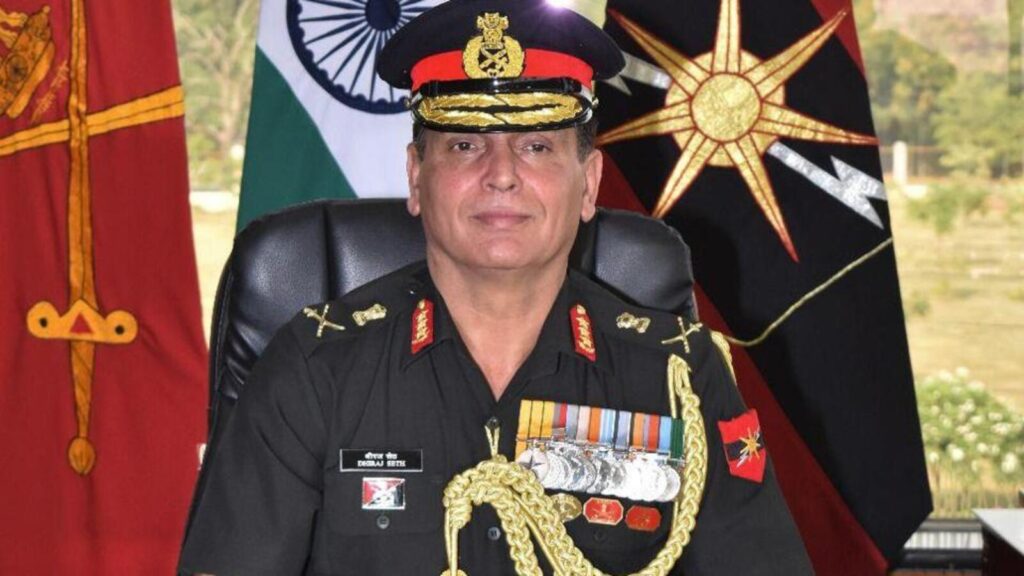
The global geopolitical landscape is currently facing unprecedented volatility, with active conflicts reshaping international relations. Speaking at the ‘JAI Se Vijay’ seminar in Pune, Lt Gen Dhiraj Seth, Army Southern Command Chief, remarked that the world at war is a present reality. He highlighted how regional frictions are rapidly escalating into broader strategic competitions.
A World Grappling with Open Conflict
Lieutenant General Dhiraj Seth provided a sobering assessment of the modern security environment. He noted that strategic competition between global powers is no longer a boardroom discussion but has hardened into open kinetic warfare across multiple theaters. From the persistent plains of Ukraine to the volatile corridors of the Middle East, the traditional rules of engagement are being rewritten in real-time.
The General emphasized that these conflicts are not isolated incidents. Instead, they serve as a catalyst for reshaping military doctrines worldwide. The employment of force, the role of technology, and the endurance of logistics are all being re-evaluated by defense forces globally, including the Indian Army.


Lessons from Ukraine and the Indo-Pacific
The ongoing Russia-Ukraine conflict remains a primary case study for modern military planners. Lt Gen Seth pointed out that this theater continues to influence how ground forces are employed and how integrated air-land battles are fought. However, the instability is not limited to Europe.
The Indo-Pacific region remains a collection of intensifying flashpoints. With maritime disputes and territorial ambitions clashing, the risk of a miscalculation leading to a larger conflagration is at an all-time high. Furthermore, friction along South Asian borders serves as a constant reminder of how localized skirmishes can quickly spiral into high-stakes geopolitical risks.
Operation Sindoor: A Blueprint for Precision
In his address, Lt Gen Seth lauded India’s tactical evolution, citing Operation Sindoor from the previous year as a gold standard. The operation represented a sophisticated blend of intelligence-driven maneuvers and multi-domain force application.
What made the operation stand out was its restraint. Despite the heightened risk environment, the Indian forces achieved their objectives with “minimal escalation.” This surgical approach demonstrates India’s capability to protect its interests without inadvertently triggering a full-scale regional war, even when the broader world at war atmosphere creates immense pressure.
Redefining Jointness Beyond Organizations
While many view “jointness” as a matter of creating new structures or integrated commands, Lt Gen Seth argued for a deeper cultural shift. He described jointness as a “mindset and an operational culture” rather than just an administrative reform.
In a landscape defined by rapid technological change, fragmentation within the armed forces is a significant vulnerability. True strength lies in the seamless integration of the Army, Navy, and Air Force. This unity allows for a synchronized response to threats that often blur the lines between physical and cyber domains.
Atmanirbharta as a Pillar of Security
The seminar also focused heavily on India’s drive toward self-reliance. For the Indian Army, Atmanirbharta is not merely an economic or industrial policy. It is a fundamental requirement for maintaining national security and strategic autonomy.
Relying on foreign supply chains during a global conflict is a risk no sovereign nation can afford. By indigenizing defense production, India ensures that its operational readiness remains uncompromised by external political shifts or supply disruptions. This indigenous capability is the bedrock upon which India’s “strategic autonomy” is built.

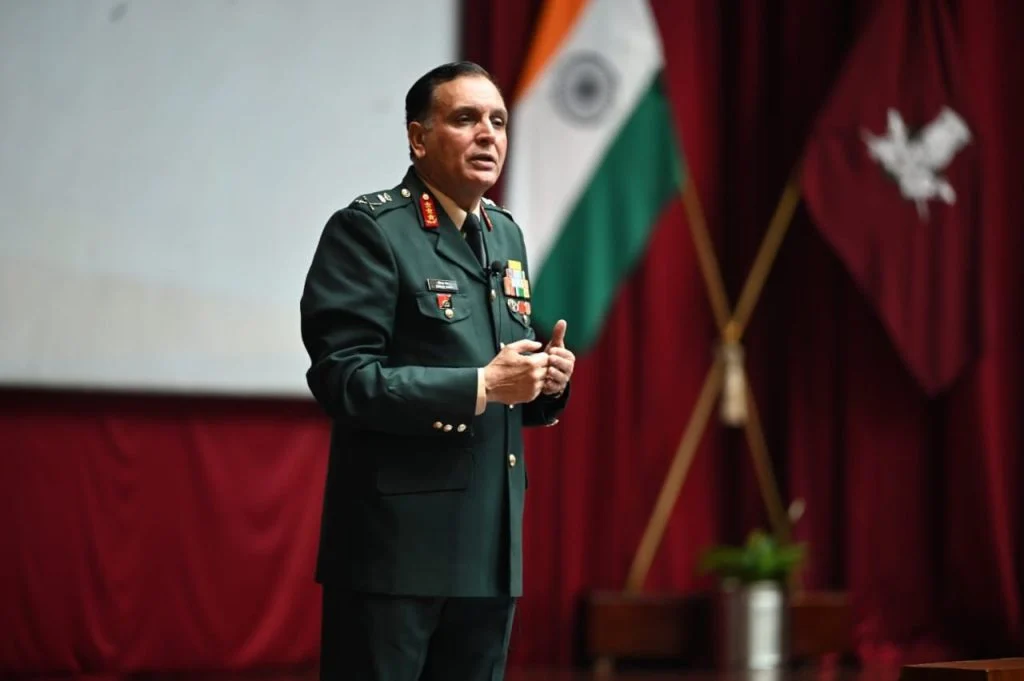
CDS Gen Anil Chauhan on ‘JAI’ and True Victory
Chief of Defence Staff (CDS) General Anil Chauhan further expanded on the theme of the seminar, ‘JAI Se Vijay’. He broke down the acronym JAI—Jointness, Aatmanirbharta, and Innovation—as envisioned by the Prime Minister.
Gen Chauhan issued a stern reminder that victory in the 21st century cannot be claimed through symbols or rhetoric. He noted that simply damaging an adversary’s infrastructure or airfields does not equate to an enduring victory. True victory must be backed by “demonstrated evidence and verifiable outcomes.”
Overcoming Institutional Inertia
The CDS emphasized that the biggest battles are often internal. To achieve ‘Vijay’ (Victory), the Indian defense establishment must overcome “inertia, prejudices, and institutional comfort.” The transition from a colonial-era mindset to a modern, innovative force is essential to navigating a world where the nature of warfare is constantly evolving.
Innovation is not just about new gadgets; it is about finding new ways to solve old problems. By fostering a culture that rewards creative thinking and technological adoption, the Indian military aims to stay ahead of adversaries who are equally invested in modernizing their arsenals.
To learn more, follow Shabdsanchi’s social media pages today and stay updated.
- Facebook: shabdsanchi
- Instagram: shabdsanchiofficial
- YouTube: @shabd_sanchi
- Twitter: shabdsanchi