

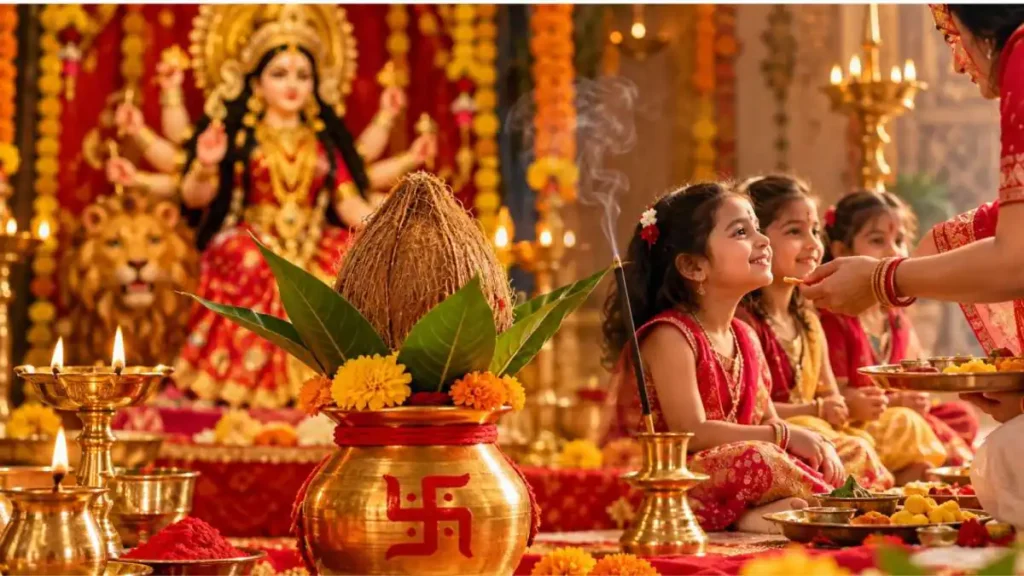
The culmination of Shardiya Navratri brings profound spiritual reflection and festive celebration, headlined by the sacred tradition of Kanya Pujan 2026. As millions of devotees prepare to honor young girls as living manifestations of Goddess Durga, confusion regarding calendar overlaps between Maha Ashtami and Maha Navami has sparked widespread discussion across households. According to the Hindu Panchang, Ashtami Tithi begins on 18 October 2026 at 8:27 AM and remains active until 19 October 2026 at 10:51 AM, immediately followed by Navami Tithi, which extends through 20 October 2026 until 12:50 PM. This overlapping lunar geometry means families following varying regional traditions and family lineages will observe the ritual across both days.
Navigating the Panchang: Understanding Ashtami and Navami Overlaps
During Shardiya Navratri, Kanya Pujan primarily anchors on either Maha Ashtami or Mahanavami. While a vast number of traditional households prefer feeding young girls on Ashtami, others strictly reserve the tradition for Navami.
The 2026 calendar structure introduces distinct regional nuances. Because Ashtami tithi concludes on the morning of 19 October at 10:51 AM, families adhering strictly to morning Ashtami worship have a narrow, highly auspicious window on that day. Meanwhile, Navami tithi takes over from late morning on October 19 and runs all the way through 20 October at 12:50 PM. Families prioritizing Udaya Tithi (sunrise-governed lunar days) or traditional Navami homam and parana will find 20 October to be their primary day of observance.
“The choice between dates depends heavily on local panchang calculations, family customs, and whether the household tradition dictates worship during Ashtami or Navami.”
Step-by-Step Kanya Pujan Vidhi and Ritual Protocols
Executing Kanya Pujan requires meticulous adherence to traditional purity, respect, and hospitality. Performing the ritual correctly ensures the spiritual benefits of the nine-day fast are fully realized.
- Purification and Invitation: On the chosen morning, devotees must complete a ritual bath, wear fresh, clean clothes, and offer formal prayers to Goddess Durga before inviting the young girls (traditionally aged between 2 and 10 years, representing the nine forms of Navdurga) into the home.
- Washing of Feet (Padapuja): Upon arrival, gently wash the feet of each young guest with clean water as a mark of supreme reverence, seating them respectfully on clean, elevated mats.
- Tilak and Sacred Offering: Apply a sacred tilak of kumkum, akshat (rice grains), and sandalwood on their foreheads, followed by a prayer of devotion.
- The Traditional Bhojan: Serve the consecrated prasad, which traditionally comprises sooji halwa, crispy poori, and black chickpeas (kale chane).
- Dakshina and Blessings: Conclude the meal by offering seasonal fruits, new clothes, or token financial gifts (dakshina) according to individual capacity, and seek their blessings for household prosperity.
Frequently Asked Questions (FAQs)
When is Kanya Pujan being observed in 2026?
Kanya Pujan falls across 19 October and 20 October 2026, depending on whether your family observes Ashtami or Navami traditions.
What are the exact timings for Ashtami tithi in 2026?
Ashtami Tithi begins on 18 October 2026 at 8:27 AM and concludes on 19 October 2026 at 10:51 AM.
When does Navami tithi end in 2026?
Navami Tithi remains active until 20 October 2026 at 12:50 PM.
Can Kanya Pujan be performed on both days?
Yes, households with split family traditions often perform worship on both Ashtami (October 19) and Navami (October 20) based on regional panchang guidelines.
What is the standard menu served during Kanya Pujan?
The traditional prasad features suji halwa, poori, and dry black gram (kala chana).
Conclusion and Analytical Outlook
As calendar variations continue to influence ritual planning across different states, consulting a trusted local priest or regional panchang remains the gold standard for finalizing exact homam and parana times. Aligning personal family traditions with precise lunar milestones ensures that the spiritual integrity of Shardiya Navratri is preserved, maintaining cultural continuity while navigating complex calendar transitions in the years ahead.


Manish Kumar began his professional journey in digital marketing and performance marketing, and currently works as a Digital Marketing Excutive and SEO expert. With over 3 years of professional experience, he handles both strategy and execution. Currently, he manages digital marketing and performance marketing at ‘Shabd Sanchi’ (shabdsanchi.com).