




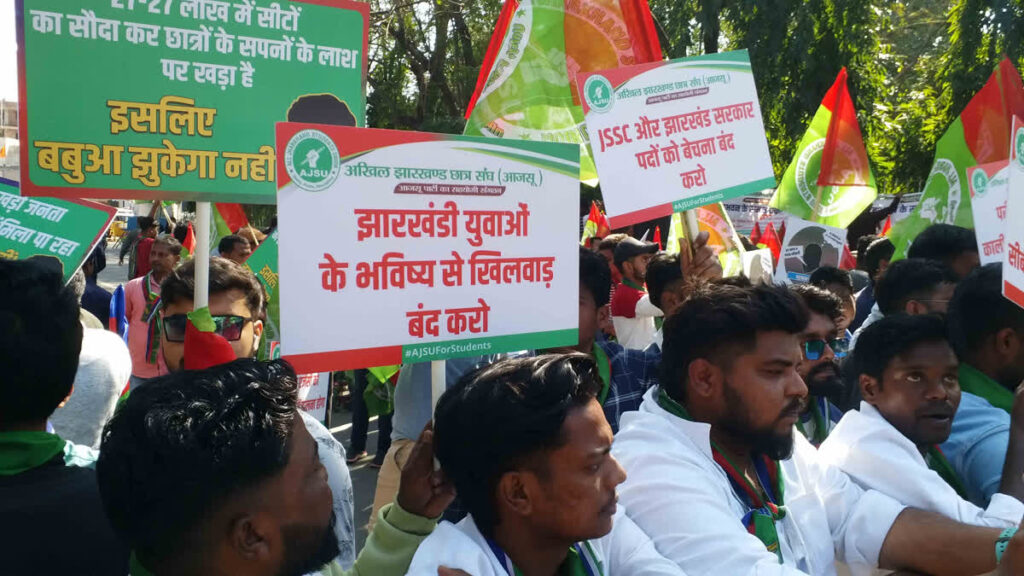
The investigation into the JSSC CGL (Jharkhand Staff Selection Commission Combined Graduate Level) paper leak has taken a major turn. The Special Investigation Team (SIT) of the Jharkhand CID apprehended businessman Rajan Kumar from Patna, Bihar. Investigators identify Rajan Kumar as a central broker who leveraged connections within examination management agencies to obtain sensitive question papers prior to the exam date. The Jharlhand CGL paper leak highlighted vulnerabilities in public competitive examinations across the region. This arrest marks a critical step forward for the CID SIT as it works to dismantle the inter-state syndicate responsible for compromising the recruitment process.
CID SIT Operation in Patna
The arrest of Rajan Kumar was executed following days of surveillance and technical analysis by the Jharkhand CID SIT. Operating out of Patna, Bihar, Rajan Kumar maintained a business front while secretly facilitating operations for the paper leak network.
During earlier interrogations of detained candidates and previously arrested suspects, investigators repeatedly uncovered Rajan’s name. Once the SIT gathered sufficient digital footprints, call detail records (CDRs), and financial evidence, a specialized team moved into Patna to apprehend him. He is currently undergoing rigorous questioning by the CID to uncover additional associates operating across Bihar, Jharkhand, and West Bengal.
The Modus Operandi: Kolkata Operation
Investigative findings detail a well-structured and calculated strategy used by the paper leak syndicate to bypass security protocols:
- Candidate Aggregation: Middlemen targeted vulnerable candidates willing to pay large sums—ranging between ₹12 lakh and ₹20 lakh—to guarantee selection.
- Relocation to Secure Locations: Selected aspirants were transported out of state to controlled locations, including venues in Kolkata and West Bengal.
- Rote Learning Sessions: Candidates were provided access to leaked question papers and answer keys hours before the official examination schedule, forcing them to memorize the material in secluded hotel rooms.
- Monetary Transactions: Payments were collected through cash transactions, hawala channels, and indirect bank transfers managed by key operatives.
By isolating candidates outside Jharkhand prior to the test, the syndicate sought to minimize local leaks while ensuring maximum control over their operations.
Links to ICN Agency and Mithilesh Singh
A primary focal point of the CID’s ongoing investigation is the operational nexus involving blacklisted or controversial exam management firms, specifically ICN agency and Webel.
Investigative disclosures link Rajan Kumar directly to Mithilesh Singh, a key figure tied to the ICN agency. Mithilesh Singh is alleged to be an architect of multi-state recruitment scams, having previously faced allegations in Bihar, Rajasthan, and Telangana. Positioned as a close associate, Rajan Kumar used this agency proximity to access confidential exam blueprints and question sets.
The CID is scrutinizing backend software manipulation, unauthorized administrative access, and OMR sheet tampering executed by agency insiders to manipulate scores for paying candidates.
Financial Investigations and Future Probes
The investigation extends beyond physical arrests; the Jharkhand CID SIT is actively pursuing financial tracing:
- Asset Verification: Authorities are auditing suspected benami properties, lands, and businesses allegedly acquired by syndicate members through scam proceeds.
- Bank Account Audits: Financial records belonging to agency directors, associates, middlemen, and compromised candidates are under forensic review.
- Candidate Scrutiny: Over 125 candidates remain under investigation. Those proven to have used fraudulent means face immediate disqualification, legal prosecution, and permanent bans from competitive recruitment.
SIT officials confirm that interrogations following Rajan Kumar’s arrest are expected to yield additional enforcement actions, raids, and arrests across multiple states in the coming days.
Frequently Asked Questions (FAQs)
Who was arrested in Patna in connection with the JSSC CGL paper leak?
Rajan Kumar, a businessman operating out of Patna, was arrested by the Jharkhand CID SIT. He worked as a central middleman who facilitated access to leaked papers and coordinated with candidates in exchange for large financial payments.
How did the paper leak syndicate operate in Kolkata?
The syndicate transported selected candidates to locations in Kolkata and surrounding areas. There, aspirants were kept in isolated setups and made to memorize leaked JSSC CGL question papers and answer keys prior to the examination.
What is the role of ICN agency and Mithilesh Singh in the CGL scam?
ICN agency was involved in exam-related technical processes. Its operator, Mithilesh Singh, is accused of leaking question papers and manipulating system software. Rajan Kumar leveraged his close connection with Singh to procure leaked test data.
What action is the Jharkhand CID SIT taking against involved candidates?
The CID SIT has placed over 125 candidates under active investigation. Candidates verified to have paid bribes or accessed leaked papers face criminal charges, cancellation of their examination results, and termination of any provisional appointments.
The arrest of Rajan Kumar underscores the growing scope of the Jharkhand CID SIT’s investigation into the JSSC CGL paper leak. By systematically exposing interstate networks, blacklisted agency operators, and financial trails, the SIT aims to restore accountability and transparency to public competitive examinations in Jharkhand. Further updates are expected as interrogations proceed.