


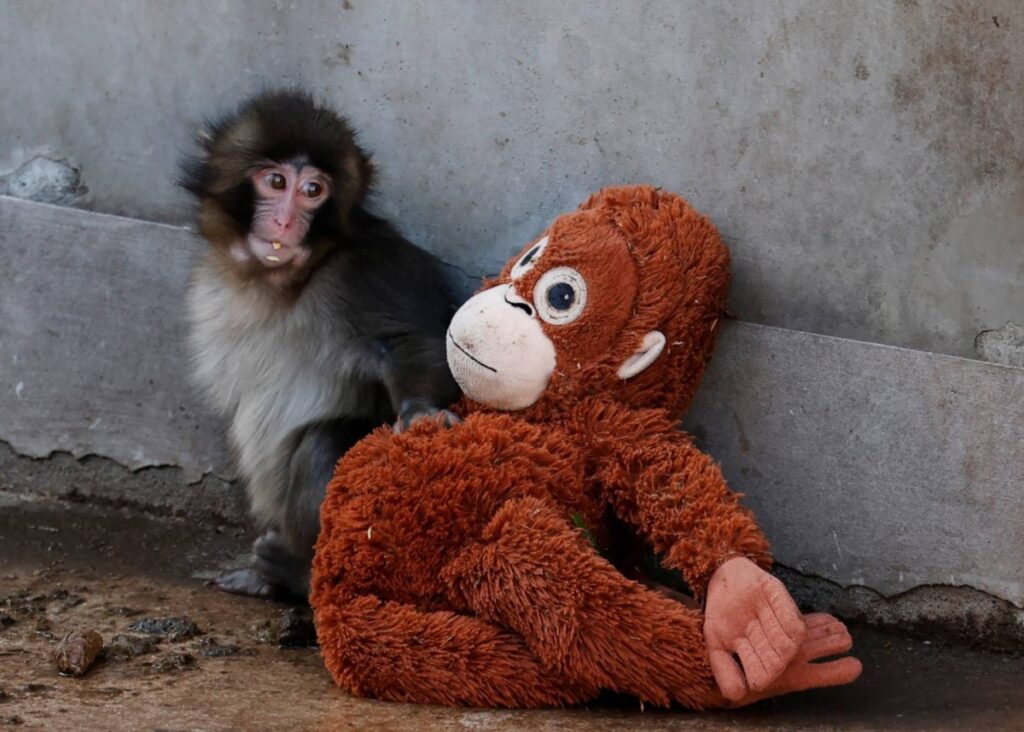
The Ichikawa City Zoo in Japan is witnessing an unprecedented surge in footfall. Visitors from across the globe are gathering to see the viral monkey Punch, a seven-month-old macaque who has captured the internet’s attention. The tiny primate is rarely seen without his signature emotional support orangutan plushie.
How a Plush Toy Made a Macaque an Internet Sensation
The global fascination with this young macaque began shortly after zookeepers introduced him to the main monkey enclosure. Initially, his attempts to integrate with the established troop were highly unsuccessful. Older monkeys either completely ignored his presence or displayed aggressive, territorial behavior towards him.
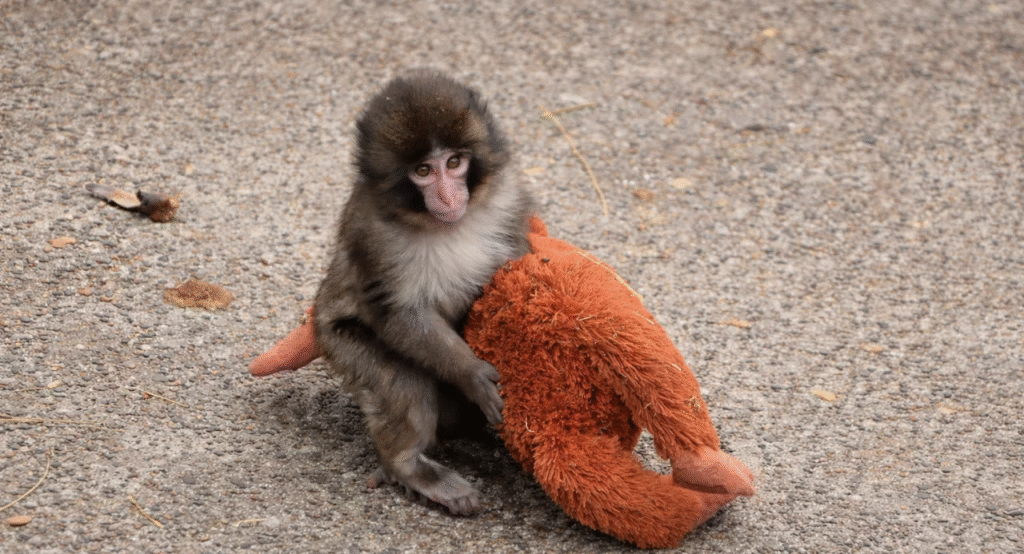
To help the young primate cope with the intense isolation, a staff member stepped in with a unique solution. They gifted him a large orangutan plush toy. This stuffed animal served a critical dual purpose for the developing primate. It acted as a maternal replacement for emotional comfort and functioned as a physical tool for muscle building.
Since that intervention, the young macaque and his plush companion have become virtually inseparable. Videos of him tightly clutching the toy quickly began circulating on various social media platforms. The heartwarming yet slightly melancholic sight resonated deeply with millions of viewers worldwide, turning the animal into an overnight digital sensation.
Massive Crowds Flock to See the Viral Monkey Punch
The digital fame soon translated into real-world logistical challenges for the Japanese facility. Recently, a Pakistani tourist visited the Ichikawa City Zoo and shared a video documenting the overwhelming number of visitors. The footage, which rapidly garnered over 4.5 million views, paints a clear picture of the ongoing frenzy.
The video shows dozens of people perched closely near the enclosure railings, forming a massive human wall. Visitors can be seen holding up their smartphones, eager to record a fleeting glimpse of the tiny primate. The tourist who uploaded the footage described the crowd size as entirely “insane,” highlighting the sheer scale of the phenomenon.
However, the tourist also noted that the facility was managing the chaotic situation surprisingly well. He reassured concerned netizens that the young macaque appeared to be doing fine despite the massive, constantly shifting audience. The zoo management currently continues to allow public viewing, as the influx of tourists checking on the animal’s condition shows no signs of slowing down anytime soon.
Netizens Demand Better Living Conditions and Facility Upgrades
While the internet remains enamored with the animal, this sudden viral fame has also sparked a serious ethical debate. Hundreds of social media users and animal welfare advocates have expressed deep concern over the barren state of the macaque enclosure. The sudden global spotlight has subjected the zoo’s infrastructure to intense public scrutiny.
Commenters were quick to point out that the current habitat is essentially a stripped-back concrete compound featuring a single fake concrete tree. Many users have actively urged the zoo management to utilize the extra income generated by the increased footfall to immediately upgrade the facilities. They argue that the current setup functions merely as an “empathy theatre” for humans, rather than a suitable home for wildlife.
Suggestions from the concerned public include adding natural elements, planting real trees, and building a functional water pond. Animal advocates strongly argue that creating a more natural environment would allow the macaques to live in a space that accurately reflects their original wild habitat, thereby reducing stress and promoting natural behaviors.
Zoo Authorities Explain Macaque Social Dynamics
In direct response to the growing public interest and mounting concerns, the Ichikawa City Zoological and Botanical Gardens issued an official statement. They systematically addressed the complex social dynamics within the troop. The authorities aimed to explain the biological and behavioral reasons behind the young macaque’s initial social struggles.

The official statement clarified that integrating a new, young member into an already established primate group is always a highly complex and sensitive process. The authorities admitted that the young animal has been scolded by older members multiple times in the past. However, they emphasized that this friction is a natural, unavoidable part of establishing a new social hierarchy.
Through these seemingly harsh interactions, the viral monkey Punch is gradually learning how to socialize properly. He is slowly understanding the strict behavioral rules and boundaries of the macaque troop. Primate experts note that while physical reprimands may look violent to human observers, this is standard socialization behavior for Japanese macaques.
The Impact of Social Media Tourism on Wildlife Facilities
This ongoing situation perfectly highlights the powerful, double-edged impact of social media on modern wildlife tourism. On one hand, viral trends can bring unprecedented global attention and crucial revenue to local animal facilities. This financial boost can theoretically be used to fund massive conservation and infrastructure projects.
On the other hand, viral fame instantly invites intense, unfiltered global scrutiny regarding daily animal welfare standards. Facilities that once operated quietly must now answer to an international audience that demands modern, ethical, and naturalistic living conditions for captive animals.
Based on official information from the Ichikawa City Zoo and available public accounts, authorities are closely monitoring the primate’s delicate integration process. Whether the facility will yield to public pressure and initiate the requested habitat improvements remains to be seen as international interest continues to grow.
To learn more, follow Shabdsanchi’s social media pages today and stay updated.
- Facebook: shabdsanchi
- Instagram: shabdsanchiofficial
- YouTube: @shabd_sanchi
- Twitter: shabdsanchi