


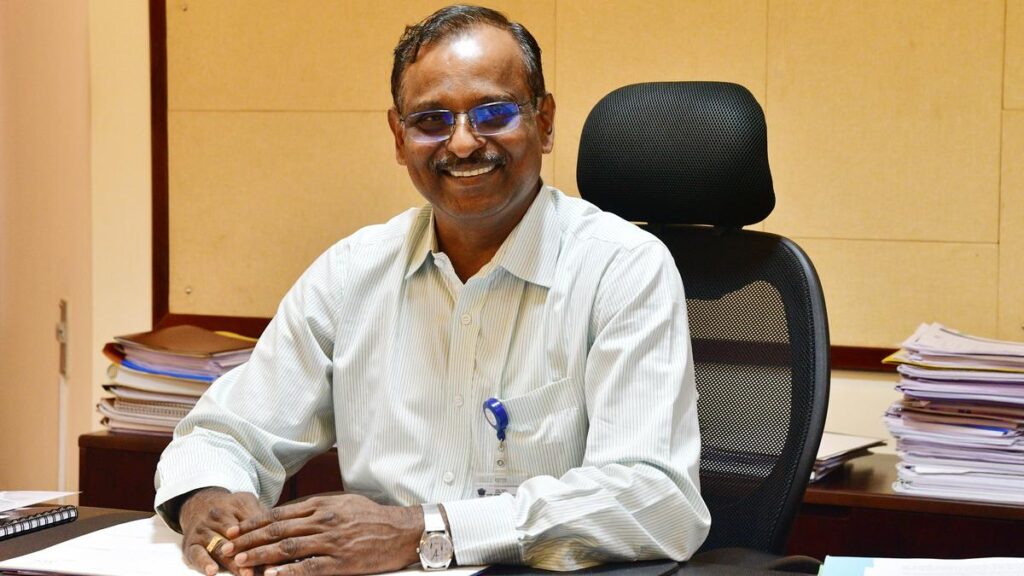
The Indian Space Research Organisation (ISRO) will not be privatised, agency Chairman V. Narayanan firmly clarified, addressing mounting industry questions and internal workforce anxieties regarding the future structure of India’s space program. Speaking at an academic event in Chennai, Narayanan emphasized that while commercial participation and manufacturing contributions from private enterprises are scaling up rapidly, the apex space agency remains fully under the Government of India.
The clarification arrives amid widespread speculation about whether the Union government intends to transfer core operational assets, including launch-vehicle production and satellite manufacturing, entirely to private entities.
Dispelling Misconceptions Around Commercialization
Addressing the distinction between industrial outsourcing and privatization, Narayanan pointed to the framework established under the Indian Space Policy, 2023. He noted that private companies act as vital co-developers rather than taking over the sovereign entity itself.
“When a Polar Satellite Launch Vehicle (PSLV) or Geosynchronous Satellite Launch Vehicle (GSLV) rocket takes off, 75% of our budget is pumped into the private industries. The private companies are also contributing. People must not misinterpret that as ISRO will be privatised,” Narayanan stressed.
The national space program, now 64 years old, manages an active fleet of 56 satellites. However, modern strategic and commercial demands require an output scaling into thousands of spacecraft. To bridge this gap, ISRO is intentionally handholding startups and manufacturing heavyweights to build a robust domestic space ecosystem.
Institutional Separation: The Roles of IN-SPACe and NSIL
The ongoing transition is governed by a clear division of responsibilities mapped out in national space reforms:
- ISRO: Focuses squarely on advanced research and development, pioneering scientific missions, and designing next-generation launch systems.
- IN-SPACe (Indian National Space Promotion and Authorisation Centre): Acts as the single-window autonomous agency regulating and promoting non-governmental entities (NGEs) to utilize public space infrastructure.
- NSIL (NewSpace India Limited): Handles the commercialization of operational space assets, technology transfers, and market-driven launch services.
By delegating operational heavy-lifting and component fabrication to over 450 Indian industries, ISRO frees up internal bandwidth to focus on complex interplanetary endeavors.
Upcoming Milestones and Strategic Horizon
Even as structural debates unfold, ISRO’s operational pipeline remains packed with high-profile missions:
- NVS-03 Launch: The upcoming navigation satellite is fully prepared, with its launch vehicle already moved to the launch pad for an October 30 lift-off.
- Gaganyaan Program: Unmanned flight tests are slated ahead of human spaceflight, backed by exhaustive ground testing exceeding 8,000 individual experiments.
- Chandrayaan-4: Advanced planning is already underway for a lunar sample-return mission targeted for 2028.
Frequently Asked Questions
Is ISRO being privatized under current policy reforms?
No, ISRO Chairman V. Narayanan has explicitly stated that the agency will remain under the Government of India and will not be privatized.
What role do private companies play in India’s space missions?
Private firms handle significant manufacturing and supply-chain operations, absorbing roughly 75% of launch-vehicle budgets for rockets like the PSLV and GSLV.
What is the primary focus of ISRO following the 2023 space policy?
ISRO is focusing its core energies on advanced research, high-end technology development, and interplanetary exploration while handholding commercial startups.
What is the function of IN-SPACe?
IN-SPACe serves as the independent regulatory body facilitating private sector access to government-owned space infrastructure and testing facilities.
When is ISRO’s next major satellite launch?
The navigation satellite NVS-03 is scheduled for launch on October 30.
Analytical Summary & Long-Term Outlook
The formal rejection of privatization underscores a hybrid economic model for India’s space frontier. By separating bureaucratic management from commercial manufacturing, India is successfully shielding its sovereign space ambitions from corporate consolidation while scaling industrial output. As global demand for commercial smallsats and heavy-lift services surges, this symbiotic approach ensures that ISRO retains its foundational leadership in deep-space science, while private industry powers the commercial mass-production of India’s space infrastructure.


Manish Kumar began his professional journey in digital marketing and performance marketing, and currently works as a Digital Marketing Excutive and SEO expert. With over 3 years of professional experience, he handles both strategy and execution. Currently, he manages digital marketing and performance marketing at ‘Shabd Sanchi’ (shabdsanchi.com).