


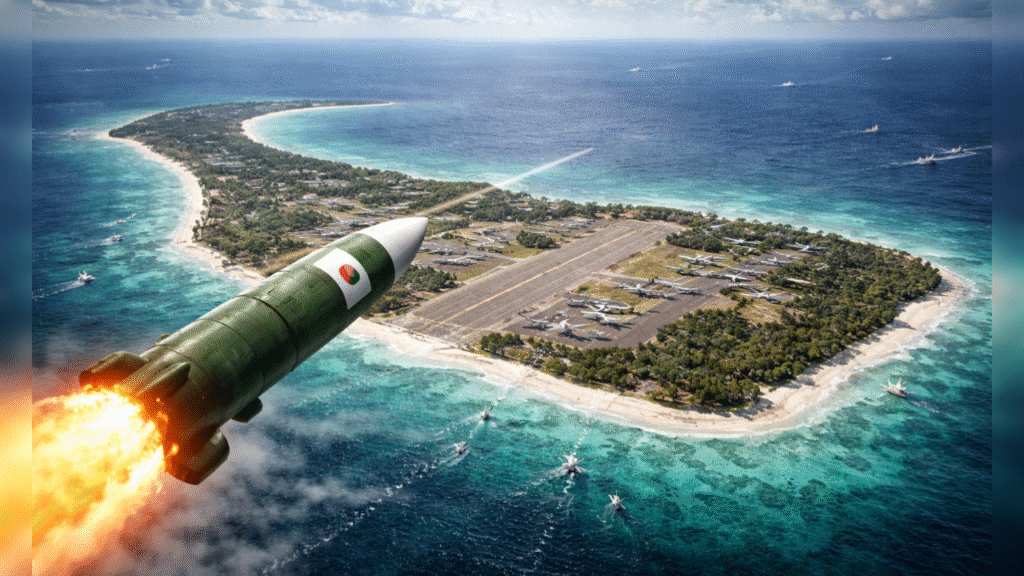
The reported launch of intermediate-range ballistic missiles by Iran toward the US-UK base at Diego Garcia has sent shockwaves through global military circles. While Tehran officially claims a 2,000-km missile cap, this latest attempt suggests Iran’s 4,000-km missile range might already be an operational reality. This escalation shifts the strategic focus from the Middle East directly into the heart of the Indian Ocean.
A Shift in Strategic Geography
For years, Western intelligence agencies have monitored Iran’s missile program with a focus on its regional reach. However, the recent targeting of Diego Garcia—located roughly 4,000 km from Iranian shores—indicates a massive leap in technical ambition. If confirmed, this development means Tehran has effectively doubled its declared strike envelope without prior notification to international monitors.
The attempt involved two missiles; reports indicate one suffered a technical failure while the other was likely intercepted. Despite the lack of a kinetic hit, the political and psychological impact remains profound. By reaching for a target so far south, Iran is signaling that the era of “safe sanctuaries” for Western forces in the region may be ending.
Understanding Iran’s 4,000-km Missile Range
The technical implications of this strike are significant for global missile defense architecture. Until now, the 2,000-km limit was seen as a self-imposed doctrine to avoid provocative posturing toward mainland Europe. However, reaching the Chagos Archipelago requires Intermediate-Range Ballistic Missiles (IRBMs) that utilize advanced multi-stage propulsion systems.

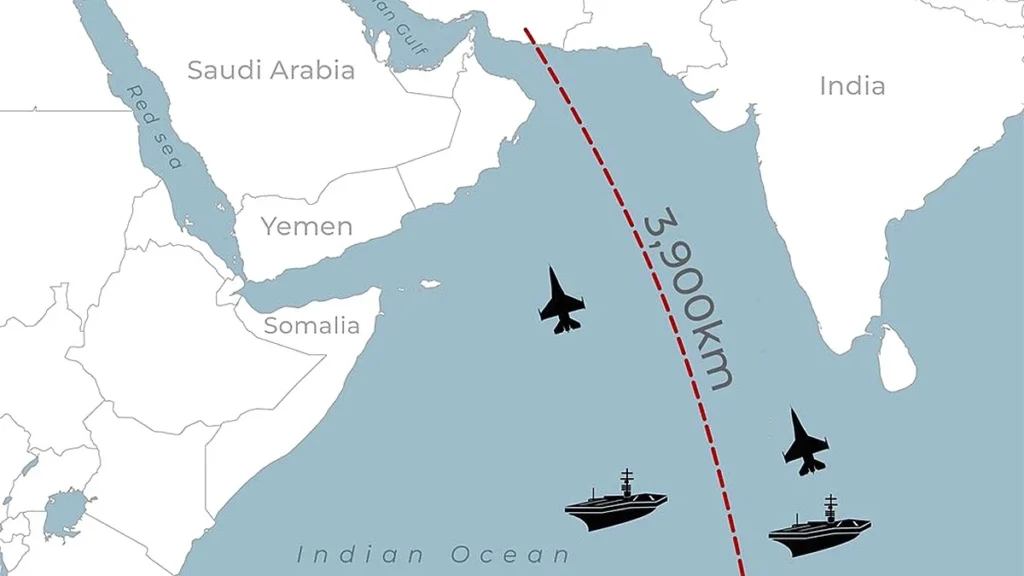
This suspected Iran’s 4,000-km missile range creates a “doctrinal ambiguity” that complicates military planning for the Pentagon. If Tehran possesses undeclared IRBMs, their reach could potentially extend not just into the deep Indian Ocean, but also into parts of Southern and Central Europe. This uncertainty serves as a powerful lever for Iran in diplomatic negotiations.
Diego Garcia: A High-Value Target
Diego Garcia is not merely a remote outpost; it is a critical node for US global power projection. The base hosts heavy B-52 bombers, long-range surveillance aircraft, and serves as a vital logistics hub for operations across Asia and Africa. Targeting such a facility is a high-stakes move designed to test the responsiveness of the US Navy’s Aegis defense systems.
Reports suggest the US military utilized an SM-3 interceptor to neutralize the incoming threat. While the interception may have been successful, the cost-benefit analysis favors the aggressor. Forcing the US to expend high-end, expensive interceptors against potentially older or experimental ballistic platforms is a calculated tactic to stress defense inventories.
Regional Repercussions and Defense Layers
The sudden expansion of the “threat zone” will likely force Gulf states and Israel to reassess their own missile defense umbrellas. If Iran can target a speck in the ocean 4,000 km away, the precision and guidance systems required for such a feat suggest that closer targets are at even higher risk.
Furthermore, this move shifts the conflict theatre. The Indian Ocean, often seen as a secondary zone compared to the Persian Gulf or the Red Sea, is now a primary area of concern. Maritime security experts suggest that India and other littoral nations will be watching these developments closely, as the militarization of these waters enters a more volatile phase.
The Technical vs. Political Outcome
In the world of strategic signaling, a “miss” can sometimes be as effective as a “hit.” Iran’s semi-official news agencies have already framed the event as a victory, claiming that their reach is “beyond what the enemy previously imagined.” The goal was likely not to destroy the base, but to prove that the base is no longer out of reach.
Military analysts argue that even a failed strike provides Iran with invaluable data on US radar signatures and response times. By testing these systems in a real-world scenario, Tehran gains insights that no laboratory simulation could provide. This “stress test” of Western capabilities marks a new chapter in the ongoing shadow war between Iran and its adversaries.
To learn more, follow Shabdsanchi’s social media pages today and stay updated.
- Facebook: shabdsanchi
- Instagram: shabdsanchiofficial
- YouTube: @shabd_sanchi
- Twitter: shabdsanchi