



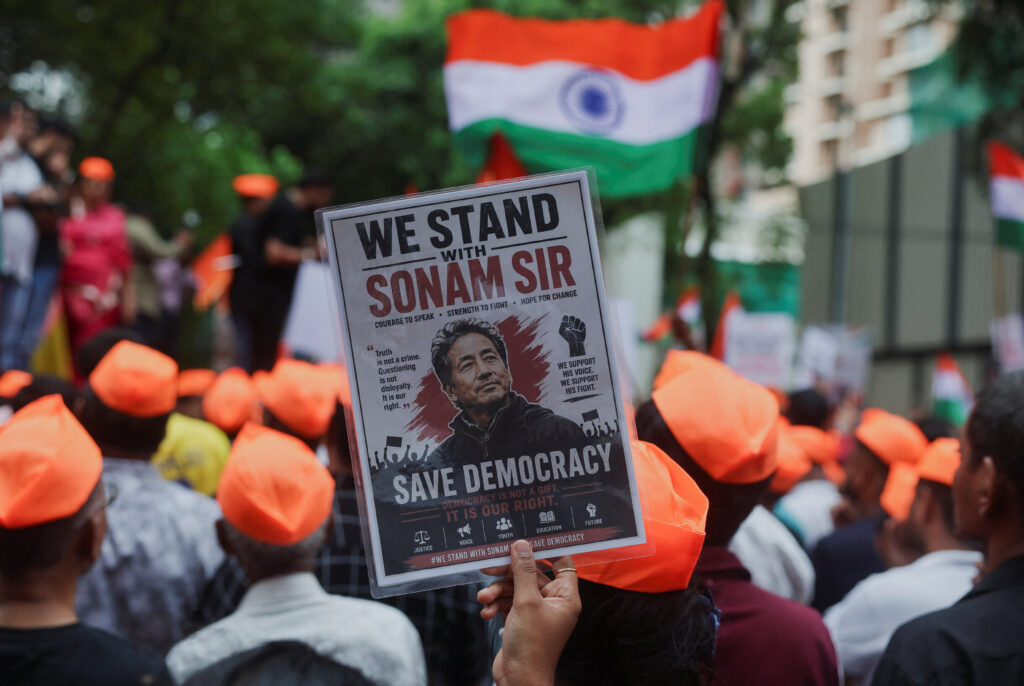
New Delhi witnessed intense scenes on the opening day of the parliamentary Monsoon Session as thousands of Indian protesters march on Parliament. Driven by deep resentment over structural failures in the country’s national testing systems, crowds of young students, social activists, and political figures converged in the heart of the capital.
The demonstrations were prompted in part after questions for the country’s biggest medical school entrance exam (NEET-UG) were leaked, forcing millions of students to face unprecedented stress, uncertainty, and re-examinations. What began as scattered student grievances has quickly ballooned into one of the most significant public challenges to the government administration in recent years.
The Spark: How a Medical Entrance Exam Leak Triggered Nationwide Fury
The primary catalyst for this massive wave of anger is the integrity failure surrounding major national competitive examinations. For Indian students, clearing these highly competitive entrance tests is often the single most critical path toward socio-economic mobility.
The Scale of the Crisis: Millions of Futures on Hold
When evidence emerged that question papers for elite entrance exams were leaked and distributed illegally for massive sums of money, it shattered public trust.
- Systemic Failures: Beyond the medical school entrance test (NEET), technical glitches and irregularities in digital marking systems for nearly two million high school students amplified the frustration.
- Widespread Impact: Instead of isolated issues, recurrent paper leaks across multiple states have created an environment where honest candidates feel the entire process is rigged against them.
“The entire process is corrupt, and it is the country’s youth and students who are bearing the brunt of it and suffering immense mental stress,” remarked Member of Parliament Dimple Yadav during the demonstrations.
Read Also: Nifty Navigates Range-Bound Oscillation After Positive Start: ICICI Direct Analysis
“Chalo Sansad”: Ground Realities of the Jantar Mantar Mobilization
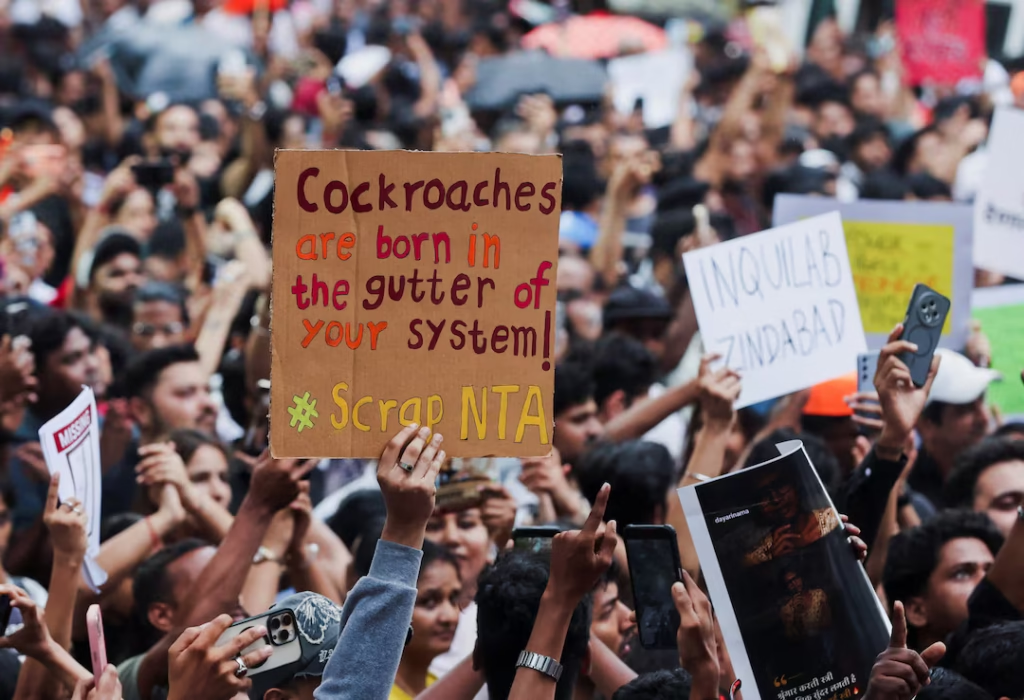
Defying heavy monsoon downpours and sweeping prohibitory orders, thousands of young citizens packed the historic protest site at Jantar Mantar.
The Rise of the Youth Movement and the CJP
A distinct feature of this protest is the prominent role played by the Cockroach Janta Party (CJP)—a fast-growing youth-centric movement driven heavily by social media channels. The movement gained substantial traction following solidarity from prominent socio-political activists like Sonam Wangchuk, whose recent hunger strike centered significantly around youth future guarantees and educational accountability.


Security Crackdown and Clashes in New Delhi
As the crowd attempted to initiate their planned “Chalo Sansad” (March to Parliament) rally, the administration responded with dense security deployments.
1.Prohibitory Orders Enforced:Early Morning.
Delhi Police imposed Section 163 of the Bharatiya Nagarik Suraksha Sanhita (BNSS), banning assemblies of five or more people in the New Delhi district. Key transit checkpoints and central Delhi metro gates were temporarily closed to restrict the influx of demonstrators.
2.Swelling Crowds at Jantar Mantar:Mid-Morning.
Thousands of students, local youth, and regional political leaders successfully gathered at Jantar Mantar, building a massive human chain to maintain their positions.
3.Barricade Breaches and Dispersal:Afternoon.
As groups of protesters attempted to move past the primary security perimeters toward Parliament Street, clashes broke out. Security forces deployed rapid action personnel, using batons (lathi-charge) and tear gas to control the advancing crowds.
Political Aftershocks: Monsoon Session Erupts Over Paper Leaks
The chaos on the streets immediately translated into friction inside the legislative chambers. As the Monsoon Session commenced, opposition lawmakers aggressively demanded an immediate, standalone discussion regarding the exam irregularities.
| Political Faction | Public Stance & Actions Taken |
| Protesting Youth & CJP | Demanding the immediate resignation of Union Education Minister Dharmendra Pradhan and complete systemic overhaul. |
| Opposition Parties | Staged symbolic marches from Parliament to the protest hubs, holding placards reading “NEET hai ya Cheat hai”. |
| Ruling Administration | Called for smooth parliamentary functioning, stating that necessary re-examinations were completed and corrective legal steps against paper leaks are active. |
What Do the Protesters Want? The Key Demands
The core objective of the youth mobilization goes beyond just fixing a single test. The leadership representing the student bodies highlighted four uncompromising requirements:
- Ministerial Accountability: The immediate resignation of the current Union Education Minister over the moral and systemic failure of the exam framework.
- Independent Structural Investigation: A transparent, non-partisan inquiry into the nexus behind recurring examination leaks across the country.
- Comprehensive Testing Reforms: Moving away from fragile, easily compromised centralized testing systems to secure, foolproof methodologies.
- Psychological and Academic Compensation: Structural safety nets and fair timelines for candidates forced into repetitive testing loops due to administrative incompetence.
Conclusion: A Defining Moment for India’s Youth
The sight of thousands of Indian protesters marching on Parliament serves as a stark warning sign regarding the deep-seated frustrations brewing within the country’s younger demographic. When competitive examinations—the foundation of meritocracy—are perceived as vulnerable to corruption, it threatens the long-term aspirations of millions. Whether the government chooses to engage in deep institutional dialogue or relies solely on security measures to clear the streets will likely dictate the political landscape for months to come.
Frequently Asked Questions (FAQs)
Q1: Why are students protesting and marching toward the Parliament?
A: Students and youth organizations are protesting major irregularities, question paper leaks, and technical glitches in India’s top national competitive and medical entrance examinations, which have derailed the career paths of millions of candidates.
Q2: Who is leading the current protest march in New Delhi?
A: The march is primarily organized and driven by a popular youth-led movement called the Cockroach Janta Party (CJP), with support from prominent social activists like Sonam Wangchuk and various national opposition political parties.
Q3: What action did the Delhi Police take to manage the Parliament march?
A: The police enforced strict prohibitory orders under Section 163 BNSS, closed several key metro stations, set up multi-layered barricades, and eventually used tear gas and batons to disperse crowds trying to march past designated protest areas.
Q4: Whose resignation are the protesting students demanding?
A: The protesters are actively demanding the resignation of the Union Education Minister, Dharmendra Pradhan, holding the ministry accountable for the systemic failure of the testing agencies.
Q5: How is the government responding to the exam scandal protests?
A: While the ruling party maintains that necessary re-tests have been conducted and legal clean-ups are underway, government representatives have reportedly initiated preliminary dialogue with protest spokespersons to defuse the situation.