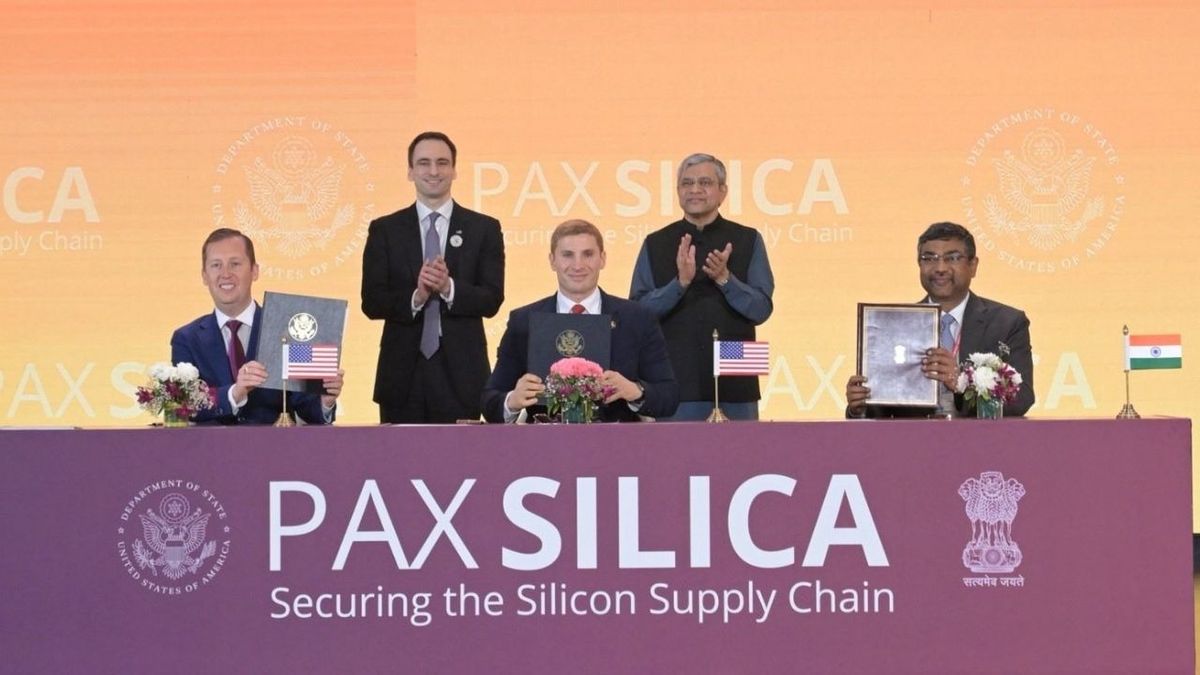
India has officially joined Pax Silica, a strategic US-led initiative aimed at revolutionizing the global technology landscape. By signing this declaration at the India AI Impact Summit in New Delhi, the nation aims to secure its semiconductor future and build resilient supply chains for critical minerals, effectively challenging current market monopolies.
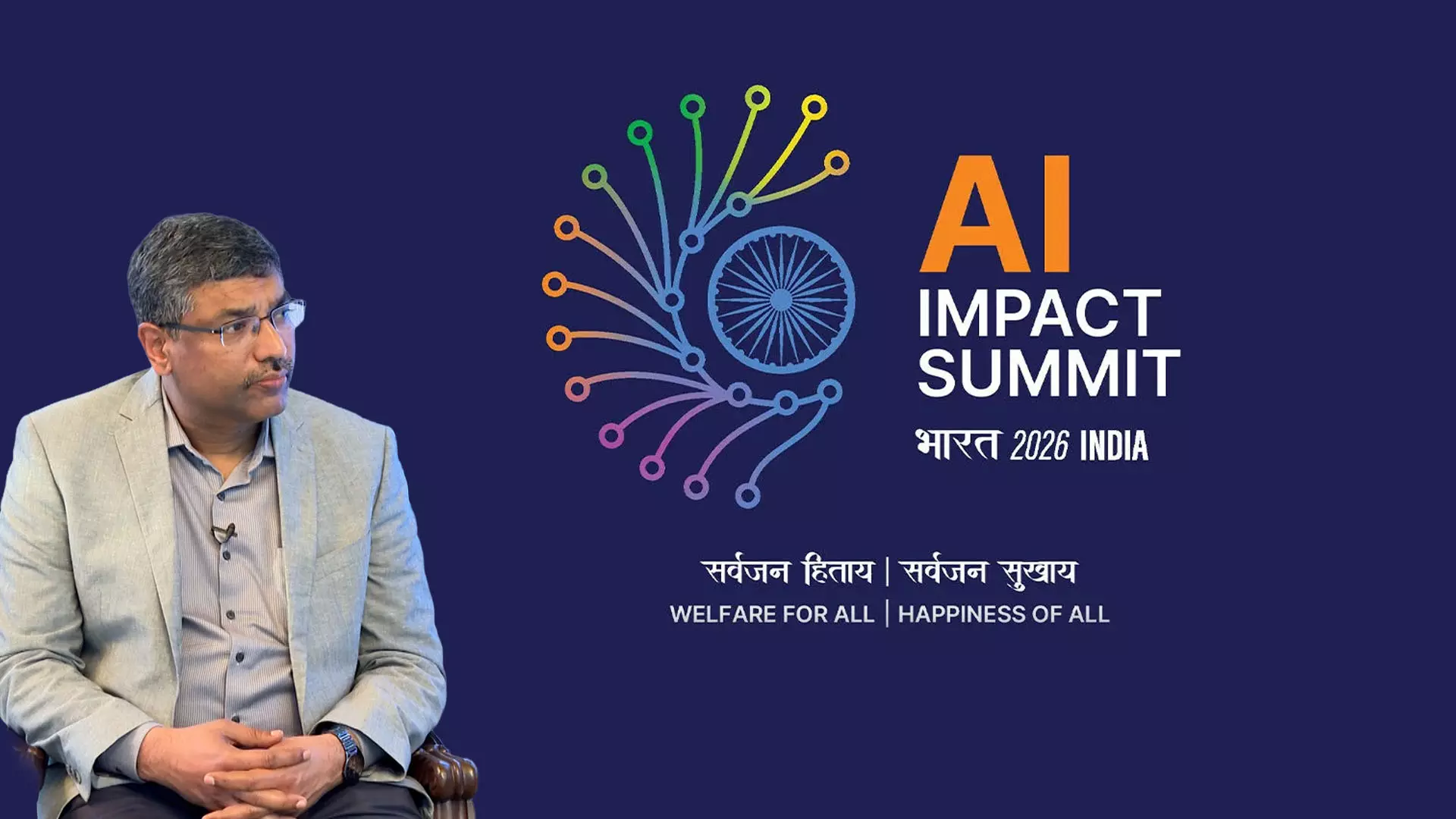
The signing ceremony marks a decisive shift in India’s industrial strategy. Union Minister for Electronics and IT, Ashwini Vaishnaw, emphasized that this partnership will act as a catalyst for the domestic electronics sector. With ten semiconductor plants already in various stages of development, the agreement provides the necessary geopolitical backing to ensure these facilities have a steady flow of raw materials.
Decoupling from Mineral Monopolies
A primary driver behind joining Pax Silica is the urgent need to diversify resource procurement. Currently, India relies on imports for nearly 93% of its rare earth elements, with a vast majority originating from China. This dependency creates a significant vulnerability for India’s defense and high-tech sectors.
By aligning with the US and other partner nations like Australia and Japan, India gains access to advanced mineral processing technologies. This collaboration is expected to unlock India’s own untapped mineral reserves, transforming the country from a raw material importer into a processing hub.
Strengthening the Semiconductor Ecosystem
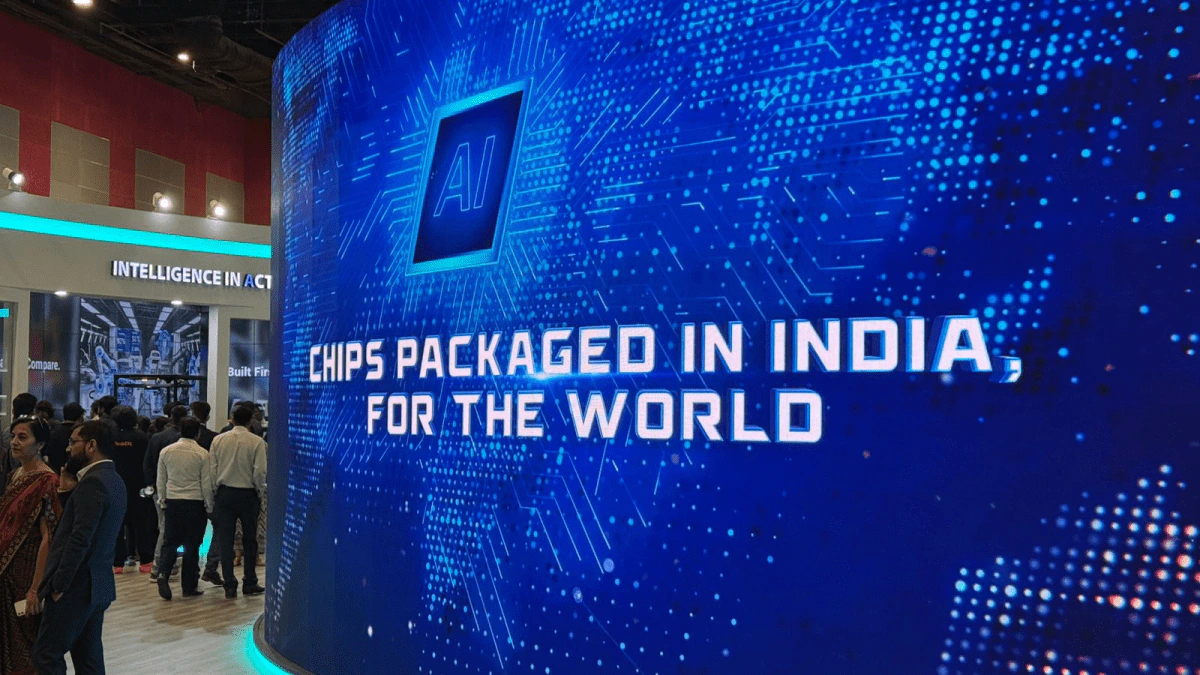
The “Silica” in the alliance’s name refers to the foundational role of silicon in modern computing. Minister Vaishnaw noted that the first Indian-made semiconductor chips are nearing commercial production. Pax Silica provides the international framework required to protect these high-value investments from sudden global supply shocks.
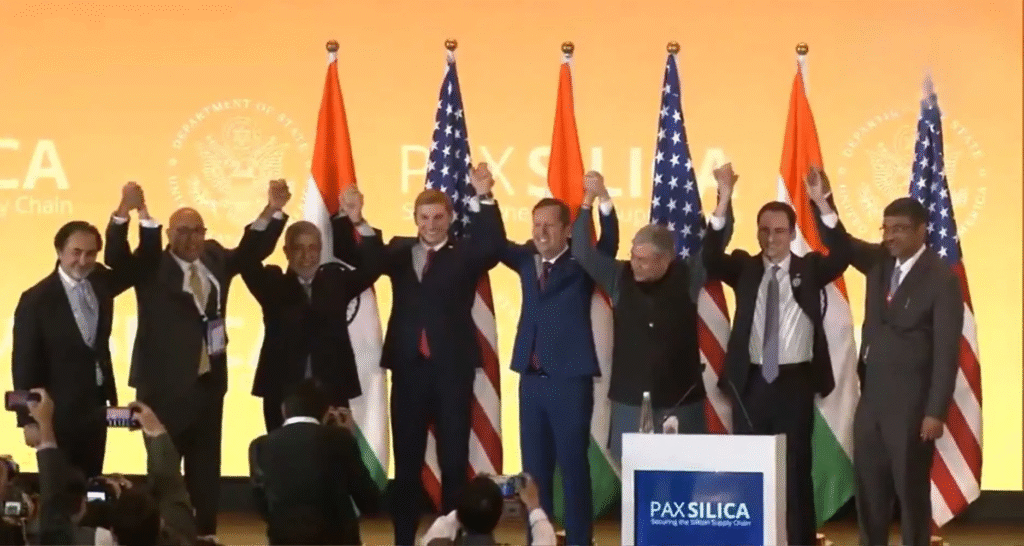
Furthermore, the alliance bridges the gap between mineral extraction and final product fabrication. It covers the entire lifecycle of technology, including software platforms and frontier AI models. For India’s young engineering workforce, this means more high-end research and manufacturing opportunities within the country.
A New Economic Order
US Ambassador Sergio Gor described the initiative as a “strategic coalition” designed to shape the 21st-century economy. Unlike the 20th century, which was defined by oil and steel, the new era is defined by data, chips, and the minerals that power them. The Ambassador highlighted India’s role as “essential” due to its massive engineering talent pool.
The timing is also significant as New Delhi and Washington move closer to finalizing a major trade deal. According to Ambassador Gor, the interim deal is already complete, with only minor technical “tweaking” remaining. This synergy between trade policy and technological alliances suggests a long-term deepening of Indo-US ties.
Global Collaboration for AI Safety
Pax Silica is not just about hardware; it is a vision for “trusted AI.” Partner nations, including the UK, Singapore, and South Korea, have committed to developing AI infrastructure that is secure and transparent. This prevents the “weaponization” of technology by entities that do not share democratic values.
For India, this aligns perfectly with the National Critical Mineral Mission. It provides a platform to share best practices in AI governance while ensuring that the underlying hardware—the chips and servers—is produced within a “trusted” ecosystem of friendly nations.
To learn more, follow Shabdsanchi’s social media pages today and stay updated.
- Facebook: shabdsanchi
- Instagram: shabdsanchiofficial
- YouTube: @shabd_sanchi
- Twitter: shabdsanchi