
In a significant move to bolster global democratic norms, India has officially joined other member nations in adopting the Commonwealth Nadi Declaration during the Law Ministers Meeting in Fiji. The agreement outlines a collective commitment to protecting human rights and the rule of law while addressing modern challenges like climate change and digital misinformation.
Strengthening Democratic Foundations in the Commonwealth
The adoption of the Commonwealth Nadi Declaration marks a pivotal moment for the 56 member states. Meeting in the Fijian city of Suva, law ministers discussed the escalating pressures on democratic systems worldwide. The declaration serves as a blueprint for renewing democratic institutions and ensuring that legal frameworks remain resilient against economic and political instability.

India’s participation underlines its role as a key stakeholder in the Commonwealth’s legal and governance architecture. By endorsing this declaration, New Delhi reaffirms its dedication to transparent governance and the protection of individual liberties. The discussions focused on how nations can cooperate to ensure that justice remains accessible to every citizen, regardless of their socio-economic status.
Addressing Misinformation and Foreign Interference
A primary focus of the Commonwealth Nadi Declaration is the rising threat of misinformation and disinformation. In an era of digital hyper-connectivity, ministers recognized that false narratives often serve as tools for foreign interference in domestic democratic processes.
The member states pledged to develop robust mechanisms to counter these threats. This involves not only technological interventions but also legislative reforms that promote media literacy and hold malicious actors accountable. The goal is to safeguard the integrity of elections and maintain public trust in state institutions, which is often the first casualty of coordinated disinformation campaigns.
Climate Change and Maritime Entitlements
One of the most innovative aspects of the meeting was the legal discourse on climate change. As sea levels rise, many Commonwealth island nations face the existential threat of losing their land. The Commonwealth Nadi Declaration reaffirms a critical legal principle: countries must retain their maritime zones and rights even if their coastlines are physically altered.
This stance provides much-needed legal certainty for Pacific nations. It ensures that their rights over fisheries and underwater resources remain intact, providing an economic safety net as they battle environmental displacement. India’s support for this clause highlights its solidarity with Global South nations facing the brunt of the climate crisis.
Enhancing Access to Justice for Vulnerable Groups
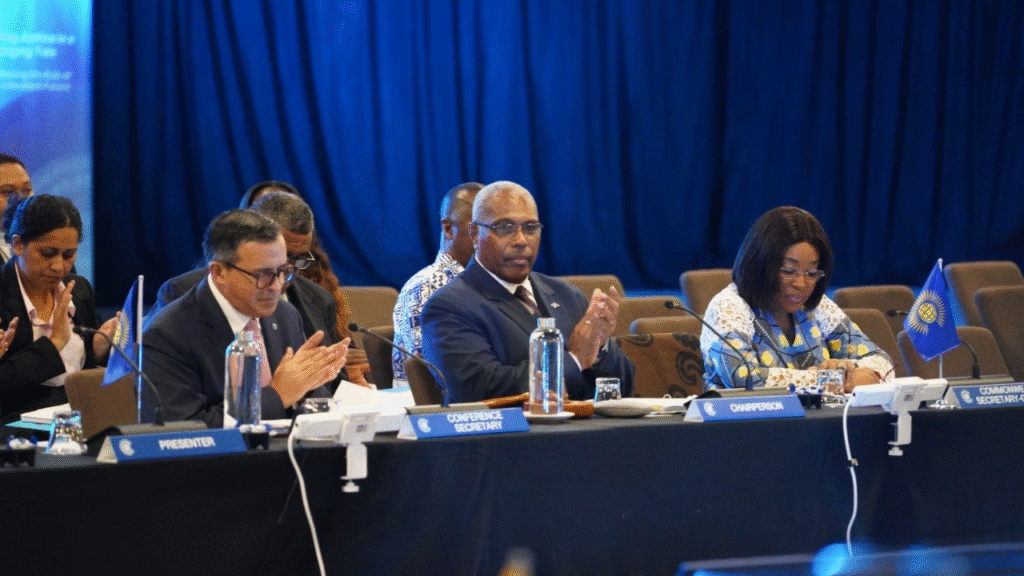
The Secretary-General of the Commonwealth, Hon Shirley Botchwey, emphasized that the rule of law is currently “under attack.” To counter this, the declaration focuses on “people-centric” justice. Ministers agreed to implement tools that reduce the cost of civil litigation and establish specialized family courts.
“When the rule of law is weakened, the consequences are felt in people’s daily lives. Without it, peace turns to instability,” Botchwey remarked during the concluding session.
Specific attention was given to reforming laws that “criminalize poverty.” These are outdated statutes that disproportionately affect the homeless and the marginalized. By modernizing these legal codes, the Commonwealth aims to ensure that the judiciary serves as a shield for the vulnerable rather than a tool of systemic oppression.
Technology and Legal Innovation
The meeting, chaired by Fiji’s Minister for Justice Hon Siromi Turaga, also introduced new resources for legal innovators. These tools are designed to streamline court processes through digital transformation. India, with its extensive experience in the “e-courts” initiative, is expected to play a major role in sharing technical expertise with smaller member states.
The consensus reached in Fiji suggests a shift toward a more proactive Commonwealth. Rather than just a consultative body, the group is moving toward collective action and capacity building. This ensures that the commitments made in the Commonwealth Nadi Declaration translate into tangible legal reforms on the ground.
To learn more, follow Shabdsanchi’s social media pages today and stay updated.
- Facebook: shabdsanchi
- Instagram: shabdsanchiofficial
- YouTube: @shabd_sanchi
- Twitter: shabdsanchi