



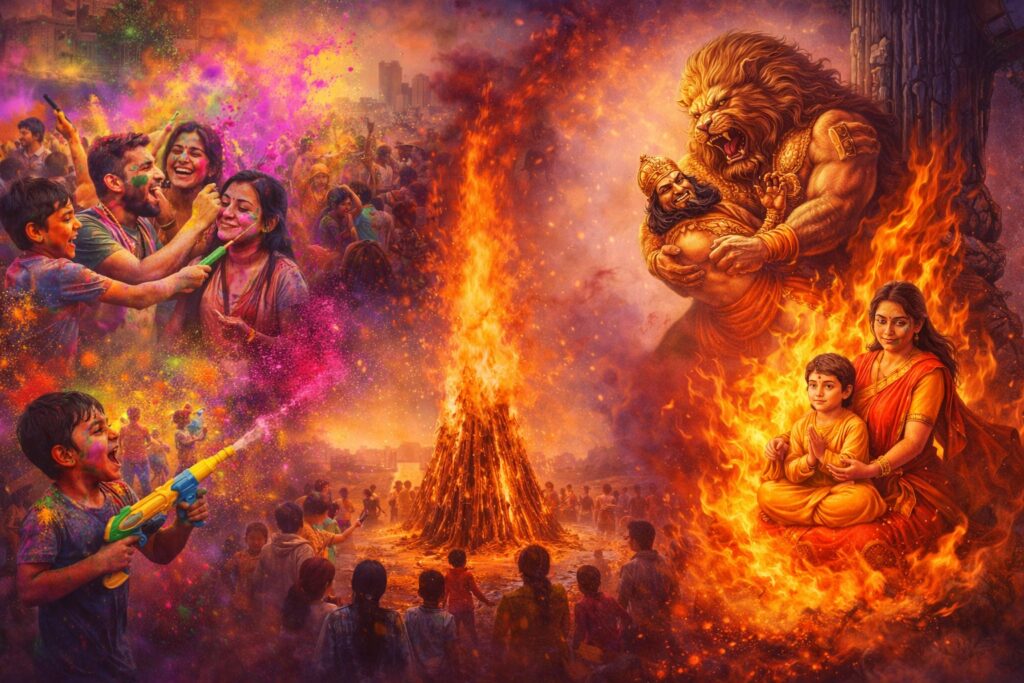
The festival of colours is one of the most highly anticipated events in the Hindu calendar. As spring approaches, people across India are eagerly searching for the exact Holi 2026 date to plan their festivities. This year, the vibrant celebrations will unfold in the first week of March, bringing communities together through shared rituals.
Celebrated immediately after the full moon in the Hindu month of Phalguna, this dynamic festival marks the official end of winter. It also symbolizes the ultimate victory of good over evil. Families gather to light sacred bonfires, share traditional sweets, and play with dry colours and water.
When is the exact Holi 2026 date?
The festival spans two distinct days, each carrying its own unique set of rituals. The first day involves the lighting of the bonfire, universally known as Chhoti Holi, Jalawali Holi, or Holika Dahan. The following day is Rangwali Holi, where people step out to celebrate with coloured powder (gulaal) alongside friends and family.
According to the Gregorian calendar, the main day of playing with colours falls on Wednesday, March 4, 2026. Consequently, devotees will observe the Holika Dahan rituals on Tuesday, March 3. The timing shifts slightly each year because it depends entirely on the lunar cycle.
Purnima Tithi and Holika Dahan timings
Timing is crucial when performing traditional Hindu rituals. For Holika Dahan, the fire must be lit after sunset during the Pradosh period. Furthermore, astrologers strongly advise against performing this ritual during the inauspicious Bhadra Muhurat.
In 2026, the Purnima Tithi begins on Monday, March 2, at 5:55 PM. It will officially conclude the following day, March 3, at 5:07 PM. Therefore, the Holika Dahan bonfire will take place on the evening of March 3.
Devotees should take note of the Bhadra Muhurat timings, which span from 02:35 AM to 04:30 AM this year. Rituals should be strictly avoided during this brief window.
The cultural significance behind the festival
Beyond the visual spectacle of flying colours, the festival carries a profound philosophical message. The tradition of burning the effigy is deeply rooted in the ancient legend of King Hiranyakashipu and his devoted son, Prahlad.
The arrogant king demanded absolute worship, but Prahlad remained a steadfast devotee of Lord Vishnu. Angered by this defiance, the king ordered his sister, Holika, to sit in a blazing fire with Prahlad on her lap. Holika possessed a magical cloak that made her immune to fire, but divine intervention caused the cloak to fly off and protect Prahlad instead.
Holika perished in the flames, establishing the enduring narrative that righteousness will always triumph over tyranny. Today, the bonfire represents the burning away of negativity, ego, and malicious intent.
How different regions celebrate the festival of colours
While the core theme remains the same, India’s immense diversity ensures that the festival takes on different forms across various states. These regional variations add incredible depth to the national celebration.
In Uttar Pradesh, particularly in the Braj regions of Mathura and Vrindavan, the celebrations last for over a week. Locals engage in Lathmar Holi, a playful tradition where women playfully chase men with sticks. This specific regional custom draws thousands of tourists and photographers every year.
Meanwhile, in West Bengal, the festival is celebrated as Dol Jatra. Devotees place idols of Radha and Krishna on decorated palanquins and take them out in a grand, musical procession. Up north in Punjab, the Sikh community observes Hola Mohalla, an energetic event that features impressive displays of martial arts, horse riding, and traditional music.
Traditional foods that elevate the celebrations
No Indian festival is ever complete without an array of traditional delicacies. Families spend days preparing specific sweets and savory snacks to serve guests. Gujiya, a sweet deep-fried dumpling filled with khoya and dried fruits, remains the most iconic dish associated with this festival.


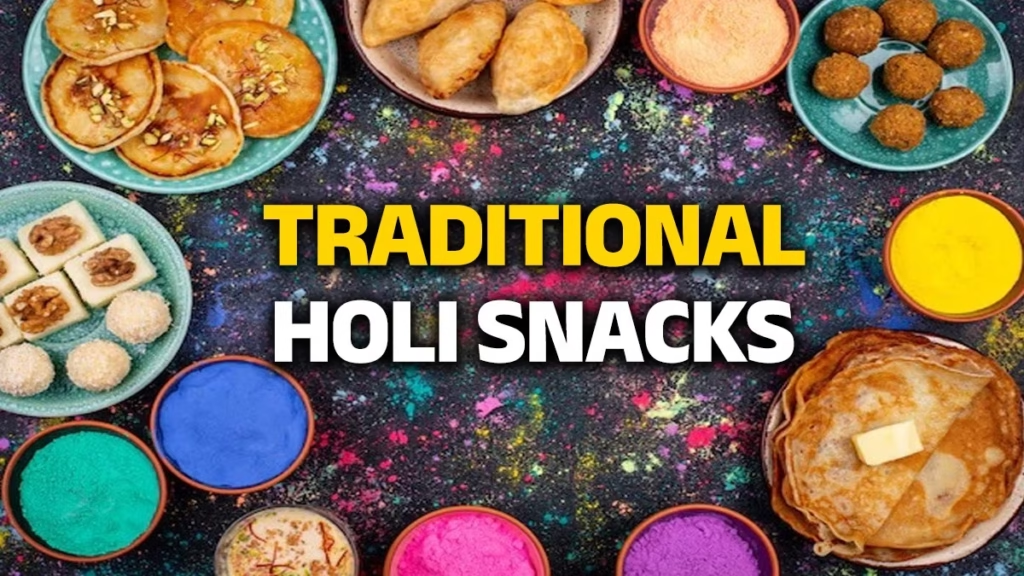
Additionally, households prepare Malpua, Dahi Vada, and crispy Namak Pare. To beat the approaching spring heat, a traditional milk-based drink called Thandai is heavily consumed. Often infused with almonds, saffron, and rose petals, Thandai serves as a refreshing staple during the high-energy daytime celebrations.
Preparing for a safe and eco-friendly celebration
In recent years, the public focus has rightfully shifted towards celebrating responsibly. Environmentalists and health experts strongly advocate for the use of natural, plant-based gulaal to prevent skin allergies and minimize environmental damage.
When stepping out to celebrate, it is highly recommended to apply a thick layer of coconut oil to your skin and hair. This simple physical barrier prevents harsh chemical colours from causing permanent damage. Moreover, staying hydrated and wearing comfortable cotton clothing can significantly improve your festive experience.
Ultimately, the festival is about community, forgiveness, and new beginnings. Whether you are observing the solemn rituals of the evening bonfire or dancing with friends the next morning, the spirit of the occasion remains deeply unifying.
To learn more, follow Shabdsanchi’s social media pages today and stay updated.
- Facebook: shabdsanchi
- Instagram: shabdsanchiofficial
- YouTube: @shabd_sanchi
- Twitter: shabdsanchi