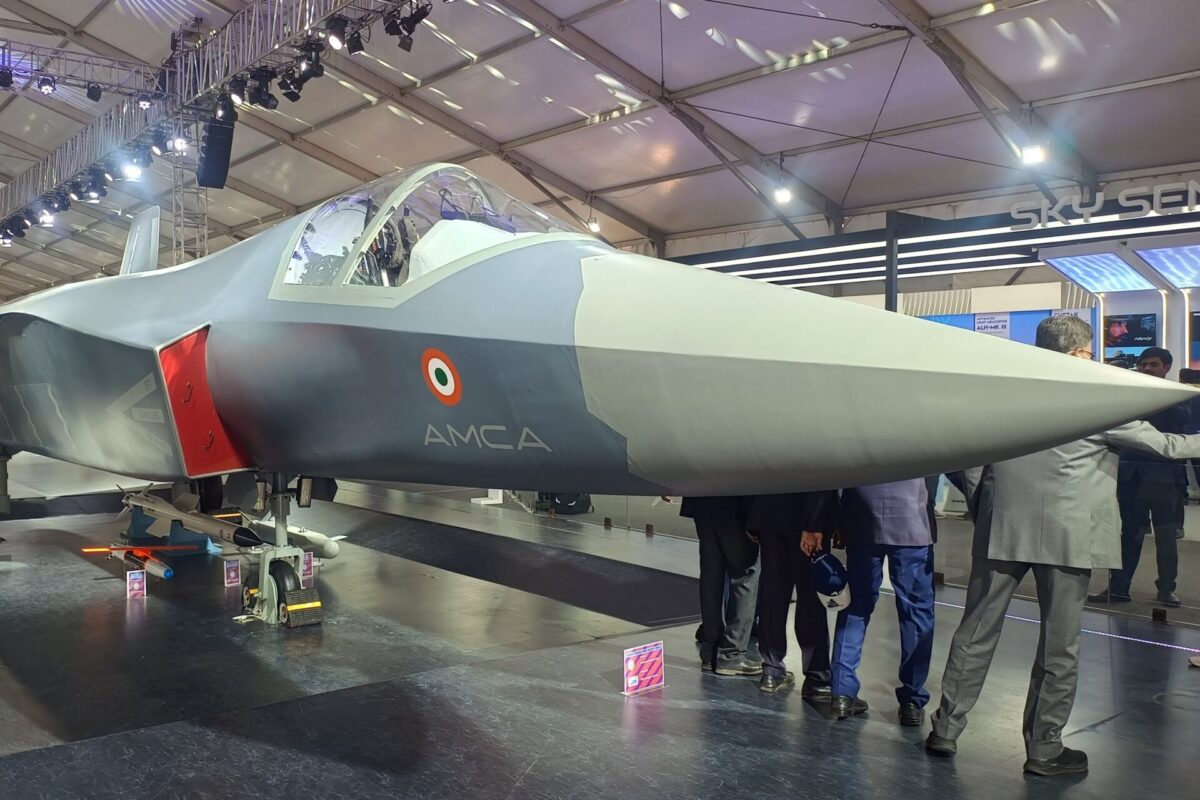
The landscape of India’s indigenous defense manufacturing has witnessed a tectonic shift as Hindustan Aeronautics Limited (HAL) has been excluded from the race to develop the country’s first fifth-generation stealth fighter. For the first time in India’s aviation history, the state-run giant will not lead a frontline combat aircraft project. The AMCA stealth fighter program—formally known as the Advanced Medium Combat Aircraft—is now moving into its next critical phase with three private-sector-led consortia emerging as the frontrunners for prototype development.
The decision marks a departure from the traditional “nomination-based” model where HAL was the default choice for all sovereign aircraft projects. By opening the AMCA program to competitive bidding, the Ministry of Defence (MoD) aims to fast-track development and integrate private sector efficiencies into the high-stakes stealth technology domain.
Why HAL Failed to Qualify for the AMCA Program
The exclusion of HAL stems from specific eligibility criteria laid down in the Expression of Interest (EoI) issued by the Aeronautical Development Agency (ADA). According to official sources, HAL’s bid, which included two smaller partner firms, failed to meet mandatory technical and financial benchmarks. A key hurdle was the “Order Book to Turnover” ratio.
HAL Chairman DK Sunil had previously highlighted that the EoI penalized companies with heavy existing workloads. Under the current rules, any entity with an order book exceeding three times its annual turnover received zero marks in certain evaluation categories. Since HAL currently manages an order book nearly eight times its turnover, it was effectively disadvantaged despite its decades of manufacturing experience with the Tejas LCA and Su-30 MKI.
The Three Finalists for the Stealth Prototype
Out of seven original bidders, only three consortia have progressed to the final stage. These groups will now receive Requests for Proposal (RFP) to submit detailed cost bids for the construction of five AMCA prototypes and one structural test specimen. While the names of the final three have not been officially released, the original pool included major domestic players:
- Tata Advanced Systems Limited (TASL)
- Larsen & Toubro (L&T) in partnership with Bharat Electronics Limited (BEL)
- Adani Defence and Aerospace
- Bharat Forge Ltd and Data Patterns
The evaluation process, conducted by senior officials from the Defence Research and Development Organisation (DRDO) and reviewed by the Defence Secretary, prioritized the ability to set up dedicated manufacturing facilities and complete flight testing within a strict eight-year window.
Urgency of the AMCA Stealth Fighter Program
India’s push for the AMCA stealth fighter program is driven by deteriorating regional security dynamics. China has already operationalized its J-20 “Mighty Dragon” stealth fighters and is rapidly producing the J-35. Furthermore, reports of Pakistan seeking fifth-generation platforms from China have forced New Delhi to expedite its indigenous efforts.
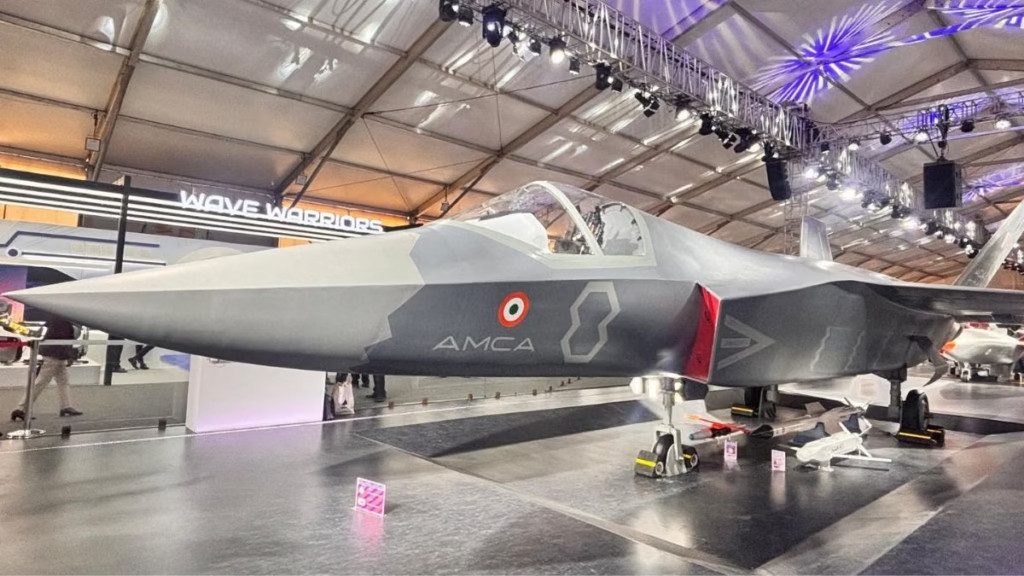
The AMCA is designed as a twin-engine, all-weather multirole fighter with a very low radar cross-section (RCS). It will feature:
- Internal weapons bays to maintain stealth.
- Diverterless supersonic intakes.
- Advanced AESA radar and integrated electronic warfare suites.
The Cabinet Committee on Security (CCS) sanctioned ₹15,000 crore in 2024 for the design and prototype phase. The Indian Air Force (IAF) eventually plans to induct 120 aircraft, split into two versions: the Mk-1 (powered by the US-made GE F-414 engine) and the more potent Mk-2.
Engine Development and International Collaboration
While the airframe will be built by private industry, the “heart” of the aircraft—the engine—remains a matter of international cooperation. India is currently negotiating a massive deal with the French firm Safran and the Gas Turbine Research Establishment (GTRE).
This joint venture aims to develop a 120-kilonewton thrust engine for the AMCA Mk-2. Crucially, this agreement involves a 100% transfer of technology (ToT) and full intellectual property rights (IPR) for India. This ensures that even if the private sector builds the jet, the core technology remains under sovereign control, preventing future supply chain vulnerabilities.
Timeline: When Will AMCA Fly?
The roadmap for the AMCA is ambitious. According to the ADA’s timeline:
- First Flight (Prototype): Expected by 2029.
- Completion of Flight Trials: Targeted for 2034.
- Induction and Series Production: Scheduled for 2035 onwards.
The selection of a private lead integrator is intended to avoid the delays often associated with public-sector monopolies. By involving firms like Tata or L&T, the government hopes to leverage modern industrial practices and faster decision-making cycles.
Key Comparison: AMCA Mk-1 vs Mk-2
| Feature | AMCA Mk-1 | AMCA Mk-2 |
| Engine | GE F-414 (USA) | Indigenous 120kN (India-France) |
| Stealth Level | High | Enhanced (Advanced Coatings) |
| Production Lead | Private Industry Partner | Private Industry Partner |
| Role | Air Superiority | Multi-role / Deep Strike |
The Future Role of HAL
While HAL has been sidelined from the prime development contract for the AMCA prototypes, it remains a vital pillar of Indian aerospace. The state-run firm is currently executing massive orders for the Tejas Mk-1A and is the primary agency for the Su-30 MKI upgrades. However, this exclusion serves as a “wake-up call” for the PSU to streamline its project management and address its mounting order backlog.
The move to exclude HAL from a flagship project signifies the government’s commitment to “Atmanirbhar Bharat” (Self-Reliant India) through a multi-vendor ecosystem rather than relying on a single state entity.
To learn more, follow Shabdsanchi’s social media pages today and stay updated.
- Facebook: shabdsanchi
- Instagram: shabdsanchiofficial
- YouTube: @shabd_sanchi
- Twitter: shabdsanchi